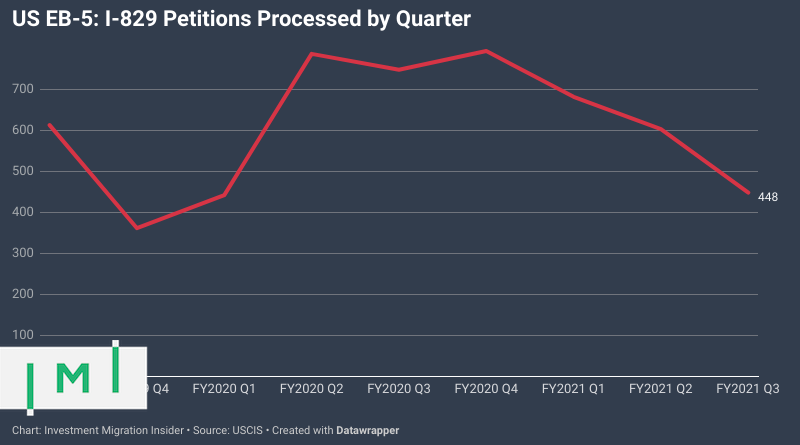
With No Regional Center-Based EB-5 Applications to Process, Why is I-829 Adjudication Slowing?
The Investor Program Office at the USCIS had three jobs to do. With the regional center closed, they have only one. So, what’s the hold-up with I-829s?

The Investor Program Office at the USCIS had three jobs to do. With the regional center closed, they have only one. So, what’s the hold-up with I-829s?

“The reason for the rule matters when it comes to how the EB-5 program fulfills the policy’s purpose,” writes IIUSA Executive Director Aaron Grau.

Aaron Grau argues that some EB-5 regional center program advocates, in their pursuit of an ideal but unfeasible reform package, are risking re-authorization altogether.

Is EB-5 dead? How does direct EB-5 work? Will the regional center program return? Is it true that minimums are back to US$500,000? Matthew Galati provides a jargon-free status update on EB-5.

The DC Court of appeals has upheld the prevailing interpretation, dashing hopes of a potential tripling of the effective EB-5 quota.

Though the Senate rejected Grassley and Leahy’s request for unanimous consent, reauthorization bills are still pending, writes Aaron Grau.

What many had feared has happened: The regional center program will expire next week, potentially affecting as many as 100,000 investors.
Following a ruling yesterday, the EB-5 Modernization Rule, which raised the program’s minimum investments in 2019, is no longer in effect. That could change quickly.
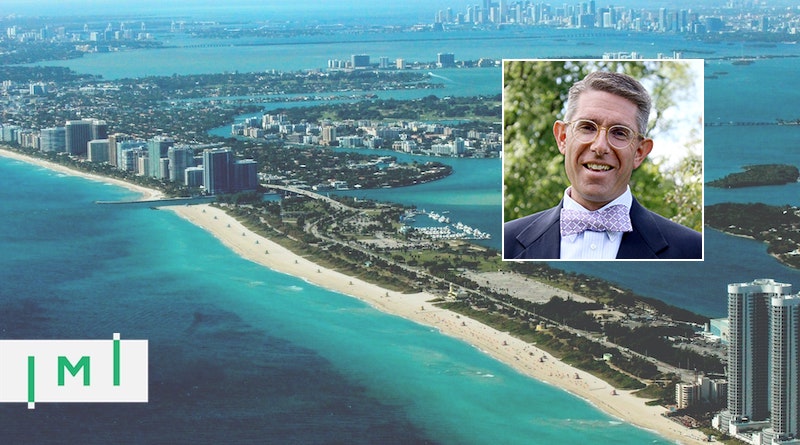
Aaron L. Grau, Executive Director of IIUSA, asks why “opposition continues to mysteriously fester” regarding EB-5 program reform.

Crunch time for EB-5, the North Macedonian surprise, why Canada makes immigration so hard, business as usual in the Caribbean, and much more.

If passed, the bill would see EB-5 wait times for applicants filing today equalized to more than eight years, regardless of country of origin.

Matthew Galati, who got into the industry after processing his wife’s green card, credits Tom Rosenfeld with the overall success of EB-5.

In a big week for EB-5, the program received another short-term extension and nearly doubled its number of available visas.

In the absence of new legislation, litigation blocking the order, or a Presidential reversal, Hong Kong’s EB-5 investors are in for retrogression.

IIUSA’s Lee Y. Li conducts a detailed statistical analysis on EB-5 investment trends in one of the program’s fastest-growing markets.

Simon Black of Sovereign Man thinks we’ll see “a vast expansion of the EB-5 program in the United States” and other Western countries.

Available EB-5 visas in 2021 will most likely be much higher than it has ever been in the past, writes Marko Issever.
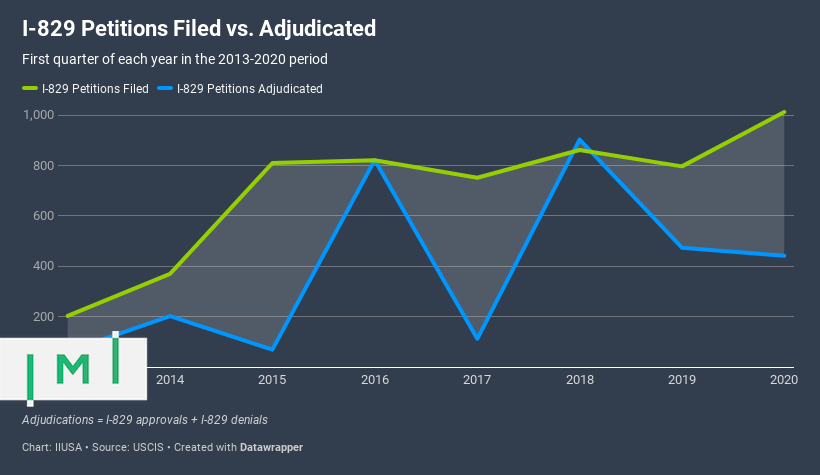
It’s the second time in EB-5 history that the number of I-829 filings exceeds 1,000 petitions within a single quarter.

“The day after that proposal, we received over a hundred calls,” said Andrew Lo, chief executive at Anlex, a Hong Kong-based immigration consultancy firm.

President Trump has now signed that executive order. The phrasing makes it clear that neither E2 nor EB-5 applicants will be affected.