
How Redeployment of At-Risk EB-5 Capital Works During The Regional Center Program Lapse
Now that the regional center program has lapsed, maintaining EB-5 capital at-risk through redeployment poses challenges, writes Aaron Grau.

Now that the regional center program has lapsed, maintaining EB-5 capital at-risk through redeployment poses challenges, writes Aaron Grau.
What do “budget reconciliations,” “continuing resolutions,” “omnibuses,” and “minibuses” mean for the future of EB-5? Aaron Grau answers.

“By filing numerous lawsuits because the agency wasn’t doing anything in 2019, we finally got the agency moving again,” says Matt Galati.

Aaron Grau argues that some EB-5 regional center program advocates, in their pursuit of an ideal but unfeasible reform package, are risking re-authorization altogether.

Though the Senate rejected Grassley and Leahy’s request for unanimous consent, reauthorization bills are still pending, writes Aaron Grau.
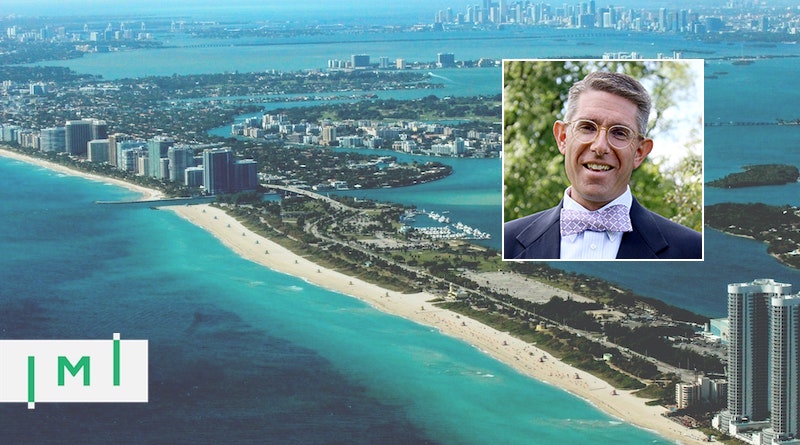
Aaron L. Grau, Executive Director of IIUSA, asks why “opposition continues to mysteriously fester” regarding EB-5 program reform.

Investment migration people in the news this week include: André Miranda of Pinto Ribeiro Luis Lima of APEMIP John Hu

If passed, the bill would see EB-5 wait times for applicants filing today equalized to more than eight years, regardless of country of origin.

In a big week for EB-5, the program received another short-term extension and nearly doubled its number of available visas.
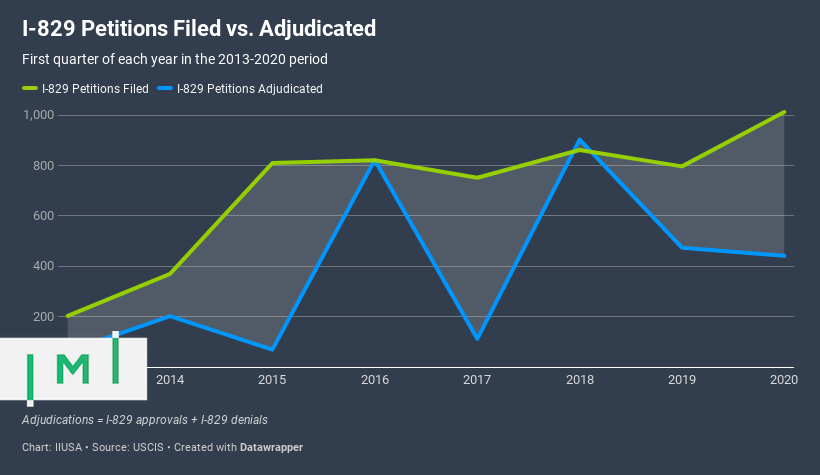
It’s the second time in EB-5 history that the number of I-829 filings exceeds 1,000 petitions within a single quarter.

“The day after that proposal, we received over a hundred calls,” said Andrew Lo, chief executive at Anlex, a Hong Kong-based immigration consultancy firm.

In this panel, we’ve brought together representatives from each step on the way to a new citizenship in Grenada and a residency permit in the United States:

IIUSA’s Bob Kraft: “This is in line with other actions taken by the US Government to protect its citizens in a period of unprecedented challenge.”

Between Jan and Sep 2019, the USCIS terminated 75 regional centers and approved only six. 80% of terminations since ’08 have taken place in the last two years.
New regulations that raise the minimum investment requirements are now in effect. But legislative developments may change the rules again within a month.

New rules raising min. investments to $900,000 are scheduled to take effect this week. President Kraft of IIUSA thinks there’s a chance that won’t happen.

But the new rules may never take effect if the EB-5 Regional Center Program gets a congressional extension before Sep 30th.
Stakeholders warn that removing per-country caps without also increasing the number of available visas will not solve the program’s capacity problem.

During the two-year fiscal period of 2014-15, the US EB-5 program accounted for some $11 billion in capital investments in

The United States Citizenship and Immigration Service (USCIS) received only 25 I-924 applications – the petition private and public economic