

Three Things You Should Expect From Investment Migration in 2024
David Lesperance makes three predictions for the investment migration market in 2024, and takes stock of how his predictions for 2023 did.
David Lesperance makes three predictions for the investment migration market in 2024, and takes stock of how his predictions for 2023 did.

Charles Savva last week argued Hungary’s new golden visa is an inferior proposition. Today, Laszlo Kiss presents nine counter-arguments.

Hungary will grant temporary status to those who invest EUR 500,000 in directly held real estate. Competitors offer permanent status for half the price, Charles Savva points out.

Unprofessional practitioners who tarnish the image of investment migration are an existential threat to the industry, writes Charles Savva.

CBI due diligence specialist Fabienne de Blois outlines the three critical characteristics of effective applicant vetting.

A two-year investment is a bridge-loan. Serious EB-5 projects need more time and longer investment cycles, argues Siren Chen.

Beyond sharing Portugal’s climate, Latin culture, and Atlantic coastline, Uruguay offers a tax holiday similar to NHR, writes Philippe May.

As conflict rages in the Middle East, a quiet EU country with a flexible residency program is just an hour’s flight away, writes Charles Savva.

A multipolar world and nationalist-protectionist policy trend make sovereign diversification a must rather than a luxury, writes Nirbhay Handa.

Sam Bayat explores the implications of economic citizenship, electronic travel authorizations, and data mining for international travel.
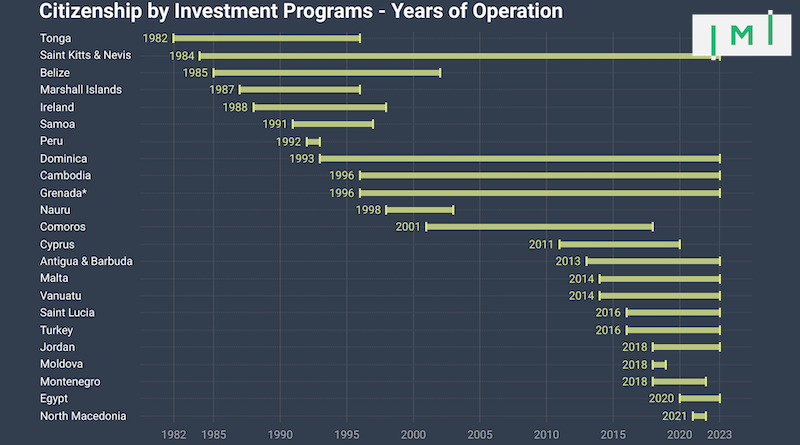
In the wake of Saint Kitts’ complete submission to the EU’s CBI demands, Brian Greco argues the industry must stake out a new course.

Investment migration can fill specific economic gaps. Keeping family businesses from dying with the owner is one way, writes Stephane Tajick.

The French requirement and the $500k walk-away option likely to result from the new rules will cripple the QIIP, laments Nicolas Laurin.

Governments increasingly balk at passive programs but welcome active investor visas. Ahmad Abbas explains how to successfully pivot to AIVs.

Patricia Casaburi points out that it’s ironic that golden visas are blamed for the housing crisis in Lisbon and Porto, where prices have risen sharply since these cities were excluded from the program.

US pressure is bringing Caribbean CIPs together around six binding principles. Kemal Nicholson outlines how this changes the role of agents.

Inês Costa Moura and Miguel Gomes outline the three possible outcomes of the government’s proposal and what is at stake in terms of jobs.

Stephane Tajick asks what the industry might have done to prevent EU antagonism, what we can expect next, and whether GVs have a future in Europe.

Martin St-Hilaire and Philippe May suggest Vanuatu give up trying to meet the EU’s ever-shifting demands and focus, instead, on the mass market.

Brian Greco asks why attitudes about RCBI explain how some countries stay poor and others get rich by attracting investors seeking mobility.