

The United States Department of the Treasury’s Financial Crimes Enforcement Network (FinCEN) has formally rescinded Advisory FIN-2014-A004, a 2014 notice that warned American financial institutions about the abuse of the Saint Kitts & Nevis Citizenship by Investment (CBI) program by illicit actors.
Effective February 24, 2026, the withdrawal ends a regulatory cloud that has shadowed the program for more than a decade.
According to Caribbean media reports, the passports associated with the foreign individuals cited in the 2014 notice have all expired. FinCEN has not published a separate rationale document, but the advisory page on fincen.gov now carries a rescission notation.
What the 2014 Advisory Said
The 2014 advisory alleged that certain foreign nationals were exploiting Saint Kitts & Nevis CBI passports to mask their identities and evade US or international sanctions.
FinCEN specifically cited Iranian nationals designated by the Office of Foreign Assets Control (OFAC) who had obtained Kittitian passports through the program.

It characterized the program’s controls as “lax” and asserted that, despite a public ban on Iranian applicants announced in 2013, Iranian nationals continued to obtain passports.
Financial institutions were instructed to conduct enhanced due diligence on holders of Saint Kitts & Nevis passports and to flag the term “SKN Passport” in any Suspicious Activity Reports (SARs).
For the Federation, the fallout was swift. Canada imposed a visa requirement on all Saint Kitts & Nevis passport holders later that year, affecting the entire citizenry alongside CBI passport holders.
Reputationally, the damage lingered even longer. As late as 2017, the head of Dominica’s CBI unit cited it as evidence that Saint Kitts had lost its “platinum brand” status in the Caribbean.
The Reforms Behind the Rescission
Prime Minister Terrance Drew, who took office in August 2022 and holds the Citizenship and Immigration portfolio, framed the rescission as validation of a sustained reform effort.
In a government statement, he cited higher minimum investment thresholds, mandatory biometric data collection, and a restructured Citizenship by Investment Unit (CIU) operating as an independent statutory body with a Board of Governors.
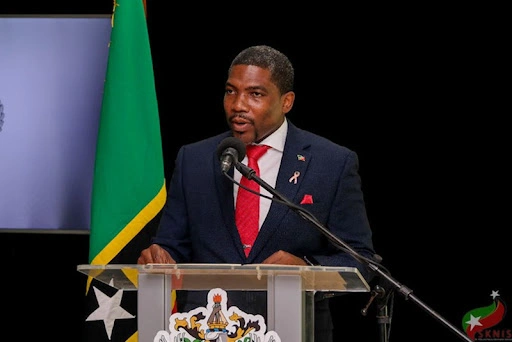
He also pointed to the establishment of the Eastern Caribbean Citizenship by Investment Regulatory Authority (ECCIRA) at the regional level. “A significant cloud that once hovered over our CBI Programme has now been lifted,” Drew said.
Calvin St Juste, Executive Chairman of the CIU, said the rescission reaffirmed confidence in the program under its new governance framework. “We took the advisory seriously and implemented comprehensive reforms to our due diligence processes, compliance framework, and security measures,” he said in a statement published on the CIU website.
Among the measures the CIU listed:
- Enhanced background checks and financial screening.
- Partnerships with international due diligence firms.
- Mandatory biometric data collection, including fingerprints and facial recognition.
- Mandatory applicant interviews.
- Independent external audits.
- Alignment with global anti-money laundering and counter-terrorism financing (AML/CFT) standards.
A mandatory “genuine link” requirement is also planned for 2026. Under the new framework, applicants will need to demonstrate a substantive connection to Saint Kitts & Nevis through physical presence, economic activity such as business establishment and job creation, or long-term social and philanthropic engagement.
That overhaul in January represents a fundamental departure from the donation-only pathways that have characterized Caribbean CBI programs for decades.
Saint Kitts & Nevis announced the rescission on February 27 while hosting the 50th Regular Meeting of the Conference of Heads of Government of the Caribbean Community (CARICOM). PM Drew, currently serving as CARICOM Chair, held a bilateral meeting with US Secretary of State Marco Rubio during the same week.
For the world’s oldest CBI program, established in 1984, the rescission marks the culmination of a multi-year effort by the CIU and the Drew administration to address the shortcomings identified over a decade ago.



