For more than a decade, Dubai sold the world’s wealthy a simple proposition: Zero tax, a luxury lifestyle, and safety you could take for granted. The first two survive almost any pressure. The third did the real work of pulling capital away from rival low-tax hubs, and the 2026 Iran war put it in question.
On February 28, the United States and Israel launched an air war against Iran. Within days, Iran’s retaliation reached the Gulf states that host U.S. forces, and for the first time the United Arab Emirates itself was a target. A reported Iranian strike sent smoke over Dubai’s Jebel Ali port on March 1. A drone hit the Address Creek Harbour 2 tower on March 12, and another briefly shut Dubai International Airport on March 16.
Wealthy residents did not wait for the all-clear. Within a week, private bankers in Singapore and Hong Kong were fielding requests from Dubai-based clients to move money out, and family offices began reviewing their Gulf footprint. This article looks at which part of Dubai’s offer actually broke, why moving elsewhere in the Gulf solves nothing, and where mobile wealth is going instead.
What Dubai Was Really Selling
Dubai’s pull was never only about tax, because plenty of places charge little or nothing. Its edge was the sense that you could leave your car unlocked and stop thinking about your physical security altogether. Karen Young of the Middle East Institute notes that Dubai “has not itself been a target before,” and that is what changed in 2026.
The model worked on a scale few cities have matched. Nearly 10,000 millionaires moved to the UAE last year, bringing an estimated $63 billion in wealth, according to Henley & Partners. Dubai’s millionaire population has roughly doubled since 2014 to more than 81,000. The Dubai International Financial Centre (DIFC) is home to around 120 family offices managing close to $1.2 trillion.

All of it rests on a population of foreigners who can leave as quickly as they arrived. That mobility is the engine of the model and its single point of failure.
The Pillar the War Hit
The fighting has not stopped cleanly. A US-Iran ceasefire took hold on April 8 and has held since, though both sides have violated it repeatedly, and the war has halted most shipping through the Strait of Hormuz and drawn a US naval blockade of Iranian ports.
Fresh Iranian strikes on May 4 and 5 set a refinery ablaze at the Port of Fujairah and sent Dubai residents back to shelters, pushing the truce close to rupture without formally breaking it. As of late May 2026, Washington and Tehran are reportedly working toward a 60-day extension and a final settlement that would clear mines from the strait and reopen it, but the picture is shifting week to week.
The wealth response was immediate. Reuters reported that wealthy Asians, many of them Chinese families who had made Dubai a base, began shifting their Dubai-parked assets to Singapore and Hong Kong. One Singapore private-wealth lawyer said several of his Dubai clients, averaging around $50 million, had contacted him within a single week, three of them planning immediate transfers.
The same surge shows up at the desks placing this money. Elena Ruda, Co-Founder and Managing Partner at IMI Official Partner Immigrant Invest, has watched the demand build: “In March to May 2026, enquiries from UAE-based clients tripled compared with the previous three months.”
On where that demand is pointing, she says: “Malta leads, driven by the Malta Permanent Residence Programme offering permanent residence rather than a time-limited permit. Portugal remains highly popular.”
She argues that “Greece holds steady on Golden Visa demand. Italy, Latvia, and Hungary feature consistently as well. In the Caribbean, Grenadian citizenship by investment stands out as the leading program. São Tomé and Príncipe citizenship by investment is also attracting growing interest owing to its lower minimum investment threshold.”
She also points to an unexpected client mix: “What is perhaps less obvious is who is driving this growth. Pakistani and Indian nationals together represent around half of all UAE-based enquiries.”
She says these people “are looking to diversify their residency options and global mobility. A similar pattern holds for South African and British expats looking for easier access to EU countries. On the other hand, citizens of the Gulf states themselves are notably rare among our clients.”
Jim Krane, a Gulf scholar at Rice University’s Baker Institute, argues that the war is eroding the aura of security that underwrites the whole arrangement, because a city built on importing foreign brains and capital needs stability to keep both coming.
Even before the war, Fitch Ratings had forecast a Dubai property-price correction of as much as 15%, driven by a supply glut as roughly 250,000 new units complete through 2026. War-driven expatriate departures would add to that pressure.
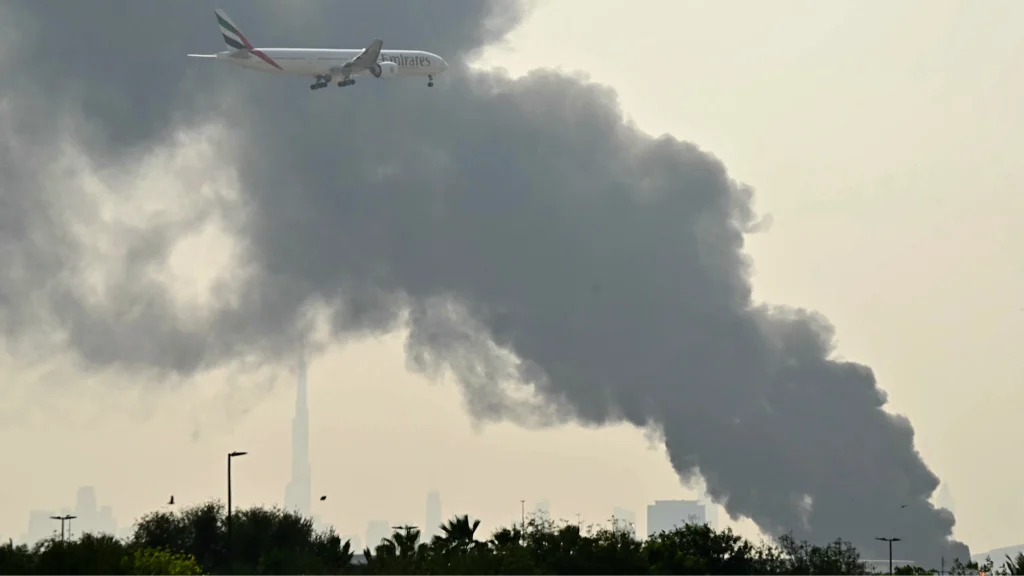
Dubai property transactions reached 252 billion dirhams in the first quarter of 2026, up 31% on the year, though only March of that quarter fell during the war, so the figure largely reflects pre-war momentum. The UAE economy grew 5.1% in the first nine months of 2025, and minister Lana Nusseibeh told the BBC the country would “bounce back.”
When airspace closures stranded roughly 500 golden visa holders abroad, the government organized their return, a show of support the alternatives rarely match. The Indian business council in Dubai says its membership has held and even grown through the crisis.
What has changed is subtler and more lasting: The security premium that made the city special now reads as a variable rather than a constant, and globally mobile wealth prices variables.
Two Problems the Headlines Miss
Two structural facts sit beneath the news, and both matter more than any single missile.
First, the UAE Golden Visa is not the anchor many holders assume. It grants five- or ten-year renewable residency, but it carries no path to permanent residence or citizenship. Philippe May of EC Holdings has long described it as a “long-term nomad visa” rather than a genuine plan B.
In March, multiple outlets reported that the UAE had begun revoking residence permits, including property-linked golden visas, held by Iranian nationals who were outside the country. The government has neither confirmed nor denied the reports, but the episode showed that the same digital system built to assist visa holders can also be used to exclude them.
A citizenship, or even settled permanent residence, does not evaporate by administrative decision in the same way.
Second, relocating within the Gulf swaps the address but keeps the risk. Iran’s retaliation hit Qatar, Saudi Arabia, Bahrain, Kuwait, and Oman as well as the UAE.
Abu Dhabi, Doha, and Riyadh have all built their own campaigns to attract the wealthy, and all three sit under the same threat from the same direction. For someone whose concern is regional conflict, a move from Dubai to Doha is not a hedge. The real alternatives lie outside the region, and each one asks for something Dubai never did.
Why Singapore Draws the First Wave of Capital
Singapore is where the money is actually going. It matches what Dubai offered on safety and prestige, from a location far from the Strait of Hormuz, and it pairs a top-ranked passport with no capital gains tax and no inheritance tax.
Singapore taxes resident income on a progressive scale that tops out in the low twenties percent, where Dubai charges nothing. Its Global Investor Programme (GIP), the main investment route to permanent residence, now requires that applicants commit at least S$10 million (about US$7.4 million) to a Singapore business, S$25 million to an approved fund, or run a single family office holding at least S$200 million in assets. Dubai’s golden visa starts around AED 2 million (about US$545,000).

The GIP grants permanent residence on approval, and investors can apply for citizenship after about two years of residence, but approval is discretionary and Singapore does not allow dual nationality, so naturalizing means surrendering your current passport. The program is also small by design, having granted permanent residence to roughly 450 investors across the decade to 2025.
For a wealthy family that wants an Asian base, a durable passport, and stability far from the Gulf, Singapore is the closest match. You pay for it in entry capital, in income tax Dubai never levied, and in the loss of any second passport if you go all the way to citizenship.
Switzerland Offers Stability You Can Price to the Franc
Switzerland sells the opposite of uncertainty. It is neutral, secure, and politically stable, and for the wealthy it offers a tax deal that is high but fixed in advance.
The mechanism is lump-sum taxation, known as the forfait fiscal. Instead of taxing your worldwide income, the canton taxes you on an assumed figure derived from your living expenses, negotiated and known before you move. For wealthy arrivals the effective rate can land in the low single digits, and the bill does not move with your actual earnings.
The federal minimum taxable base for 2026 sits around CHF 435,000, and in practice the cantons that still offer the regime set annual tax bills from roughly CHF 200,000 to well over CHF 500,000, with higher floors for non-EU applicants.
Twenty-one of Switzerland’s 26 cantons retain the forfait; five abolished it, most by referendum. You cannot work in Switzerland under the regime, you must spend most of the year there, and the country restricts foreigners from freely buying property.
Switzerland will not give you Dubai’s zero-tax headline. It will give you a tax bill you can calculate to the franc and a level of physical and political security that has held through generations of European upheaval. For wealth that values predictability above all, that is the trade.
Monaco Keeps Dubai’s Tax Deal at Riviera Prices
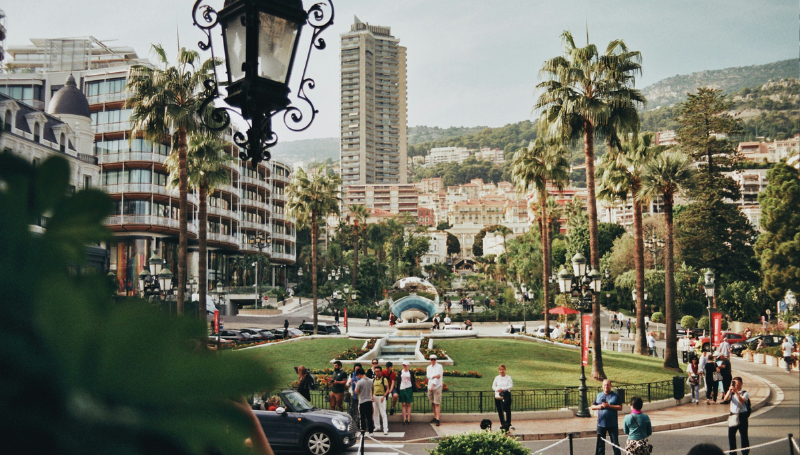
Monaco is the European jurisdiction that keeps Dubai’s core promise intact. It has levied no personal income tax since 1869, and it imposes no capital gains tax and no wealth tax. On the Côte d’Azur, with private security and one of the lowest crime rates in Europe, it offers safety to match.
Monaco runs no investment program; instead, it requires that applicants prove they can support themselves, which in practice means a bank deposit that starts at €500,000 and runs to €1 million or €2 million at many private banks.
Property is among the most expensive on earth, with average resale prices near €52,000 per square meter. The principality is tiny, newcomers cannot realistically naturalize without a decade or more of residence, and French nationals gain no tax benefit because France taxes them under a bilateral treaty.
Monaco also echoes one of Dubai’s new lessons. As of 2026, the principality applies extra scrutiny to applicants holding Iranian, Russian, or Belarusian nationality, a reminder that even the safe havens screen by passport when geopolitics demands it.
A few other options sit on the edges of this comparison. Italy’s flat-tax regime caps tax on all foreign income at a fixed annual sum, raised to €300,000 for anyone who becomes an Italian tax resident from January 1, 2026, with earlier arrivals grandfathered at €200,000 or €100,000.
It gives Europe a second predictable-cost option alongside Switzerland. Hong Kong is absorbing some of the same outflows as Singapore on the strength of low, territorial taxation, though it carries political risk tied to Beijing that Singapore does not.
Turkey, which came through the war largely unscathed behind NATO air defenses, is also weighing a reform that would exempt new residents from tax on foreign income for 20 years with no annual charge, a package that would pair with its existing $400,000 citizenship route if it clears parliament.
And for anyone whose real worry is being trapped, a Caribbean citizenship by investment (CBI) is less a place to live than an insurance layer, a second passport that lets you leave on your own terms regardless of where you are based.
The catch is that durability is exactly what Dubai’s rivals struggle to offer. May puts the citizenship gap plainly: “None of the rival financial centers of Dubai offers an easy route to citizenship: Switzerland takes more than ten years, Hong Kong more than seven, Monaco more than 25, and at its discretion, and Singapore is discretionary too. So, where can they at least get permanent residence? Besides Hong Kong, that means the Bahamas and Panama.
He argues that “these countries will also get an influx of new capital and new permanent residents, even if they may not stay there full time. The mainland Chinese and some others will avoid Switzerland based on the experience Russians and Belarusians have had there in recent years.
“Everyone knows Switzerland dances to the tune of the EU, and may freeze and seize the assets of Chinese nationals on day X.”
He is no more reassured by Singapore: “Singapore did not freeze Russian assets, but its banks quietly kicked many of them out. Not a very risky proposition, but not ideal either.”
The opening, in his view, lies with the smaller players: “There is a lot of upside potential for the Bahamas, Panama, and other independent countries that run small financial centers. Not British overseas territories like the British Virgin Islands, of course.”
What the Choice Reveals
The destinations sort cleanly by what each buyer refuses to give up.
If zero tax is the line you will not cross, the honest options narrow to Monaco, where entry costs are brutal, or to staying in the Gulf and living with the risk the past months exposed. Those who weight stability over the headline rate will find Switzerland hard to beat, with a tax bill fixed in advance and a country that has stayed calm through generations of European wars. And for anyone who wants an Asian base and a top-tier passport, Singapore is the natural home, provided the capital is there to clear the bar.
The deeper lesson of 2026 is about structure, not geography. Dubai showed that a base built on safety you cannot guarantee, held through a permit that can be canceled, is optionality only on paper. The sharpest response among globally mobile families has not been to abandon Dubai outright. It has been to stop treating any single hub as permanent, and to hold a second residence or a citizenship elsewhere, so the next air-raid siren is a reason to travel rather than a reason to panic.