This article is an adaptation of Christian Nesheim’s 28 Rules for Sovereign Individuals.
Most people go through life assuming the system is on their side. That the rules will stay the same and following the script will be enough.
History says otherwise. Every major shock of the last century, from wars and currency collapses to capital controls and asset seizures, punished the same group hardest: People with no alternatives.
A sovereign individual is someone who refuses to be trapped by a single system. Someone who understands that freedom is fragile, that governments act in their own interests, and that optionality is the ultimate form of insurance.
These are 28 rules for building that kind of life. You do not need to follow all of them today. But ignoring them entirely comes at a cost.

1. Never give one country a monopoly over you.
If you hold just one citizenship and one residency, a single government controls your mobility, your tax obligations, and your access to banking. Monopolies produce the same result everywhere: Lower-quality service on worse terms.
You would not give one company a monopoly over your business. Do not give one country a monopoly over your life. Start shifting the leverage away from the state and toward yourself.
2. Never assume where you are from is where you belong.
There are roughly 200 countries and millions of cities on this planet. You were born in one of them. The odds that, out of all those options, your birthplace is the optimal place for your family, your finances, and your freedom are slim.
If you love where you are from, good. Just make sure your roots do not become chains. You can be the first in your lineage to consciously choose where your family will be from going forward.
3. Never pay more tax than legally required.
This is not a philosophical point. It is a practical one. At least 13 preferential tax regimes across eight European countries allow you to pay single-digit effective tax rates while living in otherwise high-tax nations. Territorial tax systems in the Caribbean and parts of Central America can reduce your burden even further.
These are legal structures designed by governments themselves to attract mobile residents. Using them is not avoidance. It is compliance with favorable rules.
4. Never leave yourself open to military conscription.
Fighting to defend your family and your values is one thing. Being forced to fight on behalf of a government that does not have your interests at heart is another. Exit bans tied to military service have trapped citizens in Ukraine, Myanmar, and elsewhere.
A second citizenship or an established residency abroad is the most reliable way to keep this option in your hands, not the state’s.
5. Never rely on the government for protection.
Governments are slow to respond, bureaucratic in execution, and often the source of the threat itself. Kuwait has stripped citizenship from more than 50,000 people since August 2024 in an unprecedented nationality review campaign. These were not criminals. Many were women who had been citizens for decades.
The lesson is that relying on a single government for your security is a single point of failure.
6. Never assume your country wants what is best for you.
Politicians respond to incentives, not affection. They care about you to the extent that you provide tax revenue and votes. A proposed bill in the US Senate would force all dual citizens to choose one nationality or lose their American passport.
It may not pass. But the fact that a sitting senator introduced it tells you something about how states view citizens who build optionality.
7. Never keep all your assets in one country.
A single jurisdiction can freeze your accounts, seize your property, or change the rules overnight. Spread banking, real estate, corporate structures, and investments across multiple countries to eliminate single-country seizure risk.
You would never put your entire portfolio in one stock. Apply the same logic to where you hold it.
8. Never keep all your homes in one country.
A qualifying property investment in a golden visa country is not just a financial asset. It is an emergency landing pad. Sovereign individuals maintain alternate homes they can reach on short notice, whether the trigger is a war, a natural disaster, a pandemic, or government overreach.
Spreading your property across multiple jurisdictions turns real estate from a static investment into a mobility tool.
9. Never keep all your bank accounts in one country.
Canadian truckers had their accounts frozen for protesting. Nigel Farage was debanked in the UK over political views. Cyprus imposed a depositor haircut during the 2013 banking crisis. Capital controls can appear without warning.
Keep bank accounts in multiple countries, and ideally across different geopolitical blocs, so that if one power structure deems you unworthy of banking, your financial life continues.
10. Never expose all your money to a single currency.
Practically every fiat currency in history has eventually gone to zero. You cannot eliminate fiat exposure entirely, but you can spread it across multiple currencies. Pair that with non-fiat stores of value and you reduce your vulnerability to any single central bank’s decisions.
11. Never get emotionally attached to a country.
Patriotism can blind you to declining freedoms. Love people, landscapes, and culture. Do not love bureaucracies and borders. Stay clear-eyed enough to leave when staying becomes a liability.
The best time to plan your exit is when you do not need one. The worst time is when everyone else is trying to leave at the same time.
12. Never tell anyone how much Bitcoin you own.
Bitcoin is the ultimate portable, sovereign currency. It is also a magnet for unwanted attention. Loose lips can attract criminals, regulators, and litigants alike. Discretion about your holdings is not paranoia. It is operational security.
13. Never speak just one language.
Every new language you learn multiplies your opportunities. Spanish opens Latin America. Mandarin gives you access to the world’s largest diaspora network. Portuguese puts you in a position to deal directly with Brazil, Portugal, and their golden visa ecosystems.
Language is leverage, and it compounds. Monolingualism limits your viable life zones.
14. Never stop learning high-value portable skills.
Governments and creditors can take your property. They cannot take your knowledge. Skills that travel with you, whether coding, sales, investing, medicine, or a trade, are your most durable assets.
A sovereign individual is valuable anywhere. If you had to start over tomorrow in a country where you know no one, could you earn a living within 90 days?
15. Never publicly announce your travel plans.
Refrain from broadcasting your movements on social media. Tax authorities, kidnappers, and opportunists of every kind can exploit that information. Your location data is a strategic asset. Treat it like one.
16. Never give bureaucrats more information than required.
Every form you complete can be used against you later. Answer what the law requires, no more and no less. The Common Reporting Standard (CRS) already enables more than 120 jurisdictions to automatically share your financial data.
The Foreign Account Tax Compliance Act (FATCA) adds another layer for Americans. You do not need to volunteer anything beyond what these frameworks already mandate.
17. Never assume laws will remain favorable to you.
Whatever legal or fiscal structure works in your favor today will eventually change. The United Kingdom abolished its non-domicile tax regime after over 200 years.
Portugal ended its Non-Habitual Resident program. Italy has weakened its expatriate tax incentives. The European Court of Justice shut down Malta’s Citizenship by Investment (CBI) program in 2025.
No structure or setup is ever final. Remain diversified across jurisdictions and be ready to adapt on short notice.
18. Always maintain location-independent income.
If your income depends on a physical presence in one jurisdiction, you are anchored there whether you like it or not. Location-independent revenue, from remote businesses, dividends, rental properties, or digital products, is the engine of personal sovereignty.
Could you move countries tomorrow without disruption to your cash flow? If not, start building that capability today.
19. Always make sure a portion of your wealth is portable.
You might have to leave a given country on very short notice. There may not be time to liquidate a property portfolio or sell a business.
Keep a meaningful share of your wealth in assets you can carry with you: Cryptocurrency, gold, diamonds, or other high-density stores of value.
20. Always assume governments will become more restrictive.
A common trajectory throughout history: Countries with a lot of freedom become wealthy. That wealth attracts an extractive state apparatus. The state grows until it suffocates the wealth from which it drew its power. Then it collapses, and a freer system replaces it. Then the cycle starts again.
Recognize which part of the cycle you are in right now, and plan accordingly.
21. Always assume a residency or citizenship will be harder to get later.
The more attractive a country becomes, the more people will want to live there, and the political reflex is to make entry more difficult or more expensive. Residency by Investment (RBI) programs raise their thresholds regularly. CBI programs close or tighten their regulations.
The five Caribbean CBI nations have agreed to harmonize pricing and introduce residency requirements. Golden visa programs across Europe face increasing regulatory pressure. Recognize countries on a good trajectory early. Get residency or citizenship while the getting is good.
22. Always have a counterparty-free way to move money.
Capital controls are not a relic of the past. They could return to both North America and Europe.
Do not assume you will always be able to wire money across borders freely. Bitcoin, physical gold, and other bearer assets provide a counterparty-free transfer mechanism that no government or institution can unilaterally block.
23. Always own assets that cannot be seized.
Asset seizure does not only happen to international criminals. It happens to regular people. Canadian truckers who protested COVID restrictions. Venezuelan business owners during the Chavez era. Dentists who face malpractice claims.
Protect yourself with trusts, foundations, and seizure-resistant assets. The original five-flag theory prescribed splitting your citizenship, residency, business, banking, and lifestyle across different countries for exactly this reason. The principle still holds. Modern sovereignty is built on transparency and documented legal status, not invisibility.
24. Always be prepared to defend yourself physically and legally.
You do not need a black belt or a law degree. But you should establish relationships with competent legal counsel in the countries where you spend the most time.
Six months of training in a martial art puts you ahead of the vast majority of the population. In a world where legal and physical threats can emerge anywhere, preparation is not optional.
25. Always stay physically fit.
Weak or sick people cannot be free. You can have the most bulletproof corporate and tax structures in the world, but none of it matters if you cannot get out of bed. You cannot escape, rebuild, or adapt if your body fails you. Physical resilience underpins every other form of sovereignty.
26. Always think three steps ahead.
Pay attention to the geopolitical horizon. Demographic shifts, debt crises, emerging authoritarianism, and collapsing entitlement systems. The earlier you see patterns, the less you suffer their consequences.
Processing times for Citizenship by Investment programs range from a few months for Caribbean programs to well over a year for a European golden visa residence permit, with citizenship eligibility beginning years after that. The time to act is before you need to.
27. Always keep a portion of your wealth outside of banks and off exchanges.
Bank accounts can be frozen. Exchanges can be hacked. If every cent you own depends on the security measures of a third party, or on remaining in good standing with bureaucrats, you are not sovereign. Hold some assets privately, offline, and under your direct control.
28. Always build a globally distributed circle of kindred spirits.
This may seem like a soft recommendation. It is arguably the most important rule on this list. Freedom is lonely without allies. Build relationships with people who share your mindset across continents.
Trusted personal relationships can open doors even when borders close. They help you get settled in a new place and make a fresh start. When systems collapse, community becomes currency.
These 28 rules are not radical. They are rational responses to a world in which states grow stronger and individuals grow weaker. You do not need to follow all of them today. But the distance between knowing you should have a second passport and actually holding one is measured in years of processing time, rising investment thresholds, and closing program windows.
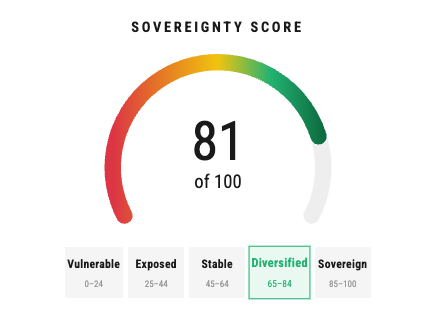
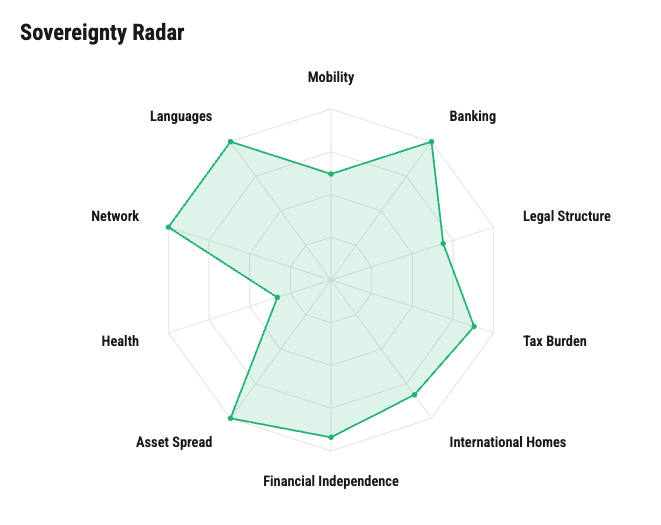
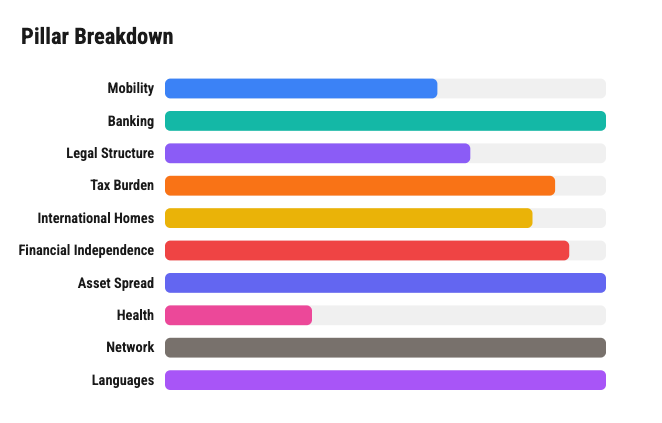
You can explore over 250 residency and citizenship programs using IMI’s Program Finder, calculate where you stand with IMI’s Sovereign Score, or contact a vetted professional through IMI’s Find a Pro directory to start building your plan.