Venezuelan legislators traveled to Montevideo on April 27 and formally asked the Mercosur parliament to take them back. Days earlier, Brazil’s Vice President Geraldo Alckmin had told reporters in Brasília that the bloc could revisit Venezuela’s suspension, describing the country as entering “a different moment,” the first time a senior Brazilian official had openly endorsed reopening the question.
Brasília had kept its distance on Venezuela’s Mercosur status even as it moved to rebuild relations with Caracas after the ouster of Nicolás Maduro and the installation of acting President Delcy Rodríguez in January. Bloomberg reported Alckmin’s remarks on April 23.
Parlasur Session and Colombia’s Backing
Venezuelan lawmaker Saúl Ortega, who led the delegation, argued that Mercosur’s parliamentary body had never itself sanctioned Venezuela, a distinction from the suspension imposed on the bloc’s executive organs in 2017, and fellow delegate Francisco Torrealba said Parlasur would formally decide on Venezuela’s full return at its next session, scheduled for June in Asunción.
Parliamentary readmission would not automatically restore Venezuela’s seat in Mercosur’s decision-making organs, which requires a separate consensus among all state parties.
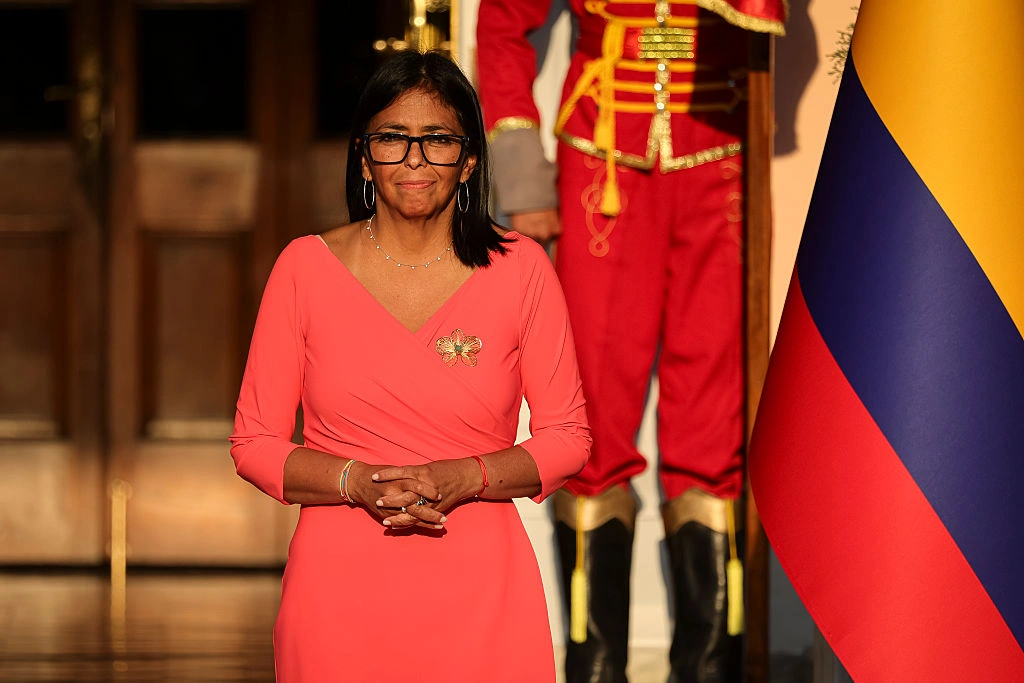
Colombian President Gustavo Petro traveled to Caracas on April 24 for what was described as the first official meeting between a sitting head of state and Rodríguez, and announced on X that Colombia would present a request for the moratorium on Venezuelan participation to be lifted. He had first floated the idea in mid-March, when he said both Colombia and Venezuela would seek full Mercosur membership.
Petro and Rodríguez also discussed border security along the 2,000-kilometer frontier and energy cooperation, including restarting the Antonio Ricaurte binational gas pipeline. Colombia has expressed interest in Venezuela’s electricity sector as Washington-backed oil production ramps up.
The Legal Path Back
Argentina, Brazil, Paraguay, and Uruguay suspended Venezuela from all rights and obligations as a Mercosur State Party on August 5, 2017, invoking the Ushuaia Protocol on Democratic Commitment after consultations with Caracas proved, in the decision’s language, “unsuccessful.” Article 7 of the Protocol says the suspension ceases when the other state parties verify “full restoration of democratic order.” What that means in practice is unclear; the Protocol contains no procedure for conducting such a verification, and it would need the agreement of all five current state parties, including Bolivia, which completed its ratification as a full member in 2024.
Rodríguez herself was Maduro’s foreign minister from 2014 to 2017 and sat through the Ushuaia consultation process that produced the suspension. She then served as his vice president from 2018 until a US military operation captured Maduro in January, after which she assumed acting presidential authority.
At the December 2025 Mercosur summit in Foz do Iguaçu, President Javier Milei called Maduro a “narco-terrorist” and praised US pressure to “free the Venezuelan people,” then joined the presidents of Paraguay and Panama in a joint statement calling for democratic restoration and the release of political prisoners. Neither Brazil’s Lula nor Uruguay’s Orsi signed it.
Argentine media, citing diplomatic sources, have reported that Buenos Aires’s resistance is not purely ideological. Venezuela sits on the world’s largest proven oil reserves, and their potential reactivation under US backing has generated anxiety within the Argentine government and its energy sector, which is betting heavily on the Vaca Muerta shale formation, according to those sources.
EU-Mercosur Deal Goes Live May 1
The EU-Mercosur Interim Trade Agreement (iTA) enters provisional application on May 1, covering more than 720 million people across 31 countries, with tariff reductions on more than 90% of bilateral trade taking effect immediately. All four current state parties completed their domestic ratification procedures by March 2026; Venezuela, still suspended, is not party to the agreement.
In January, the European Parliament voted to refer the deal to the EU Court of Justice (ECJ) for a compatibility review, which suspended the broader ratification track. No ruling is expected before late 2027, so the Commission is proceeding under EU exclusive competence with the trade-only interim agreement, which does not require ratification by all 27 national parliaments.
What Readmission Would Mean for the Mercosur SSB
Venezuela’s suspension cut it out of the Mercosur Residence Agreement, the supranational settlement bloc (SSB) through which citizens of participating states can obtain residency in the others with a clean criminal record. Nine countries remain in the arrangement: Argentina, Bolivia, Brazil, Chile, Colombia, Ecuador, Paraguay, Peru, and Uruguay.
Reinstatement would add a tenth. UNHCR puts the number of Venezuelans who left during the Maduro era at 7.9 million, and many now hold residency or citizenship in other Mercosur member states; readmission would give legal form to a mobility corridor that currently runs on ad hoc bilateral arrangements.
All five state parties would need to agree. Brazil appears open to the idea, but Argentina, for reasons both ideological and economic, does not.