Foreigners applying for Panamanian residency through a property purchase tend to read program decrees closely, comparing thresholds and counting processing days, while paying far less attention to the counterparty who must actually build the asset their residency depends on. In Panama, that counterparty matters more than in most programs.
Panama’s Qualified Investor Visa, the country’s largest investor-visa category since 2022, grants immediate permanent residency, with citizenship eligibility after five years, through three routes: $500,000 in securities through a licensed Panamanian broker, a $750,000 fixed-term bank deposit, or a $300,000 real estate purchase.
Since Executive Decree 193 of October 2024, applicants may also pay developers directly for units still under construction, provided the developer posts a bank guarantee. That change effectively made the developer’s solvency and delivery record part of the residency file.
How the Right Developer Safeguards the Residency
Under the program’s rules, a qualifying investment must be maintained for five years, and pre-construction purchases qualify through a promise-of-sale contract (promesa de compraventa).
If the project stalls, the applicant stands to lose the money and the certification the residency depends on.
Qualified Investor approvals reached 327 in both 2024 and 2025, up from 187 in 2023, with North Americans overtaking Colombians as the largest source market. Volume slowed to 100 approvals in the first half of 2026, part of a broader slowdown across Panama’s capital-based residence categories, though approval rates held at 96%.
New applicants are entering a market where demand outruns supply. Panama’s economy grew 4.4% in 2025, among the fastest rates in the region, and the International Monetary Fund (IMF) projects roughly 4% a year through 2027, while construction output rose 2.7%.
Growth like that attracts new developers faster than it produces finished buildings.
The practical question for any applicant, then, is how to tell a proven builder from a hopeful one. Track record makes a good first filter, ahead of the legal work on contracts, guarantees, and title. How many units has the firm delivered, how many projects has it finished through full market cycles, and do its completed communities still trade well on resale?
An applicant can check those answers without a lawyer, and they narrow the field quickly.
Four Decades of Finished Product
Grupo Los Pueblos (GLP) has been answering that question since 1985. Founded by the prominent Alemán family, the firm has delivered more than 26,000 units over four decades and marked its 40th anniversary in 2025 with 16 new projects in development.
Anyone who has visited Panama City has passed through its work: the Gran Terminal de Transporte moves more than 100,000 passengers a day, and Albrook Mall next door, opened in 1998, ranks among the largest shopping centers in the Americas.
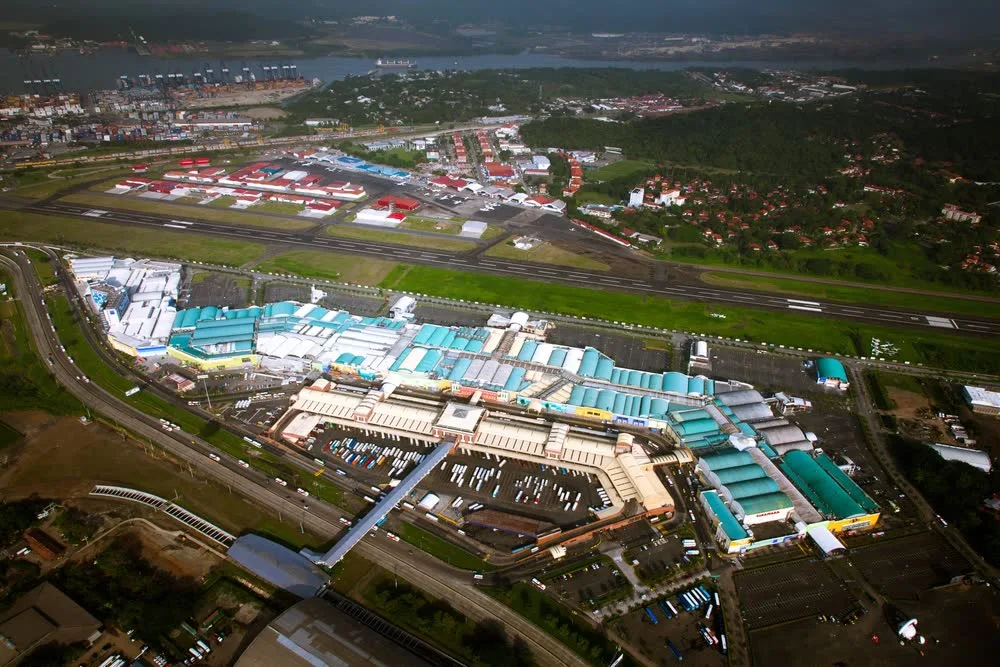
Santa María Golf & Country Club followed in 2014, built around an 18-hole course that still anchors the capital’s luxury residential market.
City, Beach, and Islands: Matching Product to Purpose
A diversified developer can match the asset to the buyer, and Qualified Investor applicants arrive with very different plans. GLP’s current portfolio covers the three geographies they ask about most: city, beach, and islands.
The islands
Ocean Reef, completed in 2018, comprises 19 hectares of man-made ground in the Bay of Panama: the first inhabited residential islands of their kind in Latin America, a short drive from the Punta Pacífica skyline.
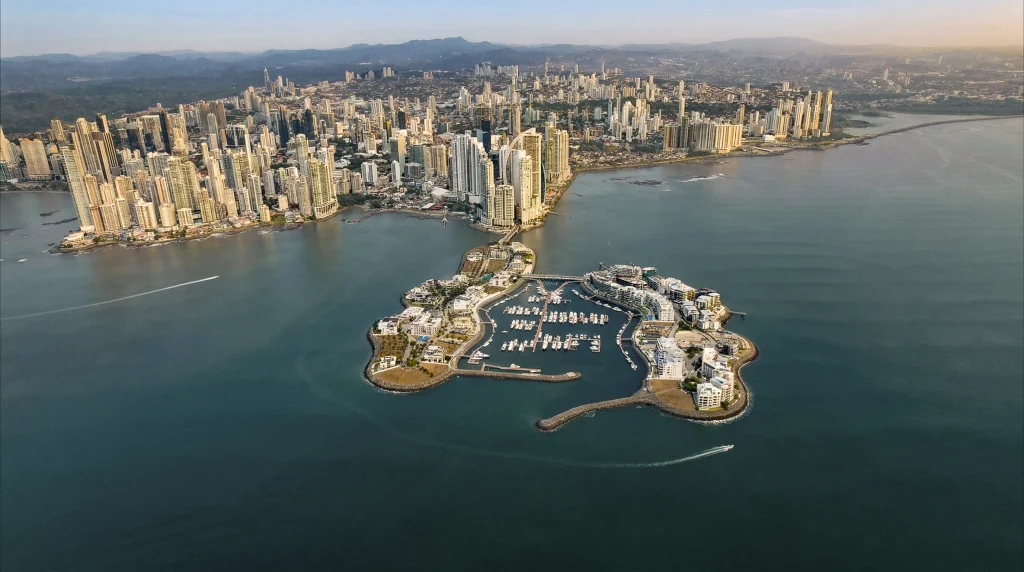
Lot supply is permanently capped, which builds scarcity into the asset. Financing, permitting, and building habitable islands is also about as demanding as residential development gets, which makes the project a credential in itself.
The city
In the capital, the lineup runs from Panamá Viejo Residences and Armonía to Bosco di Santa María, the flagship launched in the firm’s anniversary year within the Santa María master plan.

Bosco rises inside a community that has been complete and lived in for more than a decade. Santa María’s 18-hole course, clubhouse, and finished residences surround the new towers, so a buyer can tour the standard of the neighborhood before the flagship delivers.
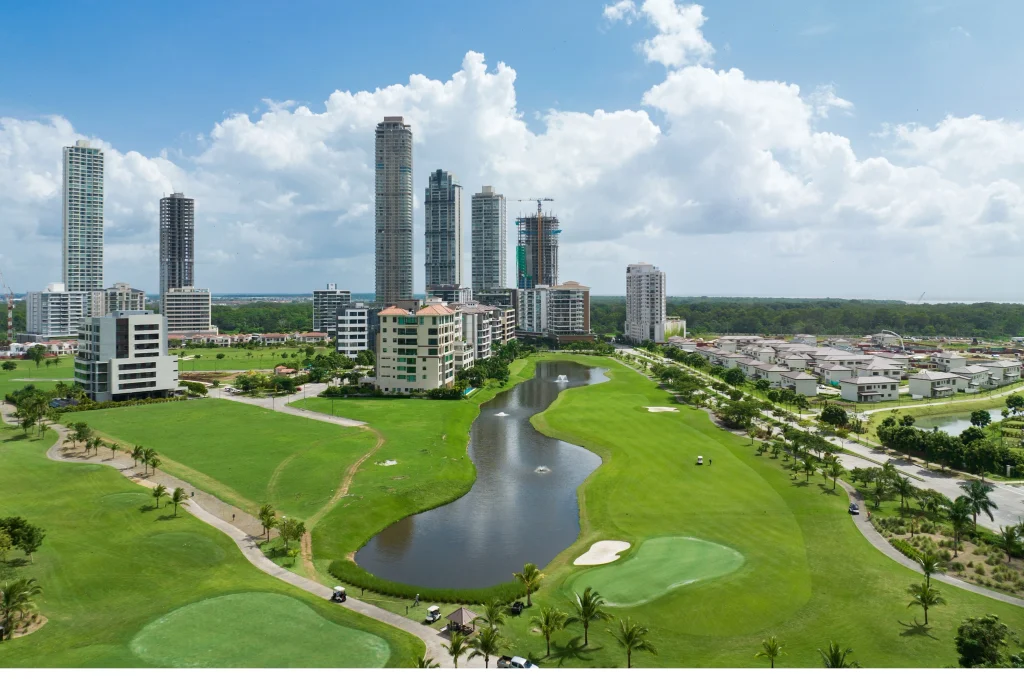
Buyers here tend to want rental yield, a permanent base, or an address beside the golf course.
The beach: Playa Caracol
An hour and 20 minutes from the capital along the Pan-American Highway, Playa Caracol in Chame fronts more than a kilometer of white-sand Pacific beach with views of Cerro Chame.
Behind its 24-hour secured perimeter, residents share the Vento Beach Club with its Italian restaurant and gym, a dedicated surf club offering lessons and rentals, pools for adults and children, sports courts, barbecue pergolas, pet parks, and an on-site market.
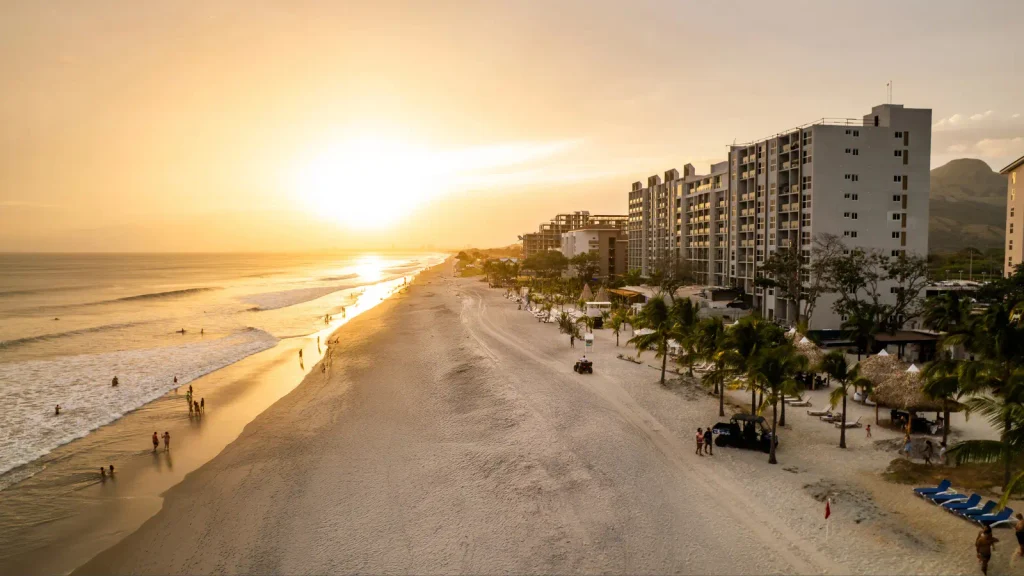
The Tides, the community’s townhouse release, comprises 62 two-level homes of two and three bedrooms from 81 square meters, each with an independent entrance and private patio, roughly 80 meters from the water.
Two- and three-bedroom apartments complete the range for buyers at other price points, for permanent living or vacation rental. Surfing, kitesurfing, seasonal whale watching, and hiking on Cerro Chame are all within reach.
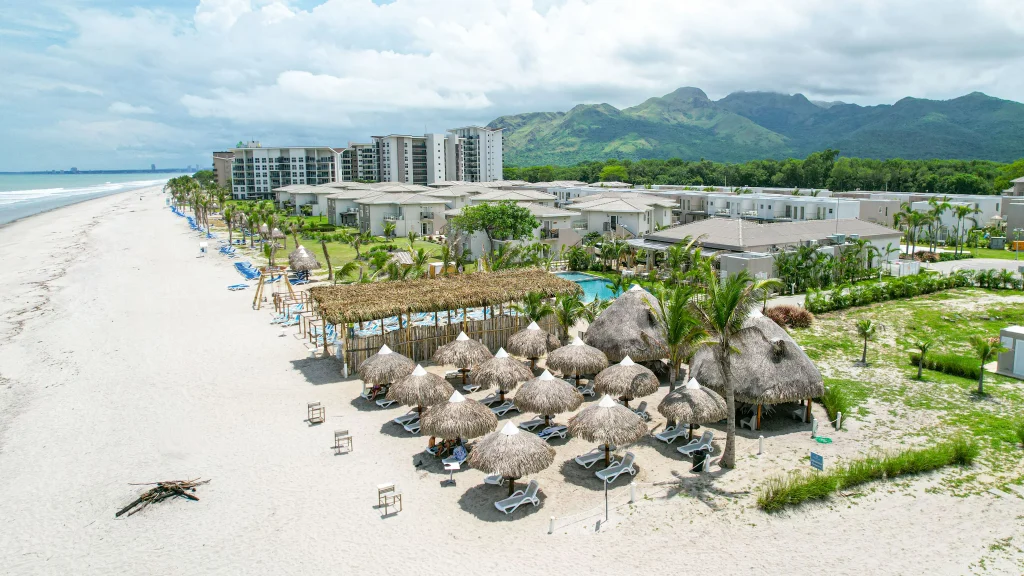
Official tourism data support the rental case. In 2025, the Panama Tourism Authority (ATP) counted a record 3,004,266 international visitors and tourism earnings of nearly $6.6 billion, up 9.7% year on year; the first half of 2026 broke the arrivals record again at 1.75 million, with hotel occupancy averaging 67.6%.
What Finished Looks Like
An investor evaluating GLP can shop Albrook Mall in the morning, drive onto Ocean Reef at midday, and watch the sun set from Playa Caracol before committing a dollar. Every stop on that itinerary is a finished, occupied project.
That is the value of a 40-year record: the work can be checked before any money moves. In a program where the property carries the residency, that kind of verification is worth the trip.
For inquiries and project details, contact Grupo Los Pueblos (GLP).