
10 On The Weekend is a weekly (-ish) feature in IMI, the concept of which is simple: Each time, we ask the same ten questions of a different IMI Pro, letting readers get to know the interviewee on a more personal and informal level than they might during the ordinary course of business.
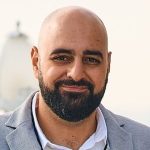
Our guest this week is Harsev Oshan, Head of Global Strategic Initiatives at World Talents
How do you spend your weekends?
Weekends are my reset button. Living in Vancouver means some work calls start before dawn and others stretch late into the night, so days can blur together. By Friday evening, I’m ready to slow down. I spend most of that time with my fiancée and our French bulldog, Coco.
We might take Coco to the seawall or linger over coffee at home, just being together. Occasionally, I’ll meet friends for a slow meal in the city, but mostly I clear space to breathe. The point isn’t to get ahead, it’s to come back rested so Monday’s decisions are grounded.
What are your top three business goals this year?
My goals this year aren’t measured in numbers.
First, I want to build more space for reflection and empathy within what we do at World Talents.
Second, I hope to deepen partnerships with universities, civic groups, and governments so the broader ecosystem is stronger.
Third, I’m investing in mentoring younger advisors so that trust and long-term thinking endure beyond any individual. These feel less like a business plan and more like stewardship.
What’s your biggest business concern right now?
The thing that nags at me on a Sunday morning isn’t revenue, it’s how quickly politics can upend people’s lives. The global order has grown increasingly restrictive, and even hostile, toward human mobility, even as instability forces more people to move. One day, a passport opens doors; the next, those doors are shut.
Behind every policy debate, there’s a child who needs a sense of home. Navigating uncertainty is part of our work, but unpredictability should never be taken lightly.
Which book is on your nightstand right now?
These days, what sits closest to my bed is my phone, which is used less for messages and more for an app called Audible for audiobooks. I’ve been listening to Ari Wallach’s Longpath: Becoming the Great Ancestors Our Future Needs.
The book challenges our instinct for short-term reactions and asks us to widen our perspective beyond the immediate moment, even beyond our own lifetimes. Wallach repeatedly returns to a simple question: To what end?
As someone who grew up stateless but now helps people navigate uncertainty, that question resonates deeply. I take it with me on evening walks, reflecting on how long-term humility applies not just to work, but to personal and professional relationships, belonging, and citizenship as well.
How and when did you first get into the investment migration industry?
I never set out to work in residency and citizenship. I was stateless in Kenya as a teenager, and leaving felt remote. An International Leaders of Tomorrow scholarship from the University of British Columbia brought me to Vancouver, where I learned firsthand how paperwork and policy can open or close futures.
My path into this field wasn’t linear. While working at Cognitive3D as a business development manager, a Vancouver startup, a vice president from a local investment migration firm asked if I could help establish startups in Portugal.
At the time, I still didn’t have a passport, but the idea of building something across borders intrigued me. Thirteen months later, after finally becoming a Canadian citizen, I left that job to travel.
A few weeks in Portugal made me fall in love with the country. On that same trip, the founder of what would become World Talents messaged me on LinkedIn; we met in Florence in March, and by September 2024, I was working alongside him. Curiosity, not strategy, brought me here.
What was your proudest moment as a service provider?
There isn’t a single moment I point to as my proudest. Instead, there’s a quiet accumulation of moments that stay with me. World Talents’ model emphasises meaningful connections between universities and companies, alongside incubation, acceleration, and specialised training in Portugal.
Whenever we match an investor with a university ecosystem, I feel a subtle shift take place. Conversations that begin with risk and return slowly open into mentorship, learning, and long-term contribution. Seeing that transition happen, again and again, reminds me why I’m in this work.
The pride comes not from a headline outcome, but from witnessing relationships form that wouldn’t have existed without patience, trust, and care.
Which investment migration market development has surprised you the most in the last year?
After years in this field, 2025 surprised me with how quickly mobility itself was questioned. We began asking whether global travel would remain a core value, and by December Norway was denying citizenship-by-investment passports entry while Caribbean governments coordinated responses to potential US restrictions.
I have always said investment migration is about people navigating uncertainty, not just residency and passports. Seeing governments openly question the legitimacy of certain passports underscored how rights we take for granted can be renegotiated overnight.
If you could go ten years back in time, what business decision would you change?
In 2016 I assumed borders would stay open and the global order would hold. If I could revisit that moment knowing a pandemic was four years away, I would take the coming disruption more seriously.
I might have invested earlier in digital tools and remote workflows rather than scaling a practice that relied on direct face-to-face communication and interactions. I would have spent more time learning about AI and data infrastructure.
That doesn’t mean I regret the path I chose; it taught me resilience, but I’d approach it with more humility about how quickly technology and geopolitics can shift.
What investment migration industry personality do you most admire?
I admire Professor Michael Doyle, who helped draft the Model International Mobility Convention. His work isn’t flashy, but his moral clarity speaks to me. He puts forward a simple idea: “Everyone should have all of their rights met somewhere,” yet “no one should be able to exercise all of their rights everywhere”.
That balance between universal dignity and respect for sovereignty guides how I advise clients.
Doyle convenes academics, NGOs and policymakers to build frameworks that outlast political cycles. In an industry full of marketing, his quiet scholarship is a north star.
If all goes according to plan, what will you be doing five years from now?
Five years from now, I hope to be living by the same pillars I measure today: nurturing my relationship with my fiancée (and, by then, perhaps wife) and our family, maintaining financial stability, keeping friendships close, and contributing to the communities I call home.
I plan to spend more time in Portugal, splitting my year between Vancouver and the Algarve or Lisbon, and if the laws stay the same, to pursue Portuguese citizenship.
Professionally, I’d like to continue mentoring and building humane systems, but my definition of success will be personal and communal, not outward markers.



