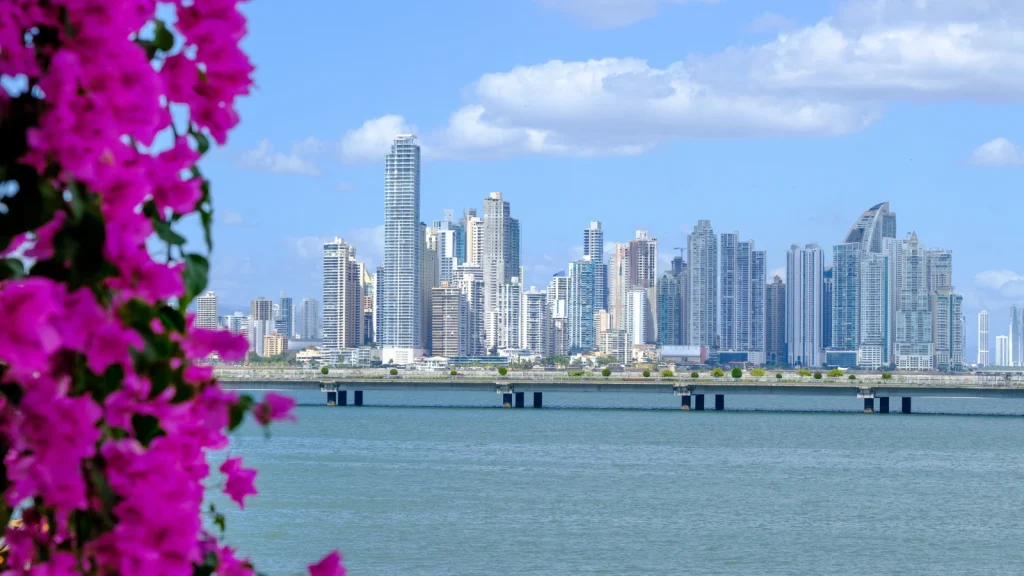
Stand anywhere along Panama City’s waterfront, and the ships are there, anchored in the bay and waiting their turn at the Canal. For more than a century, the world has passed through Panama on its way somewhere else.
More of it is now choosing to stay. Between July 2025 and June 2026, Panama’s Ministry of Commerce and Industries (MICI) issued 268 Qualified Investor certificates backed by $113.6 million, a 38.9% jump on the year before.
The average certificate represented roughly $424,000, comfortably above the $300,000 floor, which suggests investors are buying the homes they want rather than the cheapest ones that qualify.
Colombians led the applicant pool from the program’s launch in 2020. By late 2025, however, the ministry reported that investors from the United States and Canada had taken the top spot, pushing Colombia to third.
For years, residence planning was a neighborhood affair, and investors gravitated to whichever program sat closest to home. Panama’s new buyers are choosing it on its merits, and those merits travel well.
A Permanent Address, Without the Move
Most residence programs make investors earn permanence: A temporary card first, then renewals, then years of waiting. Panama hands it over on approval, and nothing obliges a qualified investor to live in the country before or during processing.
Keeping it asks for one visit every two years. For an investor whose life is anchored elsewhere, Panama becomes a standing option: A fully furnished Plan B that waits, quietly, until it is needed.
Even the bureaucracy runs on a clock. The rules give MICI 15 business days to certify an investment and the National Migration Service (SNM) 30 business days to rule on a complete file.
Nationality does not change the terms. Panama’s Friendly Nations visa is reserved for citizens of designated countries, but the Qualified Investor route turns on the investment itself, which helps explain why its buyer list keeps widening.
Families can grow inside the status, too. A spouse married after approval, and children born or adopted later can join for $2,000 apiece in government fees.
Money That Thinks in Dollars
Panama has used the US dollar as legal tender since 1904, and its own balboa trades at par. An apartment in Panama City is a dollar asset collecting dollar rent, which is no small consideration for a family whose wealth sits in a currency with a more temperamental history.
Taxes stop at the border. Panama’s system is territorial, so income earned abroad is not taxed in Panama.
What that is worth depends on the investor’s home country. A US citizen stays taxable on worldwide income wherever he lives, while other countries apply their own tests for when tax residence ends, and investors who map that interplay before buying keep far more of the benefit.
A Road to a Second Citizenship
For the first time, the program’s rules spell out a route to citizenship. Qualified investors and their dependents may apply for naturalization after five consecutive years of residence, with their files handled through MICI’s investment window.
For families thinking in generations, that may be the real prize. Naturalization is not automatic, however, and the rules leave undefined how much time in Panama counts as residence, so the presence an investor should plan for is a question to settle with counsel before the clock starts.
The $200,000 Question
Executive Decree No. 17, in force since September 16, 2026, split the real estate route in two. A new, unoccupied home bought from its developer still qualifies at $300,000, but anything previously sold, leased, or occupied now requires $500,000.
Panama made the choice deliberately. The decree’s preamble casts it as construction policy, arguing that new-build purchases do far more for jobs than resale deals, and for buyers the result is an entry price $200,000 lower when they buy new.
Every other route costs more: $500,000 in qualifying securities, $500,000 in a five-year deposit at one of Panama’s two state-owned banks, or $750,000 at a private bank. A new home is now the most economical way into the program, and the only one at that price you can live in.
The decree also makes the developer’s track record a residency question. Off-plan buyers who pay in full must hold an irrevocable bank guarantee until the finished unit is registered in their name, and if a developer misses its deadlines, the investor can execute that guarantee and has 180 business days to redirect the investment.
The paperwork has teeth. First-sale status must be proven through the Public Registry; the qualifying amount is the lower of the price paid and the property’s substantiated value, and every dollar must be the applicant’s own and traceable, with gifts excluded. A misstep on any of those can sink an application, which is why the choice of property and the structure of the purchase belong together from the start.
The Firm That Built Islands
GLP Properties has been shaping Panama since 1985. It built the first habitable artificial islands in Latin America and the region’s largest shopping center, and it has delivered more than 60 developments, with over 6.2 million square meters now under development.
Under the new rules, that record carries legal weight as well as reputational weight. Every GLP Properties home is first-sale inventory, transferred straight from the developer, and the firm designs, builds, sells, leases, and manages its communities itself.
For an owner who flies in twice a year, that last point matters most. The company that poured the foundations is the same one that answers the phone.

Pick Your Panama
GLP Properties builds master-planned communities that run as self-contained neighborhoods. Each has its own character, and its own kind of owner.
Ocean Reef Islands rises from two artificial islands in the heart of Panama City. Villas and residences share the address with a private marina, for owners who would rather arrive by boat.
Santa María wraps apartments and single-family residences around an 18-hole golf course. Inside it, Bosco di Santa María tucks low-density buildings among walking paths and greenery with more than 45 amenities, while Oceana Residences & Skyhomes stacks penthouses and flexible floor plans for buyers who want the view from the top.
Playa Caracol, in Chame, is where the mountains come down to more than a kilometer of Pacific beachfront, with restaurants and shops already open. Its The Tides collection offers single-family homes and two-level townhouses, the kind of weekend house that has a habit of becoming a full-time one.
Closer to the action, Vibe sits minutes from the Cinta Costera, mixing one-, two-, and three-bedroom apartments with an aparthotel and retail across three phases, a combination that suits investors watching yield.
Ipanema brings the beach to the doorstep, with oceanfront apartments set around a private man-made beach and resort-style amenities. Any GLP Properties home priced at $300,000 or more sits in the first-sale tier, so the choice comes down to how an owner means to use Panama: As a retreat, a rental, or eventually a home.
Where to Start
The right home depends on things only the buyer knows: His nationality, his tax position at home, the family he wants to bring under the status, and whether he wants keys now or a unit still rising. Each answer changes which properties qualify and how the purchase should be structured.
GLP Properties’ international team works with buyers and their advisors from the first conversation, matching each investor to a community and a unit that clear the first-sale bar and fit the life he has in mind. To book a private consultation, visit our website or use the form below.