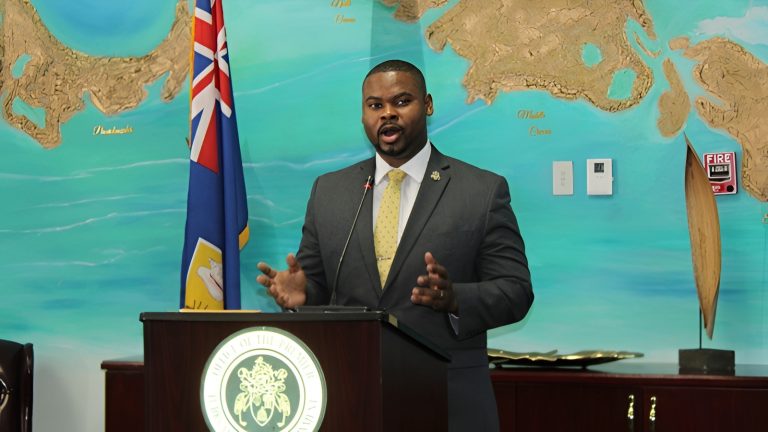

Grenada will seek to preserve both its citizenship by investment (CBI) program and its citizens’ visa-free access to Europe’s Schengen Area, Prime Minister Dickon Mitchell told reporters after his swearing-in for a second term.
“Grenada’s position will be that we would like to maintain both,” Mitchell said, according to NOW Grenada, which reported that he expects the talks with Brussels to require careful negotiation.

The European Commission asked Antigua and Barbuda in a June 25 letter to phase out its program by June 1, 2028, and Grenada, Dominica, Saint Kitts and Nevis, and Saint Lucia received similar letters, according to Antigua’s government. Prime Minister Gaston Browne has said Brussels wanted each government’s answer by November 12.
Mitchell’s National Democratic Congress (NDC) won 14 of the 15 seats in Parliament in the November 5 general election, according to provisional results, and he took the oath of office on November 8. His government has not said publicly whether it sent Brussels a written response, according to NOW Grenada.
Grenada hosts the headquarters of the Eastern Caribbean Citizenship by Investment Regulatory Authority (ECCIRA), the regional regulator the five governments agreed to create in September 2025.
Saint Lucia
Saint Lucia has answered the Commission in writing, Prime Minister Philip J. Pierre told a pre-Cabinet press briefing on November 9, but he declined to disclose what the letter says.
“We have written a letter to the EU,” Pierre said. “I don’t think we should make a letter to the EU public.”
He promised that he or Deputy Prime Minister Ernest Hilaire would brief the public once Brussels acknowledges receipt. “You can’t write a letter to somebody, and before they receive the letter, you disclose what’s in the letter,” Pierre told reporters.
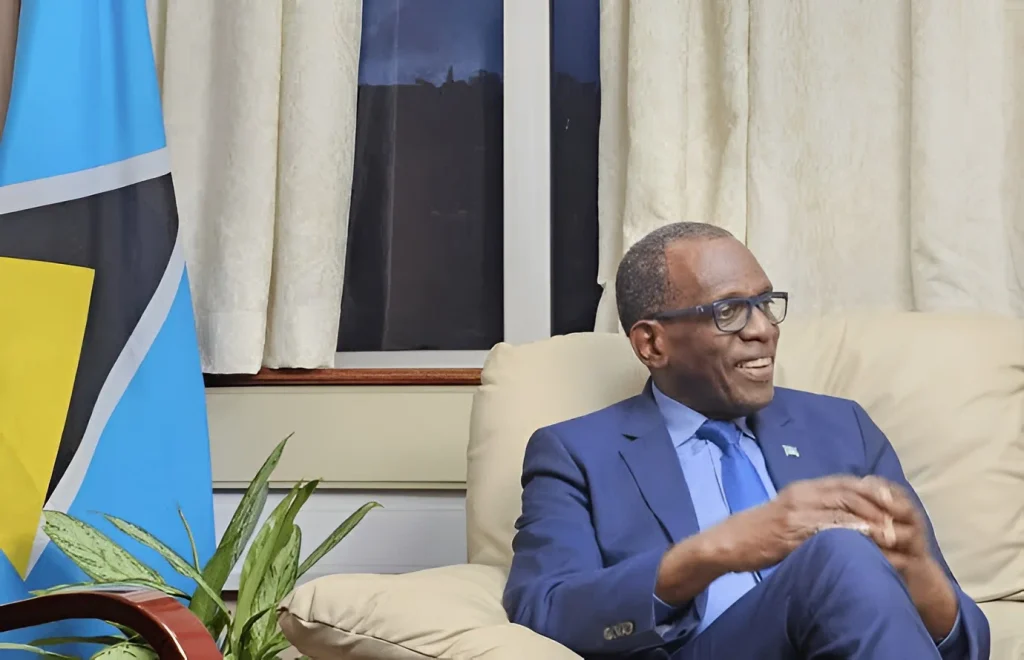
According to Pierre, the EU had given the governments “up to the 31st of October” to declare whether they would continue their programs, before granting an extension to November 12. Hilaire led the delegation from the Organisation of Eastern Caribbean States (OECS) to the talks in Brussels, Pierre said.
“The EU has said that they would like us to stop these programs,” the prime minister acknowledged.
Pierre also said his country relies on program revenue less than its neighbors do: “You must understand, St Lucia depends the least on CBI revenue.”
Brussels
Brussels has not confirmed the November 12 date in public. Inter Bellum News published an on-record response from a Commission spokesperson on November 12 that did not confirm it either.
“In line with the EU Visa Regulation, the European Commission has informed the five Eastern Caribbean partners currently operating Citizenship by Investment programs of the incompatibility of such CBI schemes with the visa-free regime they enjoy with the EU, due to security concerns,” the spokesperson said.
According to Inter Bellum News, the Commission is discussing a roadmap with the five governments that would combine risk-mitigation measures with the eventual discontinuation of the programs. Its spokesperson said that “the details of such a phase-out are still under discussion” and called the creation of ECCIRA “an important regional development.”
The Dutch Ministry of Foreign Affairs said in a written reply published by the same outlet on November 6 that the Netherlands wants the five states to abolish their programs. It also said it “has no information showing that the EU has formally set such a deadline.”
No Commission proposal to suspend visa-free access for any of the five exists at present, according to the ministry. Regulation (EU) 2025/2441, in force since December 30, 2025, made an investor citizenship program a grounds in its own right for such a suspension.
Brussels called the Eastern Caribbean programs “a persistent and serious security concern” in its eighth report under the visa suspension mechanism, published in December 2025. Its next report is due in December.
Antigua & Barbuda
Antigua and Barbuda, the only one of the five whose response is public, sent it as an October 30 letter from Browne to EU Commissioner for Internal Affairs and Migration Magnus Brunner. The letter states that “Antigua and Barbuda is prepared to terminate its Citizenship by Investment Program,” on condition of an impact assessment, an EU package of budget and development support, and a transition to the end of 2030.
According to the letter, Brunner moved the deadline to the end of October when the two met in New York in September. Browne wrote that the deadline “was further extended to 12 November 2026” at an October 20 technical meeting in Brussels with the Commission’s Directorate-General for Migration and Home Affairs (DG HOME).

Commission officials tabled three options at that meeting, the letter says. Under the first, a country continues its program and loses visa-free access, with a decision that “would likely be announced in January 2027 and take effect from around March or April 2027.”
Pending responses
Dominica said on October 28 that it “will communicate further with the European Union by 12 November 2026,” and Roseau has not said publicly whether it did.
Saint Kitts and Nevis Prime Minister Terrance Drew will deliver a national address on the federation’s CBI program at 6:30 p.m. local time on November 13. Drew said at his November 5 press roundtable that “whatever the decision is, St. Kitts and Nevis is already on a path to live without CBI.”
IMI will update this report with Drew’s address and any statement from Dominica or Brussels.
IMI program guide: Grenada Citizenship by Investment