A discussion draft of legislation reviewed by IMI would reauthorize the EB-5 Regional Center Program through September 30, 2032, five years beyond its current expiry. It would also require that each investor create 15 jobs instead of ten and leave his capital invested for 40 months instead of two years.
The text, now circulating among EB-5 practitioners, is titled the EB-5 Recommitment to Integrity and Transparency Act. Senate Legislative Counsel dated it November 12; it bears no bill number and names no sponsor.
Mona Shah, managing partner of Mona Shah & Associates, calls it “Senator Grassley’s initiative” and the vehicle for a reauthorization that Congress would otherwise face before September 30, 2027.
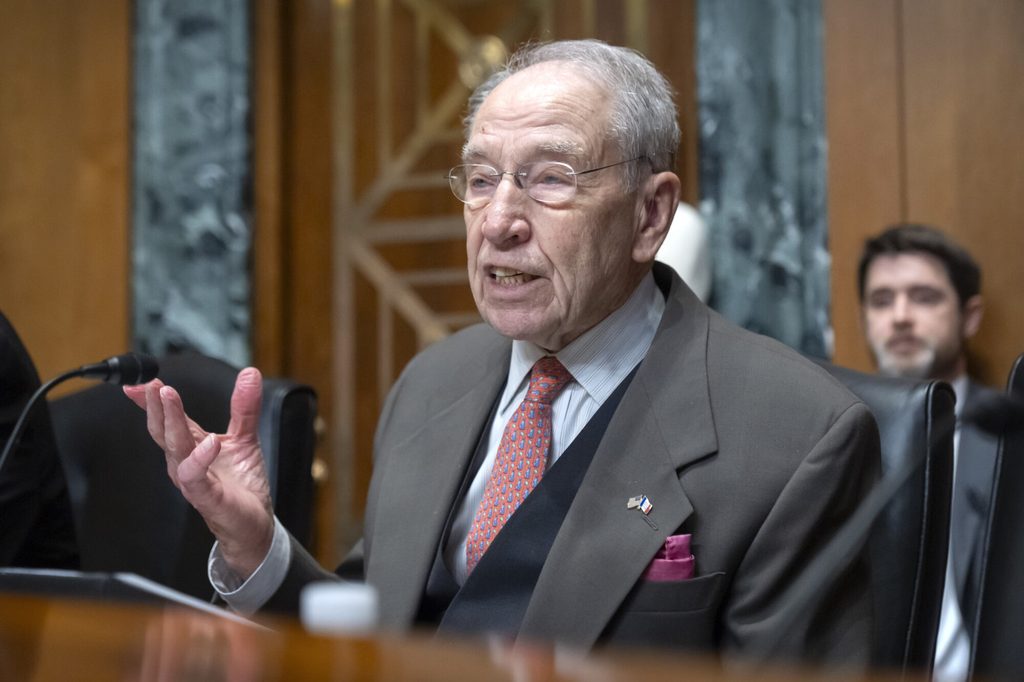
Chuck Grassley, the Iowa Republican who chairs the Senate Judiciary Committee, co-authored the EB-5 Reform and Integrity Act of 2022 (RIA), which the draft amends. He “wants the reauthorization signed, but with the stricter conditions attached,” Shah told IMI.
The plan, in her words, “is to attach it to a must-pass bill, such as a funding measure, before the new Congress takes over.” Federal funding runs out on December 11, “so that is the obvious vehicle.”
What the Draft Changes
Under the draft, jobs created per investor rise from ten to 15 (12 for rural set-aside visas), the minimum investment period from two years to 40 months, and the share of visas reserved for infrastructure projects from 2% to 5%.
Inflation adjustments to the minimum investment would follow every three years instead of every five after January 1, 2027.
| Provision | Current law | Draft bill |
|---|---|---|
| Jobs per investor | 10 | 15 12 for rural set-aside visas |
| Minimum investment period | 2 years | 40 months Counted from full funding |
| Visas reserved for infrastructure projects | 2% | 5% |
| Inflation adjustment of minimum investment | Jan. 1, 2027, then every 5 years | Jan. 1, 2027, then every 3 years |
| Regional Center Program expiry | Sept. 30, 2027 | Sept. 30, 2032 |
| Filing cutoff for lapse protection | Sept. 30, 2026 | June 30, 2032 |
The program’s expiry moves from September 30, 2027 to September 30, 2032, and the filing cutoff for protection against a lapse moves from September 30, 2026 to June 30, 2032.
Raising the job count by half cuts the number of investors a project can accept by a third. A development whose economic model supports 600 jobs can take 60 investors today and only 40 under the draft; at the $800,000 minimum for targeted employment areas, the raise shrinks from $48 million to $32 million.
Shah considers the increase “workable for regional center projects” but warns that “it will be difficult for standalone, direct projects.”
Regional center investors may count indirect jobs, estimated through economic models, toward as much as 90% of the requirement. Direct investors cannot.
For visas drawn from the rural set-aside, the figure is 12 jobs. Infrastructure investors, whose reserved share of visas would rise from 2% to 5%, get no such discount.
Rural and high-unemployment reservations remain at 20% and 10%, so the unreserved pool narrows from 68% to 65% of the annual total.
Under the draft, the 40-month clock starts only once an investor’s entire capital is in the new commercial enterprise (NCE) “with a binding obligation to a job-creating entity.”
Partial funding does not count. Two years is the minimum under current law, and the proposed regulations that the Department of Homeland Security (DHS) published in July are built on the same figure.
IIUSA, the regional center trade association, sued in 2024 to overturn that two-year reading and asked for five years instead. A July 2025 court order declined to decide the question and left the guidance in place while DHS wrote its rule.
Minimum investment amounts ($800,000 in targeted employment areas, $1.05 million elsewhere) are untouched, as is the first inflation adjustment due on January 1, 2027.
Later adjustments would come every three years instead of every five, putting the next one in 2030.
Lapse protection would also be reset. Under current law, US Citizenship and Immigration Services (USCIS) must continue processing regional center petitions filed on or before September 30, 2026, even if the program’s authorization expires; anyone who has filed since has no such shield. The draft moves that cutoff to June 30, 2032.
Source-of-Funds Checks, Bank Transfers, and Named Agents
DHS would gain express power, under the integrity section, to request updated financial records from an investor, his spouse, or his dependents “at any time before” USCIS adjudicates the Form I-829 petition that removes conditions on residence. Approval of the initial petition would no longer close the source-of-funds file.
Shah finds that prospect “definitely unsettling, especially given the recent standard USCIS has been expecting.” By her account, the standard of proof “is supposed to be on a balance of probabilities,” yet adjudications are running “at beyond reasonable doubt.”
Investors who moved money through a third-party currency exchanger would have to prove that the exchanger’s own funds were lawful and that it was “a legitimate money service business.”
Capital would also have to travel through a regulated financial institution, defined by reference to US banking law as an insured depository institution.
As drafted, that clause describes transfers “to a regional center,” although investor capital normally goes to the NCE or an escrow account; the wording is likely to change.
Regional centers, NCEs, and job-creating entities (JCEs) would be barred from providing “loans, financing, or supplemental capital” to investors, directly or indirectly, to help them meet the minimum. Shah reads that as a sign “that the government does not want to encourage loans, but rather encourage the flow of overseas capital.”
For migration agents, the sharpest change is a requirement that every promoter enter his name and USCIS registration number on the investor’s Form I-526 or I-526E. When a promoter fails to do so, the regional center, NCE, or JCE he works for could face sanctions; the same entities could face sanctions or liability for “any actions or misrepresentations” by their promoters.
“The promoter provisions will bite,” Shah predicts, and the disclosure “will definitely put some promoters off.” She expects that “part of the agent community will resist being named on petitions.”
Oversight would widen in parallel. USCIS would run at least two public engagement meetings a year and publish quarterly filing and enforcement data broken down by nationality and by regional center.
Within 30 months, the Government Accountability Office would report on the program, and DHS would have 270 days to issue implementing rules without the usual notice-and-comment period.
Section 8 and Investors Who Have Already Filed
Section 8, the draft’s final clause, applies its amendments and those of the RIA to every investor, promoter, and entity “without regard to the date on which such entities filed, petitioned, or started business.” No transition rule or exemption for pending cases appears in the provisions IMI reviewed.
Read literally, that would subject investors with pending petitions to the 15-job and 40-month requirements, although they invested under ten jobs and two years. Some could not comply after the fact: an investor already repaid after two years cannot return to the project, and a completed development cannot add jobs.
Congress took the opposite approach in 2022, when the RIA exempted investors who had filed before its enactment from its changes to the removal-of-conditions process. How far Section 8 would reach in practice is unsettled. Its heading calls it a “rule of construction,” and the text sets out no procedure for reopening cases that USCIS has already approved.
Shah’s advice is that “existing investors should look closely at Section 8, which applies the amendments regardless of when an investor filed or an entity started business.” The extended lapse protection offers them nothing on this point; it guards against a program shutdown, not against new eligibility rules.
A December Vehicle and Grassley’s “Last Stand”
No date has been set for the draft’s public release or formal introduction, as far as Shah is aware, and “there is not a lot of time for lobbying here.”
Lawmakers returned on November 9 for a five-week lame-duck session and must pass a funding bill before December 11 to avoid a shutdown; States Newsroom reports that another stopgap running into next year is the expected outcome.
The Regional Center Program has usually been renewed by riding a spending measure. Short-term extensions traveled in appropriations bills for years, and the RIA itself became law inside the March 2022 omnibus.
That followed a standalone Grassley bill that failed on a single senator’s objection in June 2021, after which the program lapsed for nearly nine months.
The December route will surprise few in the market. IIUSA reported on September 30 that its leaders had spent the month lobbying Congress for reauthorization through fiscal year 2032 “as part of the upcoming December federal funding package,” and Shah adds that word of the plan reached practitioners “a couple of months ago.”
Missing that window would not end the program, which is authorized until September 30, 2027. But a draft not enacted this year, Shah notes, “would have to start again in a new Congress under different leadership.” Grassley’s chairmanship of the Judiciary Committee ends when the current Congress does.
Support for EB-5 crosses party lines, in Shah’s assessment, so she reads the timing as personal: “I believe this is more about Grassley’s last stand.” She expects the 93-year-old senator to resign in 2027.
His office insists otherwise. A spokesperson told CBS News on November 4 that “Senator Grassley is not resigning,” and his term runs until January 2029.
Two changes arrive regardless of what Congress does in December. New USCIS filing fees apply from November 30, and the first inflation adjustment to the minimum investment follows on January 1, 2027.