
Colombian President Gustavo Petro declared on April 9 that the Andean Community of Nations (CAN) was finished for his country, ordering his foreign minister to begin the formal process of joining Mercosur as a full member.
The announcement followed Ecuador’s decision to raise tariffs on Colombian imports from 50% to 100%, effective May 1.
“This is simply a monstrosity, but it means the end of the Andean Pact for Colombia. We have nothing left to do there,” Petro wrote on X. Foreign Minister Yolanda Villavicencio confirmed that Colombia had already filed to upgrade from associate to full Mercosur membership.
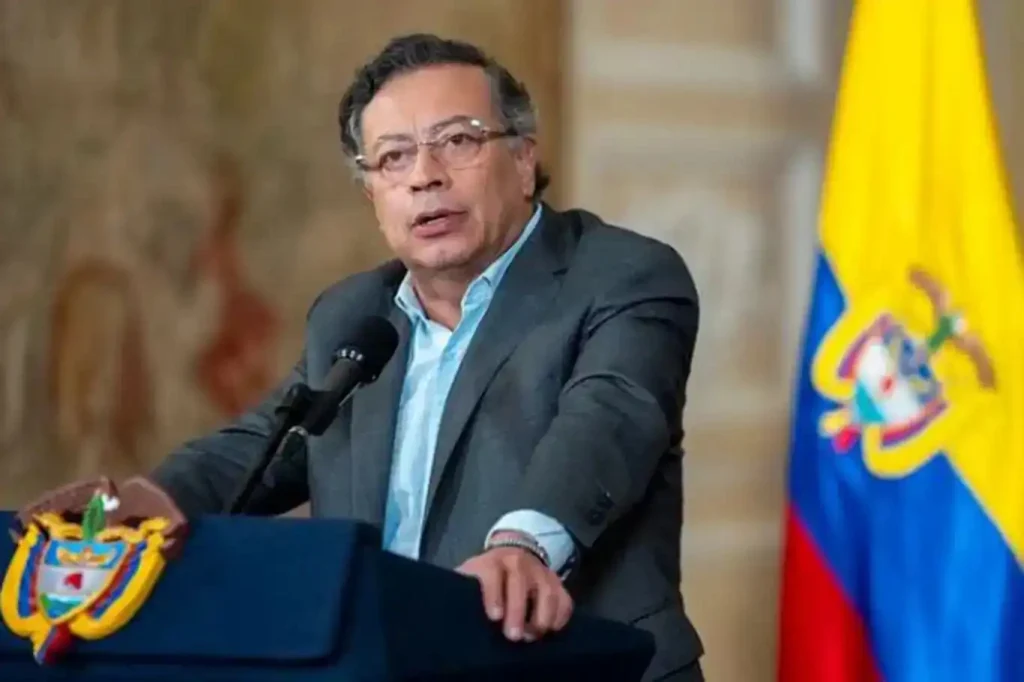
From retaliation to reversal
Colombia’s initial response was symmetrical. On April 10, Commerce Minister Diana Marcela Morales announced matching 100% tariffs on Ecuadorian goods. Petro overruled her three days later at a cabinet meeting in Ipiales, the border city bearing the brunt of the trade collapse.
His reversal was blunt. Essential Ecuadorian goods would enter Colombia at 0% duty, he told his commerce minister on live television, while domestic production would replace everything else. Exports that Ecuador’s tariffs had blocked would be redirected to Venezuela.
The conflict is now lopsided. Ecuador maintains 100% tariffs on all Colombian products. Colombia charges nothing on essentials and subsidizes domestic substitution for the rest. Petro framed this asymmetry as pragmatic: he leaves office after the July 28 inauguration of his successor, and an inflationary spike in border departments would be his parting legacy.
Two blocs, one overlap
For readers tracking supranational settlement blocs (SSBs), Petro’s threat raises a structural question about South America’s overlapping free-movement architecture.
CAN, founded in 1969 under the Cartagena Agreement, provides its four members (Bolivia, Colombia, Ecuador, and Peru) with visa-free entry using national identity cards and, through the Andean Immigration Statute, reciprocal temporary and permanent residence categories.
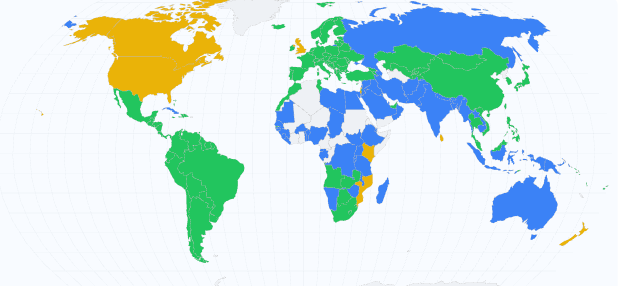
CAN functions as an SSB within an SSB: All four Andean members are also signatories to the Mercosur Residence Agreement, which spans nine countries across 16.4 million square kilometers.
That double layer has provided redundancy. A Colombian citizen seeking to settle in Ecuador can invoke either framework. If Colombia exits CAN, the Mercosur Residence Agreement still governs his right to obtain residency in Ecuador, Peru, and Bolivia, as well as Argentina, Brazil, Chile, Paraguay, and Uruguay.
The practical loss would be CAN-specific benefits: ID-card travel between Andean nations, the Andean passport’s harmonized security features, and whatever reciprocal arrangements the Andean Immigration Statute eventually operationalizes.
What full Mercosur membership would change
Colombia is already an associate member of Mercosur and a full participant in the Residence Agreement. Upgrading to full membership would grant Colombia voting rights within the bloc and a seat in its decision-making bodies, including the Common Market Council. It would also bind Colombia to Mercosur’s common external tariff, a trade policy constraint that associate members avoid.
Whether this trade-off appeals to a country with an existing free trade agreement with the United States, and separate trade deals with the EU through the CAN-EU arrangement, is an open question.
Venezuela’s experience is instructive. Caracas announced its CAN withdrawal in 2006, joined Mercosur as a full member in 2012, and was suspended from the bloc in 2016. The entire sequence produced neither the trade diversification nor the political leverage its proponents had promised.
For investment migration, Colombia’s shift would not alter the settlement rights that already make the country an entry point into the Mercosur bloc.
The Colombia Investor Visa grants residency from approximately US$46,000 in real estate or business investment, with citizenship available after five years of permanent residency (reduced to one year for nationals of Latin American and Caribbean countries). That citizenship already opens the full Mercosur Residence Agreement, which is the world’s largest SSB by area.
The election question
Petro cannot stand for reelection. Colombia votes on May 31, with a runoff scheduled for June 21 if no candidate secures a majority. The leading candidates span the ideological spectrum: Iván Cepeda of Petro’s Historic Pact coalition, right-wing lawyer Abelardo de la Espriella, and center-right former senator Paloma Valencia.
Whether Colombia’s Mercosur application survives the transition depends entirely on who wins. Formal accession to Mercosur as a full member requires ratification by all existing members and alignment with the bloc’s trade protocols.
Even under favorable political conditions, the process would take years. When Venezuela began its accession, the path from application to full membership stretched six years, and required a favorable alignment of governments across the bloc to clear procedural hurdles.
A non-Petro successor could simply withdraw the application. The CAN exit, similarly, would demand formal denunciation of the Cartagena Agreement, which carries a five-year withdrawal period during which existing trade commitments remain binding.
The damage so far
Whatever happens at the bloc level, the bilateral trade relationship is already in ruins. Bilateral commerce between Colombia and Ecuador totaled US$2.8 billion in 2025, according to Colombia’s national statistics agency DANE, with Colombia running a US$1.016 billion surplus. At the initial 30% tariff level, Colombian imports from Ecuador had already collapsed 66.8%.
Border communities have absorbed the worst of it. The Ipiales Chamber of Commerce reports more than 5,000 jobs lost, 12,000 families affected, and estimated daily losses of US$5.5 million. Smuggling across more than 50 illegal border crossings between Nariño and Carchi has surged an estimated 70%, according to the same chamber.
Petro’s own framing of the problem, delivered from Ipiales, was that closing legal trade channels does not stop commerce; it hands the border to organized crime.
That argument applies with equal force to the broader question of bloc membership. Formal trade architecture exists precisely to prevent the conditions now unfolding along the Colombia-Ecuador frontier.

Implications for the Andean bloc
If Colombia follows through, CAN would shrink to three members: Ecuador, Peru, and Bolivia. Peru holds its own presidential election on April 12, introducing additional political uncertainty into the bloc’s future. Bolivia, which joined Mercosur as a full member in 2024, already straddles both organizations.
A three-member Andean Community would be a rump organization. Colombia is its largest economy by far, accounting for roughly half the bloc’s combined GDP. Without Bogotá, CAN’s relevance as a trade instrument would be marginal, though its free-movement provisions would still govern mobility among the three remaining members.
For the investment migration market, the immediate practical consequences are limited. Settlement rights within the Mercosur bloc would remain intact for holders of Colombian citizenship regardless of CAN’s fate. Ecuador’s Investor Visa, which offers a four-year path to citizenship from a US$46,000 investment, would still confer Mercosur Residence Agreement rights.
The larger consequence is political. South America’s trade architecture, long characterized by overlapping blocs with cross-membership, is fracturing along ideological lines. That fracturing introduces policy risk into what has been a stable, if bureaucratically uneven, free-movement framework. Anyone building a settlement strategy around Mercosur or CAN membership should watch the May 31 Colombian election closely.