

The Trump administration is preparing an executive order that would require that US banks collect proof of citizenship from their customers, a significant departure from current practice and one that industry advisors warn could lock millions of Americans out of the financial system.
Under the draft, banks would have to request citizenship documents such as a passport from account holders, on top of the name, date of birth, and verified address that financial institutions already collect at onboarding. REAL ID credentials would not qualify, because they do not establish citizenship.
Earlier reporting by the Wall Street Journal and Semafor indicated that the rules could apply retroactively to existing account holders, potentially forcing banks to re-verify millions of active customers alongside standard Know Your Customer (KYC) checks.
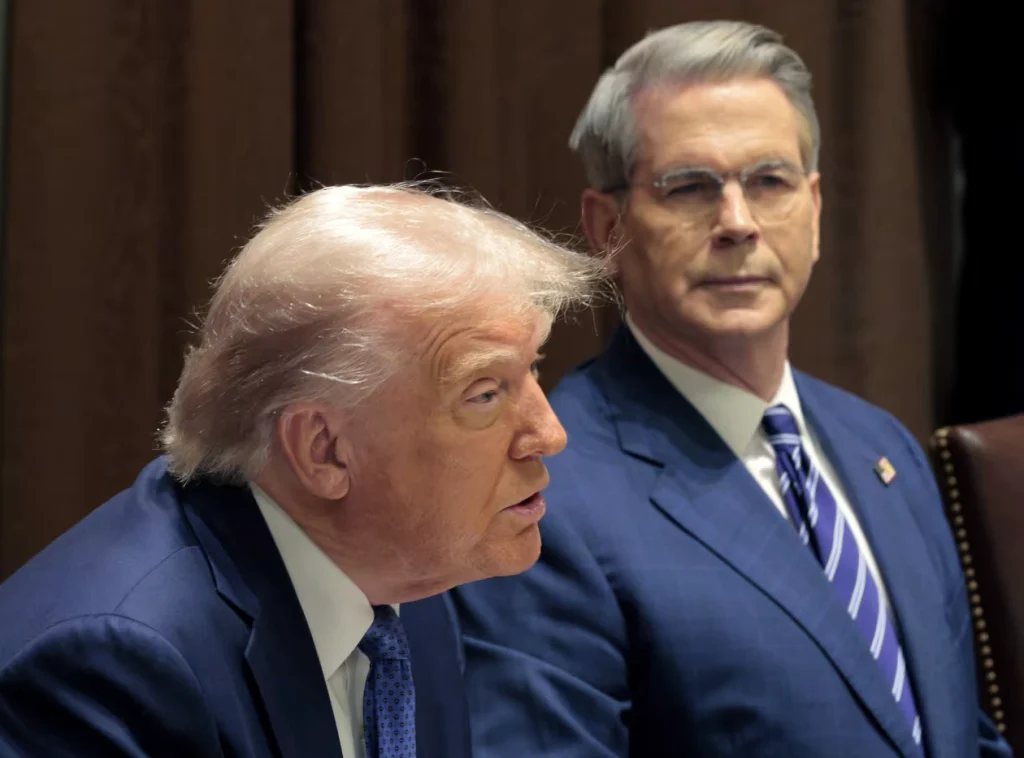
US Treasury Secretary Scott Bessent publicly confirmed on Monday that the draft order is “in process,” the first on-record acknowledgement from a cabinet-level official that the proposal is advancing. Speaking at the inaugural Treasury Secretary Dinner hosted by Semafor at the Library of Congress, Bessent told editor Ben Smith: “I don’t think it’s unreasonable, because: Why don’t we have information on who’s in our banking system?”
Semafor first reported the draft in February 2026, with Axios and other outlets picking up the story the same week. The proposal was framed at the time as part of a broader Trump administration effort to cut noncitizens off from jobs, aid, and financial services, running in parallel with expansive deportation operations.

It was unclear then, and remains unclear now, whether the rules would apply only to undocumented migrants or also to noncitizens lawfully authorised to live and work in the US.
Jeremy Savory, CEO of Savory & Partners, sees the proposal as a departure from the country’s historical openness.
“The United States has traditionally been one of the most accommodating jurisdictions in the world for incorporating a business and opening a bank account,” he said. “Requiring proof of citizenship to access the banking system is a striking reversal, and one that will inconvenience citizens as much as anyone else.”
“Nearly half of Americans still don’t hold a passport,” Savory added. That figure tracks with available data: Roughly 183 million US passports were in circulation in 2025, against a US population north of 340 million. Research from the Brennan Center for Justice estimates that more than 21 million voting-eligible US citizens do not have ready access to documentary proof of citizenship at all.

David Lesperance, principal of Lesperance & Associates, delivered a sharper assessment.
“In an effort to throw nationalistic tainted red meat to the MAGA base, Bessent is teasing an Executive Order which would cause chaos in the US financial industry,” he said. “The cost to administer such a program would be astronomical.”
Documentation gaps, Lesperance argued, are the order’s most immediate practical problem. “Most average Americans, including die-hard MAGA supporters, do not currently possess the necessary documentation, whether a birth certificate, naturalization certificate, REAL ID, or passport, to prove their US nationality. As a result, they would be de-banked.”
Wait times for supporting documents would compound the pain. A Certificate of Naturalisation currently takes between 5.5 and 14 months to issue, a US passport four to six weeks, and a REAL ID two to six weeks. Those timelines, Lesperance warned, “will certainly dramatically increase if this order is signed.”
He also saw no regulatory gap the order would fill. “Exactly what current proceeds of crime, money laundering, or tax evasion problem does this Executive Order address that is not already adequately dealt with by current KYC and AML requirements?” he asked, answering his own question: “None.”
The real function, he argued, would be to give Immigration and Customs Enforcement (ICE) “another data point… in their attempt to meet Stephen Miller’s deportation quotas.”
Lesperance has also questioned the legal foundations of other recent Trump executive actions on immigration, arguing that several are beyond the legal authority of even the most expansive reading of presidential power.
Savory made a parallel point about regulatory redundancy. “Banks already conduct extensive screening as part of their existing KYC obligations. Layering additional citizenship verification on top of that doesn’t address a gap in the system; it creates a mechanism that could easily become discriminatory in practice.”
International precedent for citizenship checks at account opening does exist. Rafael Cintron, CEO of Wealthy Expat, noted that several jurisdictions already verify legal status at onboarding.
“Not surprising considering some EU countries also do this,” he said. “Poland checked me, for example, to make sure I was legally in the country. And Georgia checked my entry stamp into Georgia too.”
Reporting suggests the administration is not united on its approach. Bloomberg has reported that some Treasury staff have been steering politically appointed officials toward a lighter version under which banks would certify US citizenship rather than re-document every customer.
Banking industry groups have separately raised concerns about feasibility and the risk of pushing people out of the formal banking system altogether.
Political backing for a tougher rule comes from Senator Tom Cotton (R-Ark.), who published a letter to Bessent in October 2025 urging a review of rules that allow what he termed “illegal aliens” to access financial services. Cotton framed the American banking system as “a privilege that should be reserved for those who respect our laws and sovereignty.”
Savory argues the priorities are wrong. “When you have unresolved questions around the unregulated Polymarket, Kalshi, and suspicions of insider trading within the president’s own circle, it’s hard to argue that the most pressing use of Treasury’s attention is making it harder for ordinary people to open a bank account.”
Two questions remain open: What documents the order will accept in practice, and whether existing account holders will have to be re-verified. Bessent has not indicated a release date.



