If you have been searching for countries that let you use cryptocurrency to obtain residency or citizenship, prepare for a short list. Despite the marketing noise from advisory firms, only two governments on earth accept crypto directly as the qualifying investment for an immigration program. El Salvador accepts Bitcoin or USDT for citizenship. Bhutan requires a sovereign token deposit for its digital nomad visa.
Everywhere else, your crypto must become fiat before a government will touch it.
El Salvador: The World’s Only Crypto-Native Citizenship Program
El Salvador’s Freedom Passport remains the only citizenship by investment (CBI) program that accepts cryptocurrency as the investment itself. Launched in December 2023 under the “Adopting El Salvador” initiative, the program grants Salvadoran citizenship in exchange for a $1 million non-refundable contribution paid in Bitcoin or Tether’s USDT.
The contribution goes directly to government development funds. Tether provides the payment infrastructure, meaning applicants transfer crypto wallet-to-wallet without converting to fiat. Processing typically takes six to eight weeks from submission to passport issuance.
Applicants can include a spouse and children under 18 (or under 25 if enrolled as full-time students) for $999 per dependent. No physical residency is required before or after approval. Dual citizenship is permitted. The program is capped at 1,000 participants per year.
The Salvadoran passport provides visa-free or visa-on-arrival access to approximately 135 destinations, including the Schengen Area, Singapore, Japan, and South Korea.
El Salvador operates a territorial tax system, meaning only income earned within the country is taxed. Foreign-sourced income is exempt. There is no capital gains tax on Bitcoin transactions.
A significant policy shift happened in early 2025. El Salvador’s Congress amended the Bitcoin Law on January 29, 2025, as a condition of a $1.4 billion loan from the International Monetary Fund. The amendments removed the mandatory acceptance of Bitcoin by businesses, eliminated the ability to pay taxes in Bitcoin, and stripped the characterization of Bitcoin as a “currency” from the law. Bitcoin acceptance by the private sector became voluntary.
The Freedom Visa program continues to operate despite these changes. It functions as a standalone CBI program and does not depend on Bitcoin’s broader legal tender status. But the policy reversal raises a question worth asking before committing $1 million: How stable is the regulatory environment underpinning this program?
Katie Ananina, CMO of CitizenX, has argued that demand for the program comes from investors who share El Salvador’s broader vision rather than those shopping purely on price. That may be true. At $1 million, the Freedom Visa costs roughly five times more than a Caribbean CBI passport with comparable or stronger visa-free access, and the Caribbean programs can be paid for through agents who accept crypto and convert it to fiat on your behalf.

Bhutan: A Token-Backed Digital Nomad Visa
Bhutan launched the world’s first blockchain-backed digital nomad visa in early 2026, and it works differently from anything else in the investment migration space.
The program requires applicants to deposit $10,000 worth of TER tokens through DK Bank, Bhutan’s regulated digital bank. TER is a sovereign gold-backed token issued on the Solana blockchain by the Gelephu Mindfulness City Authority (GMCA). Each token represents fractional ownership of 0.01 grams of physical gold with 999.9 purity, stored in audited vaults.
The deposit is fully refundable upon departure. A separate non-refundable annual fee of $2,800 goes to the GMCA. The visa is valid for 12 months, renewable for up to 24 months. No minimum income threshold applies, and there is no mandatory stay requirement.
This is a digital nomad visa that uses a crypto token as a deposit mechanism. It does not lead to permanent residency or citizenship in Bhutan, a country that has historically restricted both immigration and tourism. For decades, visitors paid between $100 and $250 per day in mandatory fees and were required to follow guided itineraries.
The program is part of Bhutan’s broader blockchain strategy. The country has been mining Bitcoin with surplus hydroelectric power since at least 2019 and held over 13,000 BTC at its peak in late 2024, though reserves have declined sharply since. In December 2025, King Jigme Khesar Namgyel Wangchuck pledged up to 10,000 BTC to fund the Gelephu Mindfulness City’s long-term development.
Critics have raised valid concerns. Adam Juchniewicz of 21 CBI told IMI that requiring applicants to buy a specific sovereign token, rather than allowing deposits in Bitcoin, USDT, or USDC, risks making the visa look like “token distribution with a visa wrapper.” He also questioned the depth of demand for long-term relocation to Bhutan, given its limited tourism infrastructure.
For digital nomads exploring visas that lead to permanent settlement, Bhutan’s program does not fit that bill. Among the 50-plus digital nomad visas now available globally, it stands alone in requiring a position in a sovereign token ecosystem. Whether that is innovation or friction depends on your perspective.
What About the Rest? Agent Conversions and Crypto-Friendly Programs
Multiple advisory firms and licensed agents now accept Bitcoin, Ethereum, and stablecoins as payment for CBI and Residency by Investment (RBI) applications. This is not the same as the government accepting crypto for the program.
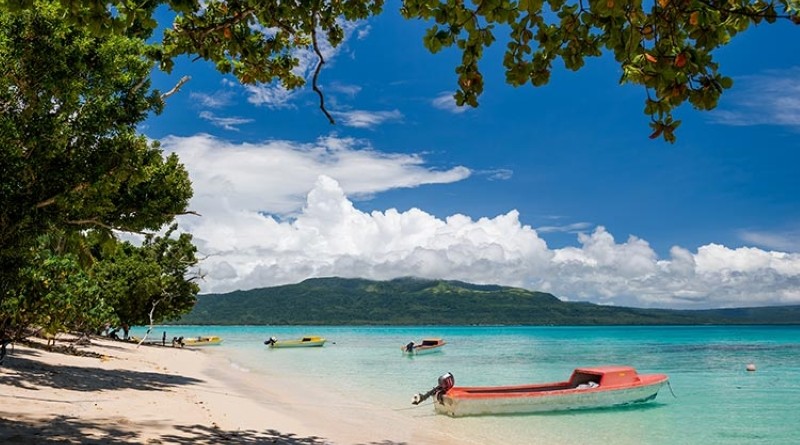
Vanuatu was the first CBI jurisdiction where agents began accepting Bitcoin, as early as 2017. The government itself does not receive Bitcoin. Authorized agents accept crypto, convert it to US dollars, and remit the fiat to the state. The donation starts at $130,000 for a single applicant. Vanuatu’s passport lost Schengen visa-free access in December 2024.
Antigua and Barbuda amended its Citizenship by Investment Act in 2018 to allow crypto as a source of funds. The government converts crypto to USD on a daily basis.
Dominica and Saint Lucia operate under the same model: Licensed agents accept crypto on behalf of applicants and convert it to fiat before remitting payment to the government.
Saint Kitts and Nevis now accepts crypto holdings as proof of net worth for due diligence purposes, though the actual program payment must be made in fiat.
Hong Kong’s Capital Investment Entrant Scheme (CIES) began accepting cryptocurrency holdings as valid proof of wealth in early 2025. Two mainland Chinese investors have already qualified by demonstrating US$3.8 million in Bitcoin and Ethereum holdings. Applicants must store digital assets in cold wallets or on major exchanges and convert them into qualifying investments within six months of approval. The actual HK$30 million investment must still be made in eligible financial assets.
In Turkey, licensed agents accept Bitcoin and other cryptocurrencies to facilitate real estate purchases that qualify for citizenship. The agent converts the crypto and remits fiat to complete the $400,000 property transaction. The Turkish government itself does not receive cryptocurrency.

The Practical Calculus
For crypto holders weighing immigration options, the question is whether direct crypto acceptance matters enough to narrow your choices to El Salvador and Bhutan, or whether converting to fiat opens a broader and potentially better range of programs.
If keeping your wealth in crypto until the last possible moment is the priority, El Salvador is the only country that will let you buy citizenship that way. If you want a temporary base while holding a sovereign blockchain asset, Bhutan’s digital nomad visa is an experiment worth watching. For everyone else, the 20 countries that do not tax crypto gains offer a wider menu of residency and citizenship pathways. The investment migration market serves crypto investors well. It just expects them to sell first.