

Hungary’s foreign ministry has accused officials of the previous government of selling citizenship to wealthy foreigners, most of them Canadian, who had no Hungarian roots and met none of the usual residence or language conditions.
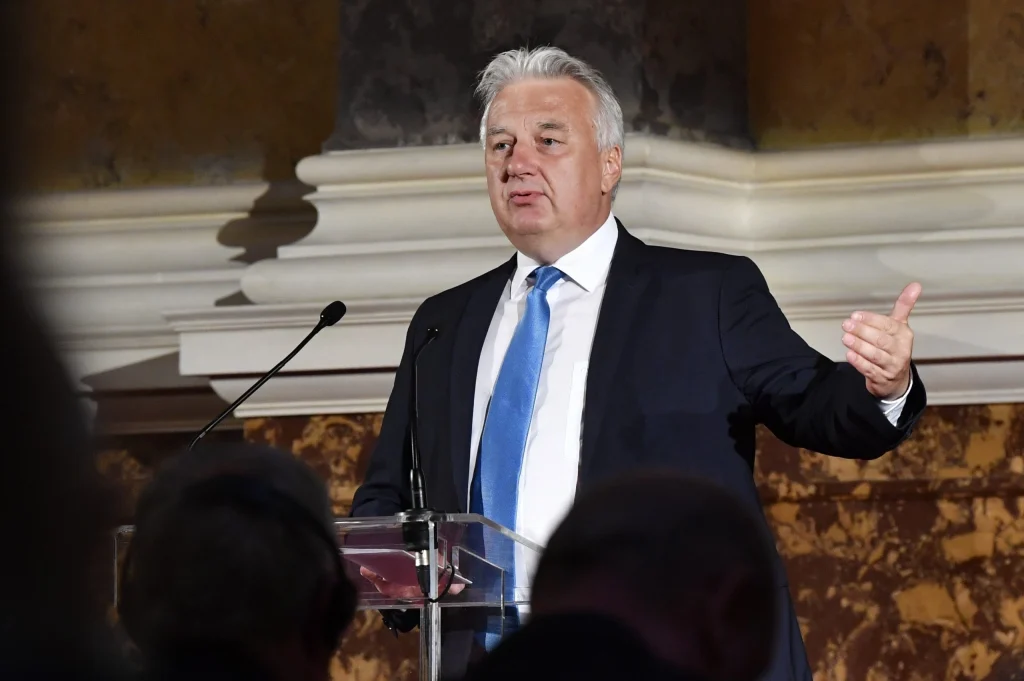
György László Velkey, the parliamentary state secretary and deputy foreign minister, made the allegations on June 16, describing a discretionary naturalization route turned into a paid service. The accusations target the administration of Viktor Orbán, ousted at the April election.
At the center of the claims sits államérdekből történő honosítás, naturalization in the national interest. Under Act LV of 1993, the President may grant citizenship on this basis on a submission from the relevant minister, waiving the usual residence and language conditions. Reserved in principle for exceptional cases that serve the country, the provision became a paid product, Velkey contends.

A Business Model Built on a Loophole
Hungarian Citizenship Consulting, a private company under Hungarian ownership, sits at the heart of the most pointed allegation, managing applicants for a fee by Velkey’s account.
One of its principals, Velkey says, also held the official post responsible for the state naturalization programs, an appointment he traces to Gulyás’s ministry. Its co-director, he added, was a diaspora leader whose recommendation letters Hungarian missions cited when accepting applications.

Intermediary fees ran between 30,000 and 50,000 Canadian dollars (approximately US$22,000 to US$36,000), by his estimate. He framed the range as a figure from the ministry’s internal review, not a documented tariff. No recipients were named, and the numbers rest on his account alone.
Velkey extended the accusations to two other figures from Orbán’s cabinet. Former deputy prime minister Zsolt Semjén repeatedly signaled support for national-interest naturalizations to diaspora leaders, he alleged, and consulates leaned on those endorsements when accepting files. The cases moved through the ministry then run by Péter Szijjártó.
Behind the former government’s sovereignty rhetoric, he argued, lay the protection of “private interests,” business circles, and friends. He cast the citizenship findings as one thread of a ministry audit that keeps surfacing irregularities.
From Passports to Citizenship
Velkey’s broader audit began with diplomatic passports. Roughly 1,500 of them went out at Szijjártó’s discretion, by his account, against one or two hundred in earlier cycles, and the government now means to revoke close to 1,000. Recipients reportedly included politicians’ relatives, sports officials, and foreigners tied to the former government by business.
Fidesz has rejected the ministry’s accusations and maintains that the diplomatic passports were issued lawfully. Neither the party nor the named former officials have yet responded publicly to the citizenship-for-cash claims.

One national-interest grant had already drawn scrutiny before the government changed hands. Hilarion Alfeyev, a Russian Orthodox metropolitan then based in Budapest, reportedly obtained Hungarian citizenship through the route despite no known Hungarian roots.
Officials never set out the national interest his case served, and reports say he was detained in the Czech Republic in May in a separate matter.
An Old Vulnerability
Citizenship without residence is not itself unusual in Hungary. Since 2010, the country has naturalized more than a million people of Hungarian descent abroad, many without ever living in Hungary. That mass program has drawn fraud worries before, and in 2022, the United States curbed visa-waiver access for Hungarian citizens born outside the country.
The findings reach a European Union already set against the sale of member-state citizenship, after the European Court of Justice struck down Malta’s program in April 2025.
Adam Juchniewicz, CEO of Bitcitizen LLC, who studied law in Malta and wrote his thesis defending that country’s sovereign right to run a citizenship-by-investment program, says he is the “last advisor who wants investor migration discredited.”
He argues that “every backroom passport handed to someone with no connection to the country is a gift to the people who want the legitimate programs abolished, the ones built on law, transparency, and a genuine link.”
He says that “ citizenship is only as durable as the process that granted it. Earn it on the merits through a transparent, statutory program, and no future government can touch it. Buy it through a discretionary backdoor, and you are holding a revocable liability, not an asset. Hungary has just reminded the entire industry which one it has been selling.”
Hungarian law lets the President revoke citizenship gained by fraud, on a ministerial submission, and Velkey says the ministry is weighing whether the disputed grants qualify. He expects the Canadian files are not the last of it, with similar arrangements possibly waiting in other countries.



