The Organisation for Economic Co-operation and Development (OECD) built the Common Reporting Standard (CRS) in 2014 to end banking secrecy and combat offshore tax evasion. More than 120 jurisdictions now run it, with each participating country obliging its banks to identify account holders who are tax resident elsewhere, then handing that data to the relevant foreign tax authority.
The exchange covers the account holder’s name, address, tax identification number, account balance, and the year’s interest, dividends, and sale proceeds. It happens once a year, automatically. No government has to request the information, no court has to approve it, and the account holder never finds out which file landed where.
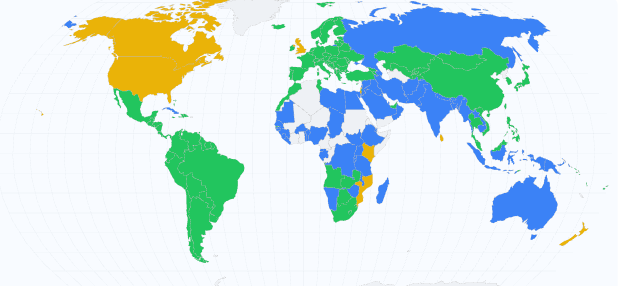
The participating network keeps growing. Thailand, Kenya, Uganda, Moldova, Ukraine, and Armenia have all started exchanging within the last two years, closing gaps that privacy-conscious investors had relied on for a decade. What remains outside the system is a shrinking set of jurisdictions, and the reasons they sit outside vary enormously.
Some, like the United States, stayed out by design and built a parallel regime instead. Others appear on the Organisation for Economic Co-operation and Development’s (OECD) list of “developing countries not asked to commit,” which is a polite way of saying nobody has pushed them and thus they have set no date to begin exchanging financial records. A handful are simply slow – possibly on purpose.
This is not a guide to hiding money. CRS status does not erase a home-country tax obligation, and “non-reporting” rarely means “invisible” once you account for tax-residency rules and the reach of foreign banks.

What follows is a sober map of where automatic exchange does not currently reach, paired with the investment migration route into each jurisdiction, because in many of these countries, there is one.
The financial transparency status below is drawn from the OECD’s Automatic Exchange of Information (AEOI) commitments documentation.
United States

CRS status: Outside by choice, and not quietly. The US never joined CRS. Instead it runs the Foreign Account Tax Compliance Act (FATCA), which compels foreign banks to report American account holders to the Internal Revenue Service.
The asymmetry is the point: the US collects data on its own citizens abroad but does not reciprocate as CRS jurisdictions do. A non-American banking in the US generally falls outside automatic exchange entirely.
That makes the US, by some measures, the world’s largest jurisdiction for non-resident financial secrecy. This shows no sign of changing; FATCA has functioned as Washington’s political substitute for multilateral participation for a decade.
The investment migration route: The EB-5 Immigrant Investor Program grants a green card in exchange for a qualifying investment in a US commercial enterprise that creates at least ten jobs.
The standard minimum is $1 million, dropping to $800,000 for projects in a Targeted Employment Area. It is residence by investment, not citizenship, though the green card opens a conventional naturalization path after five years.
Egypt
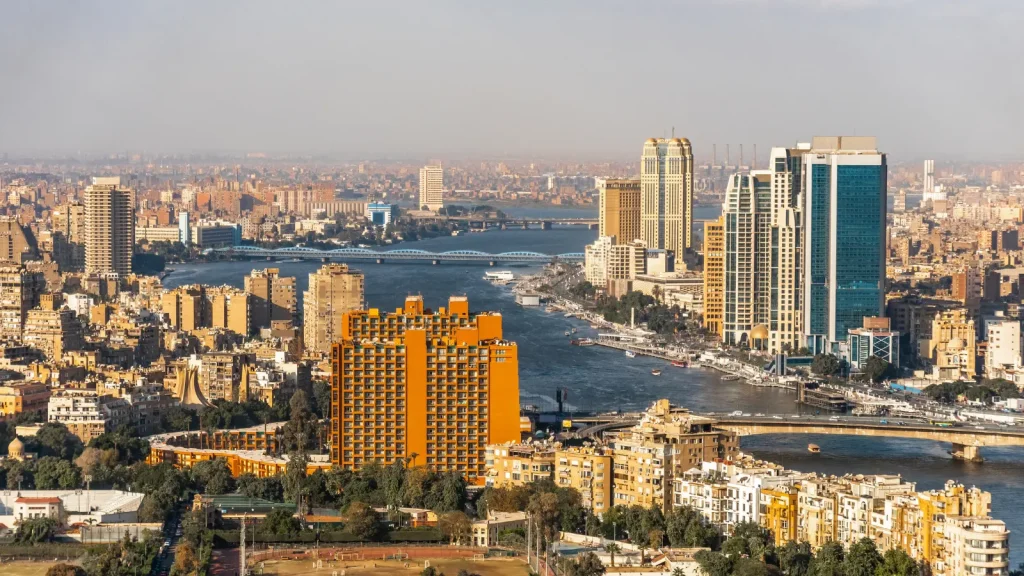
CRS status: Egypt appears on the OECD’s roster of developing countries not asked to commit, with no date set for a first exchange.
For now, account information held in Egyptian institutions does not flow automatically to other tax authorities. The status is administrative rather than ideological, which means it could shift if the OECD’s posture toward the region changes.
The investment migration route: Egypt is one of two jurisdictions on this list offering a direct citizenship route.
The Egypt Citizenship by Investment program, established in 2019, offers four routes: a non-refundable $250,000 contribution to the treasury, a $300,000 real estate purchase held for five years, a $350,000 business investment paired with a $100,000 donation, or a refundable $500,000 bank deposit returned after three years.
A $10,000 state fee applies to every route, and there is no residence requirement.
El Salvador

CRS status: El Salvador is on the OECD’s not-asked-to-commit list and has no FATCA agreement with the United States.
That dual absence makes it one of the more decisively non-reporting jurisdictions in the Western Hemisphere, a status reinforced by its 2024 decision to exempt all foreign-source income from taxation.
The investment migration route:
The headline program is the Freedom Passport, which grants citizenship in exchange for a $1 million investment in Bitcoin or US dollars.
The price tag limits it to a narrow band of applicants, but it is one of the few programs anywhere that grants citizenship eligibility quickly for those who can afford it.
Serbia

CRS status: Serbia appears on the OECD’s not-asked-to-commit list. It is an EU candidate, and candidate states typically align with European tax-transparency norms as they advance, so Serbia’s non-reporting status is best read as a function of where the country sits in its accession timeline, not a permanent feature.
The investment migration route: Serbia’s investor visa is among the more accessible in Europe by entry mechanics. The real estate route carries no fixed minimum: an applicant can buy residential or commercial property anywhere in the country at any price point and obtain temporary residence within 30 to 60 days.
A company-formation route runs alongside it, requiring around €50,000 held in a Serbian bank account.
Residence can lead to permanent residence after three years and citizenship after a further three. Serbia also holds an E-2 treaty with the United States, which gives Serbian citizens a separate route to US residence.
The Philippines

CRS status: The Philippines is listed by the OECD as a developing country not asked to commit, with no date set for exchange. It is among the more substantial economies on this list, which matters: its non-reporting status rests on a functioning banking sector rather than on micro-jurisdiction offshore positioning.
The investment migration route: The Special Investor’s Resident Visa (SIRV) grants indefinite renewable residence in exchange for a $75,000 investment in securities listed on the Philippine Stock Exchange or in a qualifying local enterprise.
A separate Foreign Investor Visa accommodates a broader range of qualifying investments. Neither requires physical presence, and the SIRV remains valid as long as the investment is maintained.
Cambodia

CRS status: Cambodia sits on the OECD’s not-asked-to-commit list with no exchange date. It has long featured on advisory shortlists of non-reporting banking jurisdictions, though account-opening friction and documentation standards have tightened as global compliance pressure has spread.
The investment migration route: Cambodia runs the only citizenship by investment program in Southeast Asia, making it the second outright-citizenship option on this list. The route traces to the 1996 Law on Nationality, which waived the standard residence and Khmer-language requirements for qualifying investors and donors.
A December 2025 reform sharply raised the thresholds: $1 million invested in an approved-sector project, or a $3 million cash donation to the national budget. Citizenship is typically granted within about six months, with no prior residence requirement, and Cambodia permits dual nationality.
Paraguay
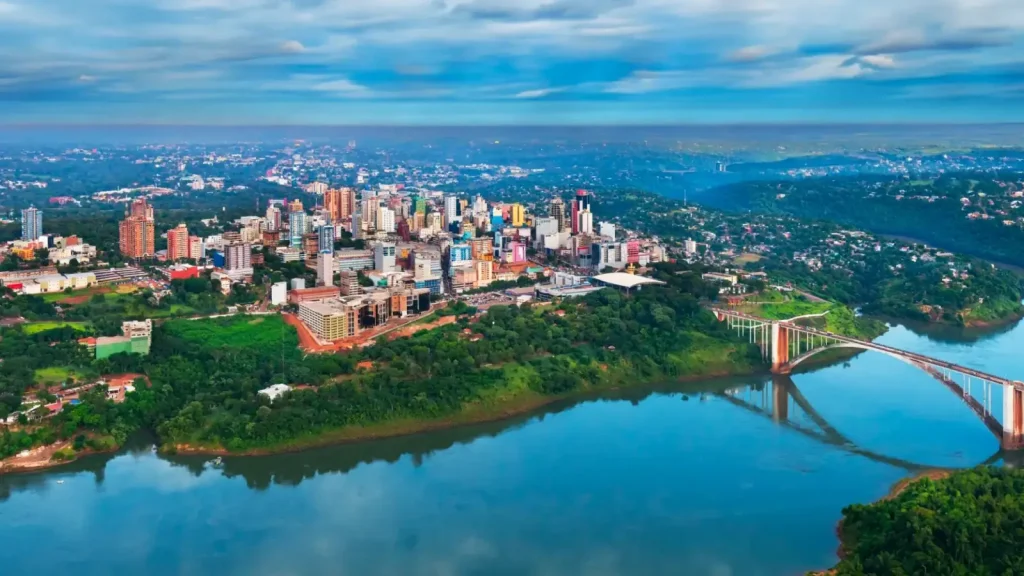
CRS status: Paraguay is the outlier on this list. It is not on the OECD’s not-asked-to-commit roster, but its account information does not currently flow automatically to other governments, which puts it functionally outside exchange for now.
The OECD treats Paraguay as a “jurisdiction of relevance” for future CRS adoption, so of all seven countries here, its non-reporting status is the least secure.
The investment route: Paraguay launched the Investor Pass in April 2026, granting direct permanent residency with no temporary-residency stage through one of three routes: $150,000 in a qualifying tourism project, or $200,000 in Paraguayan real estate or securities on the Asunción stock exchange.
The older SUACE route, which requires roughly $70,000 in business investment and local job creation, still runs alongside it.
The draw is a low threshold, a territorial tax system that does not tax foreign income, and a three-year path to citizenship among the shortest in the hemisphere.
What this list actually tells you
Four of these seven countries offer a passport rather than just residence: Egypt, North Macedonia, and Cambodia run citizenship by investment programs outright, and El Salvador’s Freedom Visa offers an accelerated citizenship path.
That distinction is the whole game. CRS routes data based on where you are tax resident, not where you bank. Acquiring residence in Serbia or the Philippines while remaining tax resident in a CRS country changes very little about what your foreign banks report.
The jurisdictions that genuinely disrupt the flow are those that combine non-reporting status with a territorial or zero tax regime, which is why Paraguay and El Salvador attract disproportionate attention despite their drawbacks.
None of this is tax advice, and none of it should be read as a route around disclosure obligations.
The legitimate uses of these jurisdictions are asset diversification, geopolitical hedging, and lawful tax planning aligned with a genuine change of residence, all of which depend on getting the residency and reporting architecture right.
The programs above are not always a country’s only route in. Several of these jurisdictions run additional residence and citizenship options not covered here. For the full picture, program by program and country by country, browse the IMI Program Pages.