
Czech Prime Minister Andrej Babiš said on Friday that his country may one day have to defend its border against migrants coming from Western Europe. He spoke in Brussels on the second day of the European Council summit, where a dispute over Spain’s mass regularization of undocumented migrants consumed the leaders’ debate on migration.
Spanish Prime Minister Pedro Sánchez retorted that the criticism bore no relation to the data and likened Babiš’s language to that of Vox, Spain’s far-right party. The summit’s final conclusions on migration ran to three sentences.
Babiš’s warning
Speaking before Friday’s session, Babiš said Czechia may have to “defend our border at some point” against migrants from Western countries if current trends persist, according to Euronews. His government, he added, was preparing for that eventuality. What those preparations involve, the prime minister did not say.
Spain drew his sharpest words. Some politicians there, he said, were willing “to replace the population just to cling to office,” according to the Catalan daily ARA. He also named the Netherlands, Sweden, and Germany among the countries he says are struggling to absorb and integrate refugees.
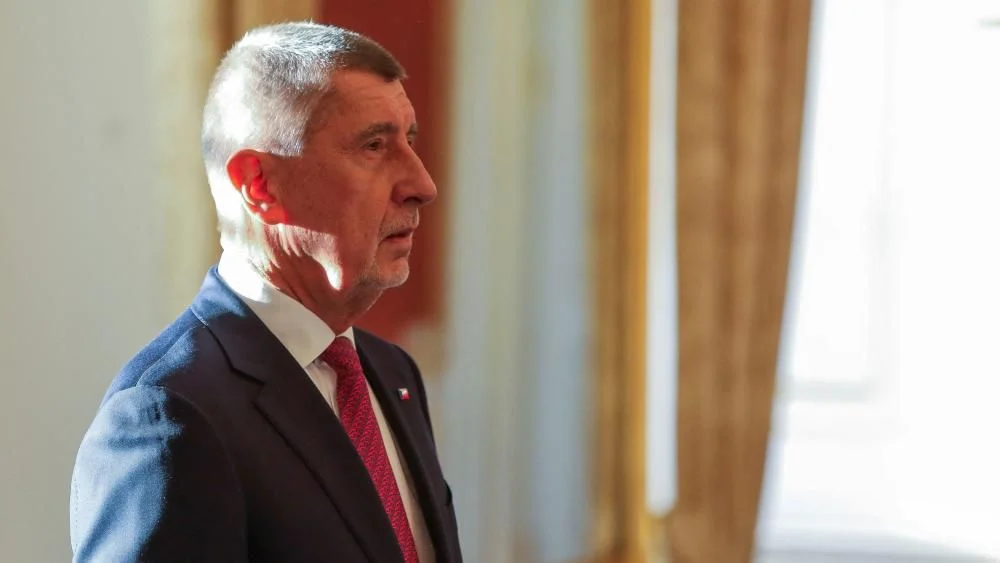
Asked whether Czechia would join plans for migrant reception centers outside the EU, Babiš urged governments to jail smugglers and “sink the empty boats,” according to Novinky. Less than a week earlier, he had brandished a German newspaper article on his Sunday program with First Deputy Prime Minister Karel Havlíček. Czechia, he said then, would in future need “an army on our border with Germany,” according to Expats.cz.

His ANO party sits with the far-right Patriots for Europe group in the European Parliament. As opposition leader, Babiš branded the EU’s Pact on Migration and Asylum the greatest betrayal in modern Czech history. The pact’s rules took effect in June.
Every country bordering Czechia belongs to the Schengen Area, the EU’s passport-free travel zone. Checks on those frontiers would therefore count as internal border controls, which the Schengen Borders Code permits only as a temporary, last-resort measure.
Stephen Barnes, architect of Sierra Leone’s GO-FOR-GOLD citizenship program, called the EU’s immigration policy “a complete dog’s breakfast.” National populism, he argued, is now the political zeitgeist. Europe’s leadership, in his view, remains “completely out to lunch,” and “the fundamental question nobody seems prepared to ask is who actually adds value to Europe.”
“Politicians appear convinced that demographic decline can be solved simply by admitting illegal iimmigrants en masse,” he said. “Ask the man on the Clapham omnibus or a commuter on Berlin’s U-Bahn, and you’ll hear a very different story.”
Turning to Babiš’s border remarks, Barnes concluded: “When EU member states contemplate protecting themselves from each other’s immigration policies, the absurdity is complete. At this rate, the European project is doomed.”
Sánchez’s rebuttal
Sánchez answered his critics at his closing press conference, saying “one thing is the blah, blah, blah and another is reality,” according to Euronews. He distinguished his disagreements with Danish Prime Minister Mette Frederiksen from Babiš’s remarks, which in his telling echoed Vox.
Spain, he argued, is a model student of the EU’s new asylum rules, which Madrid helped secure during its 2023 Council presidency. As evidence, the Spanish leader pointed to interceptions in the Atlantic and refusals of entry at airports. Claims that Spain serves as a corridor for onward movement to other member states, he said, are false.

Sánchez also charged his critics with inconsistency. Many other countries, he said, grant work permits to migrants in very similar numbers but “don’t call it regularization,” according to Agence Europe. Italy, whose Prime Minister Giorgia Meloni co-led a summer letter criticizing Spain, has authorized nearly 500,000 work visas for non-EU nationals through 2028, according to EUobserver.
Pared-down conclusions
Frederiksen arrived on Friday saying she had asked the European Commission to examine Spain’s policy. “You come to a country illegally, and suddenly you’re allowed to be there legally,” she said, according to EUobserver. Denmark, which holds an opt-out, does not vote on EU asylum and immigration laws.
Austrian Chancellor Christian Stocker called the regularization a bad signal with consequences for the whole bloc, according to Euronews. He also praised the idea of suspending the right to claim asylum during crises such as Ceuta.
Copenhagen joined Rome and Warsaw in tabling amendments to the draft conclusions. One called for efforts to reduce so-called pull factors, the policies critics say draw irregular migrants to Europe, according to Euronews. Another asked the Commission to encourage coordination when one country’s migration policy affects other member states.
A later working draft, which Euronews obtained, urged member states to avoid measures that could create incentives for illegal migration. Spain and France opposed the changes. According to Agence Europe, the latest drafts had run to nine paragraphs on migration.
The adopted text kept none of that language. It welcomes the Commission’s plan to work with member states on an emergency framework and on instrumentalization, the deliberate use of migrants to pressure a border. Its last sentence says the European Council “will revert to this issue at one of its forthcoming meetings.”
European Commission President Ursula von der Leyen told reporters that regularization decisions belong to national governments but can have cross-border effects, which makes close coordination inside Schengen important. Commission figures put the fall in illegal crossings at the EU’s external borders at around 55% across 2024 and 2025.
French President Emmanuel Macron said politicizing the debate had left the EU divided and ineffective. Calling Ceuta a humanitarian tragedy, he said “what happened was an informational attack” on Spain, according to Demócrata. In a separate passage, the conclusions express the European Council’s solidarity with Spain over the July influx into Ceuta.
Regularization figures
Spain’s regularization program, a one-time process granting legal status to undocumented migrants already in the country, opened on April 16 under Royal Decree 316/2026. Applicants had to prove they were in Spain before January 1, 2026, and had stayed at least five uninterrupted months before applying. They also needed a clean criminal record.
The window closed on June 30 with 1,174,978 applications, more than double the roughly 500,000 beneficiaries the government had projected. Latin Americans filed 67% of them, and Colombians alone 25.9%. Spain’s previous mass regularization, in 2005, drew around 692,000 applications.
By July 2, officials had admitted 609,737 files to processing, a step that grants provisional permission to live and work in Spain. About 11,000 applicants had received a favorable final decision at that point. Since then, the ministry has published no national update, according to the Spanish news site Infomigrante.
Successful applicants receive a one-year permit valid only in Spain, after which they must transfer to ordinary residence permits. Researchers at the Migration Policy Centre of the European University Institute have said the evidence does not clearly show whether the program drew more migrants to the EU.
The permits confer residence rather than citizenship. Spain’s Civil Code, however, lets nationals of Ibero-American countries apply for Spanish nationality after two years of legal residence, against ten for most foreigners.
For Philippe May, Founder and CEO of EC Holdings, the stakes extend to the value of EU passports themselves. “Given the record numbers of naturalization of unvetted immigrants in certain EU countries, I would not be surprised if some Asian countries or even the USA imposed visa requirements on them within the next ten years,” he told IMI.
“All it takes is a terror attack by a holder of an EU passport,” May said. “That may be the tipping point.”
Ceuta aftermath
The Ceuta crisis began on July 30, when tens of thousands of people crossed from Morocco into the Spanish autonomous city on the North African coast. Spain’s Interior Ministry put the number at about 50,000; Ceuta’s president, Juan Jesús Vivas, estimated 60,000. Most later returned to Morocco, and Madrid maintains that none of those who entered irregularly reached the Spanish mainland.

On August 1, leaders of 22 member states, with Italy and Denmark in the lead, signed a letter criticizing Spain’s regularization. Spain, France, Portugal, Luxembourg, and Ireland withheld their signatures. The letter also linked the crossings to a June Supreme Court ruling that narrowed summary returns at sea.
Italy reintroduced checks on arrivals from Spain at airports and seaports that same day, and Spain answered with reciprocal checks from August 8. After meeting Sánchez in Brussels, Meloni extended Italy’s controls by seven days so that both sets now expire on October 22. According to Meloni, the two interior ministers will spend next week working out other arrangements for cooperation.
November election
Sánchez called a snap general election on October 5 for November 29, after Congress rejected his government’s housing decrees. Most private polls place the conservative Partido Popular (PP) first, while the state pollster’s October survey puts the Socialists about 12 points ahead. Vox polls in the high teens.
EU leaders meet again informally on November 13. A full European Council follows on December 17 and 18, and von der Leyen said the Commission would present its emergency measures before the end of the year.