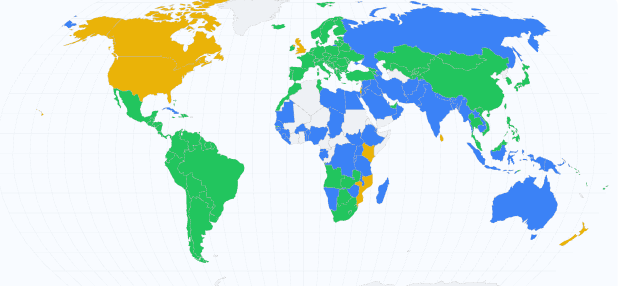

Moving abroad does not end your tax residency in every country. IMI checked the rules of 30 countries.
In 21 of them, the law names a period, a destination, or a citizenship that can make some people taxable after they move out. The periods range from 12 months to a lifetime.
In 16 of those 21 countries, citizenship decides whether a rule reaches you after you leave, or for how long. Spain, Portugal, Italy, Germany, and Finland apply their rules to their own citizens, naturalized citizens included.
Foreign residents who leave those five countries fall outside these citizenship rules, though Spain’s family presumption reaches anyone.
These rules treat you as a resident, or tax more of your income, gains, or estate than other non-residents pay, after you have moved. Exit taxes, which charge you once on the way out, are a separate subject.

They are covered in IMI’s guide to the countries that charge an exit tax.
IMI counted a country when its law names a period, a destination, or a citizenship. It counted a country among the 16 when citizenship changes whether, or for how long, a rule reaches people who leave.
Joseph Boll, Founder and CEO at Frederick Capital, notes that one question “comes up more than any other: If I get another passport, will I pay less tax?” His answer is that “a passport is not a tax plan.”
A second citizenship “may give a family options, a second legal home, and a genuine Plan B,” Boll believes. In his view, “leaving a country is not the same as ending your tax relationship with it.”
“Too many people assume the equation is simple: A new passport, a few months abroad, and the old country no longer matters. In many cases that is simply wrong,” Boll argues.
For Boll, the opening conversation “should be about the departure, not the destination.” He asks, “Is there an exit tax? A temporary residence rule? Which ties remain behind?”
“I am not anti-tax. People should pay what they lawfully owe. I am anti-surprises,” Boll adds. In his experience, “the clients who get this right plan early, take proper cross-border advice, and build a life that still makes sense when the rules are tested.”
The United States, Hungary, and Eritrea tax citizens wherever they live
US Treasury regulations make “all citizens of the United States, wherever resident” liable to US income tax on income from any source. A green card has the same effect for as long as the status lasts.
The tax code treats a lawful permanent resident as a US resident until the status is revoked or officially found to have been abandoned.
A person with a green card who moves to a treaty country can end this earlier. They must claim treaty residence there, not waive the treaty’s benefits, and notify the Secretary of the Treasury.
Some people have had a green card in at least eight of the last 15 years. For them, ending it this way counts as giving up long-term residency.
That can bring the US exit tax and section 2801 into play.
Section 2801 of the tax code reaches gifts and inheritances that US citizens and residents receive from some former citizens and former long-term residents.
When the giver is a “covered expatriate,” the recipient pays a tax on the amount above an annual exclusion. The section sets no end date.
One test for a covered expatriate is a net worth of US$2,000,000 or more on the date the person gives up that status.
A 2024 bill would have let Americans abroad choose to be taxed on residence instead. The House referred it to the Ways and Means Committee, and it went no further.
Hungary’s income tax law counts every Hungarian citizen as a resident. The exception is a citizen who also has another citizenship and has no registered address in Hungary.
The law sets no time limit on the citizenship rule. Hungarian citizens remain resident under Hungarian rules even when they live and work abroad for several years.
Where the other country also treats you as resident and has a tax treaty with Hungary, the treaty decides which country taxes you.
For a Hungarian who has moved abroad, a second citizenship and no registered address in Hungary end the citizenship rule. Hungary can treat them as resident on other grounds.
Examples are a permanent home in Hungary and nowhere else, or a center of vital interests in Hungary.
The wealth tax bill the government sent to parliament on October 27 would go further. It would count dual citizens as residents too.
The bill would release a citizen after ten years of settled life abroad, measured on the last day of the tax year.
Eritrea levies 2% on the net income of its citizens abroad. The levy rests on a 1995 proclamation, which gives Eritrea’s Ministry of Foreign Affairs the job of collecting it.
A study commissioned by the Dutch government called the levy’s legal basis uncertain.
Five countries reach citizens who move somewhere with low taxes
Spain, Portugal, Italy, Germany, and France apply their rules when a citizen moves to certain destinations. Each country decides which destinations count, so one move can trigger one country’s rule and miss another’s.
Spain
Spanish nationals who move to a country on Spain’s list of tax havens remain Spanish income taxpayers. The rule covers the year of the move and the four following tax years.
Spain renamed the list “non-cooperative jurisdictions” in 2021.
Bahrain and Vanuatu, which offers citizenship through its Development Support Program, are on it, while the United Arab Emirates, Monaco, and Andorra are not.
Spain took Dominica off the list in 2026, though a transitional rule means the old list governs income tax for the whole 2026 tax year.
Spain also presumes that you live in Spain if your spouse, unless legally separated, and your dependent minor children live there. You can rebut it with proof, and it applies whatever your citizenship.
Portugal
Portugal’s rule reaches Portuguese citizens who move their tax residency to a country on its list of “clearly more favorable” tax regimes. They remain Portuguese tax residents in the year of the move and the four following years.
Listed destinations include the United Arab Emirates, Monaco, Panama, the Bahamas, and Bahrain. All five Caribbean countries with citizenship by investment (CBI) programs are listed too: Antigua and Barbuda, Dominica, Grenada, Saint Kitts and Nevis, and Saint Lucia.
A Portuguese citizen can escape the rule by proving a valid reason for the move, such as temporary work for a Portuguese employer. The rule also ends when the person becomes tax resident in a country that is not on the list.
Uruguay, Hong Kong, and Liechtenstein came off the list with effect from 2026.
The law covers all Portuguese citizens and sets no separate rule for naturalized ones. An investor who becomes Portuguese after years of living in Portugal, and then moves their tax residency to Dubai, falls within it.
Portugal’s government sent parliament a bill this year that would let it revise how the list is drawn up. The government said the new list would include every jurisdiction on the European list of non-cooperative jurisdictions, so the destinations on Portugal’s list may change.
Italy
Italy’s presumption covers citizens who leave the population register and move to a state on its 1999 list of privileged tax regimes. Italy treats them as tax resident unless they prove otherwise.
The presumption has no time limit.
The Italian tax authority says the citizen must fully prove that they lost every meaningful link with Italy. They must also prove that they live in the new country on a lasting basis, whether or not they pay tax there.
Among the listed states are the United Arab Emirates, Monaco, Andorra, Singapore, Panama, and the five Caribbean CBI countries. Switzerland came off the list with effect from 2024.
From 2027, the rule moves into Italy’s new income tax code, with the same wording.
Germany
Germany’s Foreign Tax Act reaches people who paid unlimited German income tax as German citizens in at least five of the ten years before leaving. Years before naturalization do not count, and giving up German citizenship after those five years does not end the rule.
The rule applies if they move to a low-tax country, or settle in no country, and have essential economic interests in Germany.
Owning a German business or a qualifying stake in a German company counts as such an interest. So does earning more than 30% of their income from Germany, among other measures.
German tax then reaches more of their income than it reaches for other non-residents. This covers the rest of the year of departure and the ten years after it.
The extra tax applies in each year when the conditions are met and the income it catches passes a floor set in the law.
Germany uses no list. A country counts as low-tax when its income tax on a set benchmark income is more than a third below Germany’s.
A country also counts when it offers the person a special regime that can cut their tax substantially. You can escape the German rule by showing that your total tax is at least two thirds of what you would pay in Germany.
German citizens also remain within unlimited German inheritance and gift tax after they leave. This lasts until they have lived abroad for more than five years without a home in Germany.
France
France’s residence rules name one destination, Monaco. Under a tax convention signed in 1963, French nationals who move there pay French income tax as if they lived in France.
The rule has no end date.
The French tax authority exempts some groups, including members of the princely household. It also exempts some people with both French and another non-Monegasque citizenship who settled in Monaco before a 1995 cut-off date.
In 2025, the National Assembly rejected an amendment by 132 votes to 131. The amendment would have taxed high-earning French citizens for ten years after a move to a low-tax country.
The same proposal came back for the 2027 budget. The National Assembly’s finance committee rejected it in October 2026, and the full chamber did the same.

Finland and Sweden tax citizens for years after any move
Finland treats a Finnish citizen who moves abroad as tax resident in the year of the move and the three following years, wherever they go. The citizen can end this earlier by proving that they no longer have substantial ties with Finland.
A summer cottage by itself does not create such a tie, according to the Finnish Tax Administration. A foreign citizen who leaves Finland to live abroad permanently becomes non-resident from the day of the move.
Sweden’s rule covers Swedish citizens and anyone who lived in Sweden for at least ten years. It presumes that they have close ties to Sweden for five years from the date of departure.
Until they prove otherwise, Sweden taxes them on all their income, from Sweden and from abroad.
After five years the presumption ends, though the Swedish Tax Agency can treat you as resident for longer if close ties remain.
Separately, Sweden taxes gains on shares and similar assets that a former resident sells, whatever their citizenship. The rule covers sales in the rest of the year of departure and the ten calendar years after it.
For shares in foreign companies, the rule covers those bought while the person was resident in Sweden. Fund units and shares in an investment savings account are excluded.
Colombia and India reach citizens with income, assets, or family at home
Colombia treats its nationals as resident in any year in which their spouse or permanent partner is tax resident there, unless legally separated. The same applies if their dependent minor children are tax resident there.
Nationals are also resident when 50% or more of their income comes from Colombia. So are those with 50% or more of their assets managed in Colombia or treated as owned there.
A national who is tax resident in a jurisdiction on Colombia’s tax haven list counts as resident too. The list in effect since 2025 includes the Bahamas and none of the five Caribbean CBI countries.
A Colombian national escapes the rule if 50% or more of their income comes from the country where they live. They also escape it if 50% or more of their assets are located there.
India deems a citizen resident when they are not liable to tax in any other country by reason of domicile or residence. Their Indian income must also exceed 1.5 million rupees.
An Indian citizen who moves to the UAE, which has no personal income tax, can fall within it.
Such a person counts as not ordinarily resident. India does not tax their income earned and received abroad, unless it comes from a business controlled in India or a profession set up there.
The rule moved into India’s new Income-tax Act, 2025, which took effect in 2026.
Norway, Ireland, and the United Kingdom count your years, whatever your citizenship
Norway applies its rule to anyone who lived there for at least ten years. Their tax residency ends at the close of the third income year after the year they move.
For each of those three years, they must show that they spent no more than 61 days in Norway. No home there may be available to them, their spouse or partner, or their minor children.
A holiday cabin can be allowed if it has no year-round water and drainage and nobody uses it as a home. So can a home bought at least five years before the move that the family has not lived in since.
Until their tax residency ends, Norway taxes all their income, in Norway and abroad.
In Ireland, the test is ordinary residence. It begins after three consecutive years of residence and ends after three consecutive years of non-residence.
During that period, Ireland taxes you as if you were resident. The exceptions are income from a trade or job exercised wholly abroad, and other foreign income of up to €3,810 a year.
If that other foreign income exceeds €3,810, all of it is taxable.
Ordinary residence also brings Irish capital gains tax on assets anywhere. Non-domiciled people pay it on gains from assets outside Ireland and the UK only when they bring the money into Ireland.
For people domiciled in Ireland, it also brings Irish gift and inheritance tax. Those domiciled elsewhere fall within these taxes after departure under a stricter test.
They must have been resident for the five tax years immediately before the year of the gift or inheritance. They must also remain resident or ordinarily resident on the date of the gift or inheritance.
In practice, that covers only their first tax year of non-residence.
Three British rules reach people who leave, and none depends on citizenship.
Since April 2025, UK inheritance tax on worldwide assets follows long-term residence. A person resident in the UK for at least ten of the previous 20 tax years remains within it after leaving.
The period lasts three tax years for someone resident for 13 years or less. It grows by one year for each further year of residence, up to ten.
If you return within five years, the UK taxes some gains and income from your time abroad in the year you come back. This applies if you had sole UK residence in at least four of the seven tax years before you left.
No tax treaty can block the charge on gains.
The statutory residence test is also stricter for leavers. Someone who was UK resident in any of the three previous tax years needs fewer UK ties to remain resident than a new arrival does.

Mexico, Argentina, and Brazil set a period for anyone who leaves
Mexico’s rule reaches anyone, of any nationality, who leaves for a country where their income faces a preferential tax regime. It also reaches anyone who fails to prove a new tax residency.
They remain Mexican tax residents in the year they file the departure notice and the five following tax years.
A regime counts as preferential when the income goes untaxed or is taxed at less than 75% of the Mexican tax. The rule does not apply if the new country has a broad agreement with Mexico to exchange tax information.
That country must also have a treaty with Mexico for mutual help in collecting taxes.
A person who never files the notice does not lose Mexican tax residency at all.
Mexico also presumes that its nationals are resident unless they prove otherwise. Because of that presumption, Mexico is one of the 16 countries where citizenship decides whether a rule reaches you.
Argentina counts its nationals as resident, but its rule for leaving is the same for nationals and foreign residents. Tax residency ends after 12 months abroad, or earlier on gaining permanent residence in another country.
Officials posted abroad by the state remain resident. Visits to Argentina of up to 90 days in each 12-month period do not break the count.
Since 2026, Argentina’s law has excluded people who naturalize through its citizenship by investment route from tax residency based on that citizenship alone. People who were permanent residents of Argentina when they naturalized remain resident.
Brazil treats a person who leaves as tax resident for 12 consecutive months. A person who moves for good can end this sooner by filing an exit notice, the Comunicação de Saída Definitiva do País.
In April 2026, a regional office of Brazil’s tax authority ruled on a civil servant who moved abroad without giving up her post in Brazil. It said the notice by itself does not make a person non-resident, because the person must intend to leave for good.
The ruling, Solução de Consulta 4.010, does not bind the authority nationally. It follows a 2024 national ruling on civil servants teleworking abroad, which taxed their Brazilian pay at the non-resident rate after 12 months away.
Inheritance and gift taxes that outlast the move
Dutch inheritance and gift tax treats a Dutch national as living in the Netherlands for ten years after they leave. The rule applies when they die or make a gift in that period.
Anyone of another nationality who makes a gift within one year of leaving is treated the same way.
Japan taxes worldwide assets that a Japanese national inherits or receives as a gift. This applies if they had a home in Japan at any time in the ten years before.
The count also applies to the person who dies. As a result, heirs abroad can owe Japanese tax on worldwide assets when a Japanese national dies within ten years of leaving.
Greece taxes the movable assets abroad of a Greek national who dies, wherever they lived. A national who had been settled abroad for at least five consecutive years is outside this rule.
A 2025 law cut that period from ten years.
Six countries judge your ties, with no fixed period
These countries can treat you as resident after you leave for as long as you remain tied to them. IMI did not count them among the 21.
Australia’s domicile test makes a person with an Australian domicile a resident. They remain resident unless the Commissioner of Taxation is satisfied that their permanent place of abode is outside Australia.
As a general guide, the Australian Taxation Office says a planned absence of less than two years is unlikely to meet that test.
In 2021, the government announced a plan to replace the residency tests, which remain the law today.
The Treasury set out a design in a July 2023 consultation paper. Under it, a long-term resident would remain resident until they spent less than 45 days a year in Australia for three consecutive income years.
New Zealand treats anyone with a permanent place of abode there as resident, even if they also have one elsewhere. That residency cannot end before the place of abode stops being theirs, however long they spend abroad.
Canada’s tax agency says a person who leaves without cutting all “significant residential ties” generally remains a factual resident taxed on worldwide income. Such ties include a home, a spouse or partner, or dependents.
The courts have set no period abroad that settles the question by itself.
South Africa’s tax agency treats an ordinarily resident person who plans to return as resident, regardless of the time spent outside the country.
China taxes anyone with a domicile in China on worldwide income, regardless of the days spent there. Its regulations define domicile as habitual residence because of household registration, family, or economic interests.
A person who cancels a Chinese household registration to emigrate must settle their taxes before cancelling it.
Denmark ends full tax liability when you give up your Danish home. Its Tax Agency normally treats a year-round home that remains at your disposal as a home you have not given up.
In practice, you must be cut off from the home for at least three years, usually through a lease you cannot end. This does not apply when there are clear signs that you have emigrated for good.
Switzerland, Singapore, and the UAE end it when you go
Switzerland ends unlimited tax liability on the day you move away. Singapore’s residency test looks at where you lived in the year before the year of assessment, and the UAE charges no personal income tax.
Treaties can override some of these rules
Where two countries both claim you as resident, a tax treaty between them can decide which one wins. Spain applies its tax haven rules to a treaty country to the extent they do not conflict with the treaty.
Canada and South Africa write treaty residence into their own law, so a treaty that places you exclusively in another country ends their claim. Germany’s Finance Ministry says a treaty takes precedence over its extended tax rule.
Germany’s treaty with Switzerland is an exception. It lets Germany tax German income for the year of departure and the five years after it.
Swiss citizens and some people who move to Switzerland for a job are exempt.
The Italian treaty preserves the rule’s full ten years for German citizens’ German income. Germany’s Finance Ministry says Italian income tax does not count as low for this purpose, except for people taxed there only on Italian income.
The UK limits the role of treaties. HM Revenue and Customs (HMRC) says a treaty does not override UK residency for domestic purposes.
What to check before you move
- List every citizenship you have, including any acquired by naturalization or investment, and check each one against these rules.
- Before moving to a low-tax country, check whether it appears on the list of each country whose citizenship you have.
- Count your years of residence in Norway, Sweden, Ireland, and the UK, whose rules reach long-term residents.
- File any exit notice that the country you leave requires, such as Brazil’s or Mexico’s, within its deadline.