
Italy’s Interior Ministry ordered what it called the closure of the country’s air and sea borders with Spain on Friday, reinstating document checks on travelers moving between the two countries. The suspension of Schengen free movement is expected to run for one month.
Interior Minister Matteo Piantedosi chaired the meeting at the Viminale that approved the measure, acting on assessments by Italy’s Committee for Migration Analysis and Border Security. Prime Minister Giorgia Meloni and Deputy Prime Ministers Antonio Tajani and Matteo Salvini had signaled the move on Thursday evening.
Roughly 50,000 people crossed from Morocco into Ceuta, the Spanish autonomous city on the North African coast, in the 24 hours from Thursday morning, according to Spain’s Interior Ministry. Juan Jesús Vivas, president of Ceuta, put the figure at about 60,000.
One month of checks at ports and airports
Italy and Spain share no land border, so the measure applies at airports and seaports. Border police will run what the Interior Ministry called targeted, selective checks on third-country nationals arriving from Spain. Officers are to verify whether travelers hold the documents required to move within the European Union.
Piantedosi also spoke by telephone with his French counterpart, Laurent Nuñez. The two agreed to reinforce controls along the Franco-Italian land border under police cooperation agreements already in force between the two countries.

Tajani, who is also foreign minister, defended the decision on X. He called the temporary suspension “a necessary choice to safeguard the security of our citizens and defend the European borders.” Treaties provide for the measure, he added, and events had made it unavoidable.
Domestic critics were unconvinced. Center-left opponents dismissed the order as a symbolic gesture pitched at Italian voters, noting that no evidence has emerged of anyone leaving Ceuta for Italy. Meloni’s coalition faces pressure from a newer party on its right led by former army general Roberto Vannacci.

Sánchez answers from Ceuta
Foreign Minister José Manuel Albares summoned Italy’s ambassador in Madrid after Tajani first floated suspending Spain from Schengen. Albares called the Italian remarks “unbecoming” and accused Rome of partisan demagoguery.
Spain’s Foreign Ministry rejected any link between the crossings and the government’s regularization program for undocumented migrants. It pointed instead to the Supreme Court ruling and its exploitation by criminal organizations.
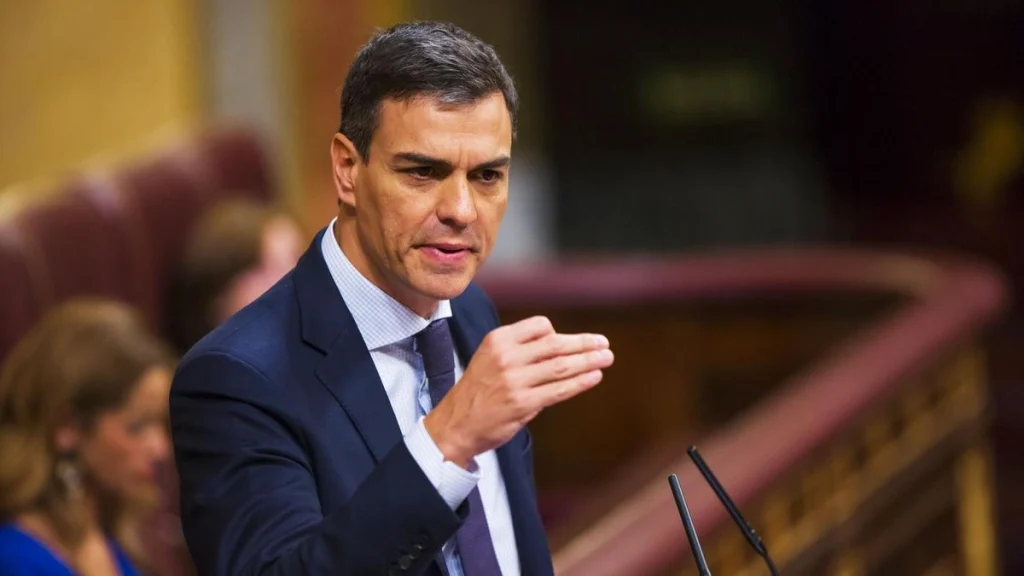
Prime Minister Pedro Sánchez answered Rome directly on X. “Solidarity and empathy are optional. Respect for European treaties and data is not,” he wrote. Alongside it he published Frontex figures for irregular entries between 2021 and 2026: 478,600 through Italy, 340,600 through the Western Balkans, 259,800 through Greece, and 234,760 through Spain.
Sánchez travelled to Ceuta on Friday morning with Interior Minister Fernando Grande-Marlaska. He described the mass entry as a violation of Spain’s territorial integrity that “deserves our reproach and our condemnation at the strongest possible level.” The government would deploy all the resources of the state to guarantee security in the city, he said.
Blame, in his account, lies with smuggling networks that seized on a recent court ruling. Irregular arrivals to Spain had fallen by more than 30% on a sustained basis, he told reporters. Madrid will also lay a line of buoys near the Tarajal breakwater to mark the border visibly.
At least 57 people died attempting the crossing, the Spanish government confirmed on Friday evening. That toll climbed through the day from an initial 18. Authorities in Ceuta said many of the dead drowned, while others were crushed at the breakwater that carries the border fence into the water.
By 6pm local time on Friday, an estimated 48,300 people had returned to Morocco voluntarily, according to Spain’s Interior Ministry. Vivas called the situation an absolute humanitarian and social emergency. Madrid refused his earlier request for a national emergency declaration, saying the relevant legislation does not treat migration flows as a security risk.
Brussels rejects Italy’s call
The European Commission rejected the calls, led by Italy, to suspend Spain from the Schengen Area. Officials stressed that Ceuta is subject to special rules that block onward movement, and that nobody who entered irregularly has reached the mainland.
Home Affairs Commissioner Magnus Brunner called the situation in Ceuta unacceptable and said he was in close contact with the Spanish authorities. “I reiterate that there are no movements towards mainland Europe or other member states,” he wrote on X.

Commission President Ursula von der Leyen struck a firmer note on Spain’s own handling of the crisis. She called the images from Ceuta unacceptable, said dangerous crossings must stop immediately and returns must be swift, and confirmed that Brussels was preparing additional operational support through Frontex.
European Council President António Costa posted a message of solidarity with Spain. Third-country nationals in Ceuta do not enjoy free movement to mainland Spain or the rest of the Schengen Area, he noted. A senior EU official put it more bluntly to AFP: “It’s not like they’re landing in Spain and moving onto France.”
No mechanism to expel a member state
No mechanism exists to expel a member state from Schengen. “There is no provision in the Schengen framework for this kind of action. One state cannot unilaterally expel another from the area,” Marie-Laure Basilien-Gainche, a law professor at Lyon 3 University, said.
Member states may instead reintroduce controls at their own internal borders. Where immediate action is needed against an unforeseeable serious threat, Article 25a of the Schengen Borders Code allows a member state to reimpose checks for one month without prior notification.
Notification must reach the European Parliament, the Council, the Commission, and the other member states at the same time. Controls introduced on that basis cannot run beyond three months in total, even if prolonged.
Rome is not an outlier in using the power. Commission records list eight Schengen states currently operating reintroduced internal controls: Austria, France, Germany, Italy, the Netherlands, Norway, Poland, and Sweden. Italy has run checks on its Slovenian border since June and is notified to continue until December.
Ceuta and Melilla already sit outside ordinary Schengen practice. Article 41 of the Schengen Borders Code preserves the special rules set out in Spain’s 1991 accession declaration on the two cities. Under those rules Spain maintains identity checks on flights and ferries leaving them for anywhere else in the zone.
That arrangement exists because Moroccan nationals resident in the neighboring provinces of Tétouan and Nador may enter the two cities without a visa for local cross-border traffic. Exit checks are what prevent that local exemption from opening the rest of the Schengen Area.
The Supreme Court ruling on sea returns
Spain’s Supreme Court narrowed the country’s summary return regime in judgment 814/2026, issued by the Fifth Section of its Administrative Litigation Chamber on June 29 and made public on July 8. It concerned an Algerian national intercepted in the water off Ceuta in November 2024 and handed straight back to Moroccan custody. He was given no administrative resolution and no chance to seek legal assistance or international protection.
Since 2015, the Tenth Additional Provision of Spain’s Aliens Law has permitted rechazo en frontera, or rejection at the border, for anyone overcoming the containment elements erected at Ceuta and Melilla. Judges held that the provision reaches only people who physically get past a fixed barrier such as a fence. A maritime boundary, they found, is not a containment element.
Surveillance technology does not close the gap, the Court added: Drones, thermal cameras, and sensors detect and monitor, but they do not physically stop a crossing. Summary returns could still be extended to sea arrivals if Spain installs physical maritime barriers, which is the gap the Tarajal buoys are meant to fill.
Reaction in other capitals
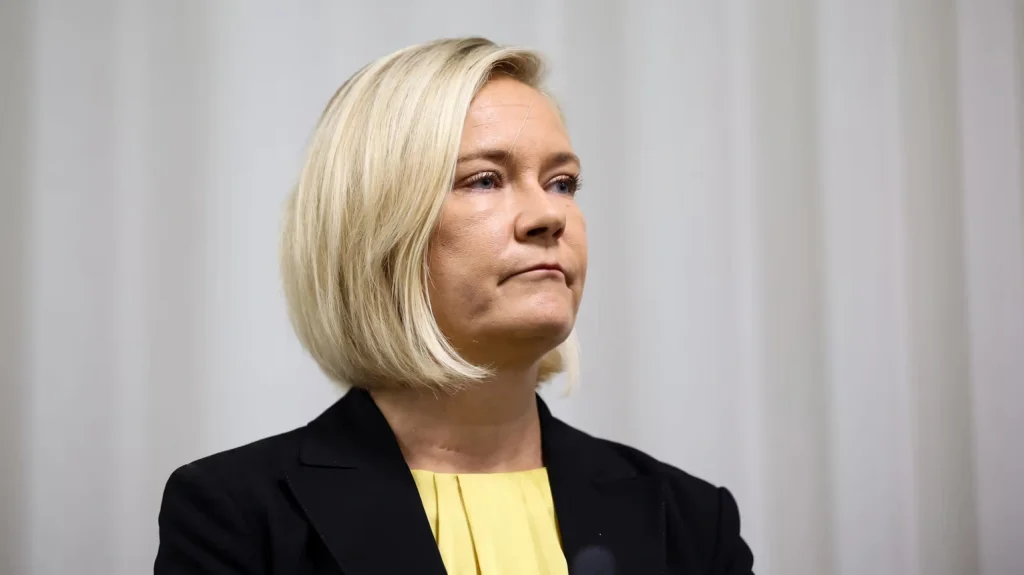
Finland’s Interior Minister Mari Rantanen said Spain had “completely failed to protect the external border of the Schengen area from incursions” and urged every European country to back the Italian proposal. Danish Prime Minister Mette Frederiksen said the EU must consider all options, including suspension of Schengen cooperation, and said she had already spoken to Meloni.
Swedish Prime Minister Ulf Kristersson called on Spain to regain control swiftly and meet its Schengen commitments. His government was prepared to act if Sweden’s security or migration situation came under threat, he added.
Austrian Chancellor Christian Stocker called the events a clear warning signal. Austria stood ready to close Schengen borders temporarily should migratory pressure reach its territory, he said.
Not every capital joined the pile-on. Dutch Foreign Minister Tom Berendsen called the developments worrying, saying he counted on Spain to protect the external border and on Morocco to take the necessary steps. He had spoken to both counterparts, he added, and welcomed the Commission’s offer of help.
France had already notified controls at all its internal borders, Spain’s included, running from May 1 to October 31. Nuñez said he had ordered those checks at the Spanish border strengthened overnight, and activated what Paris calls its Rapid Intervention Border Force.
The closest precedent came in May 2021, when around 9,000 people entered Ceuta over two days after Moroccan police eased border controls. A European Parliament resolution adopted the following month recorded at least 1,200 unaccompanied minors among them.
Political, not legal
Italy has not removed Spain from Schengen, and it lacks the power to do so. Rome has reintroduced temporary checks on its own air and sea entry points. Eight member states are doing the same thing right now, as the Schengen Borders Code permits.
Passengers flying or sailing between Italy and Spain should expect to present identification for the duration of the measure. Checks are to focus on third-country nationals rather than EU citizens.
What remains is political rather than legal. Finland and Denmark have backed suspension outright, and Sweden and Austria reserve the right to act alone.
Brussels, by refusing to entertain the demand, sits at odds with a growing bloc of capitals over who carries responsibility when an external border gives way.