

Dubai holds 173 investment migration firm offices, nearly double the next closest city. Lisbon sits at 93, London at 92, and two Cypriot cities, Limassol and Nicosia, land back-to-back in fourth and fifth with 87 and 85 offices respectively.
Those are the raw numbers from the IMI Rolodex, the investment migration market’s largest company database. Parsing the 1,230 firms with recorded office locations (out of the roughly 1,300 firms IMI referenced in November 2025) produces a hub-city map that aligns with parts of IMI’s published editorial view of the market, and diverges from it in telling ways.
What the Rolodex Counts
The IMI Rolodex tracks roughly 3,000 offices across nearly 500 cities, covering Residency and Citizenship by Investment (RCBI) advisories, single-country agents, law firms with dedicated immigration practices, and professional services providers with a documented investment migration focus. The ranking below counts each office a firm maintains in a specific city. Malta, Hong Kong, and Singapore appear as single-city entries because the Rolodex records them that way, reflecting their city-state or territory status.
Office distribution reflects where firms choose to plant their flag, which is a supply-side measure of market weight rather than a direct measure of applicant volume, transaction value, or high-net-worth individual inflow.
The Top 10 at a Glance
The ranking, by office count: Dubai (173), Lisbon (93), London (92), Limassol (87), Nicosia (85), Malta (84), Kuala Lumpur (62), Toronto (61), Hong Kong (56), and Istanbul (53). Just outside the cut: Athens (50), Delhi (50), Ho Chi Minh City (49), Shanghai (43), New York (41), and Singapore (40).

Three Patterns Worth Noting
Cyprus uniquely places two cities in the top five. Limassol and Nicosia together account for 172 offices, and if Larnaca (32) and Paphos (29) are added, the country’s total reaches 237 offices, exceeding every other country in the Rolodex except the United States, whose offices are dispersed across more than thirty cities.
Two of the ten hub cities, London and Toronto, function as major investment migration centers without a high-volume passive investor visa anchoring local demand. London’s Tier 1 closed in February 2022. Canada’s federal IIP has been gone since 2014, and while Quebec’s QIIP relaunched in 2024 with a French-language requirement and provincial nominee programs remain active, neither matches the firm-magnet pull the original Federal and Quebec IIPs once exerted.
Firms cluster in these cities for reasons unrelated to a local program: HNWI presence, banking and legal infrastructure, and historical market gravity. Cyprus holds a related but distinct position, having lost its Citizenship by Investment (CBI) in November 2020 while keeping its active Permanent Residence Program.
Middle East and North Africa
Dubai (173)
Dubai sits as the de facto capital of the investment migration market, and the Rolodex makes clear why. No other city comes close. Offices cluster in DIFC, Business Bay, and JLT, many of them regional headquarters for firms with pan-Middle East mandates covering the Gulf, South Asia, Egypt, and sub-Saharan Africa.
Of Dubai’s 173 offices, 102 are RCBI Advisories, the single largest concentration of any city in any category. Another 28 are General Immigration Advisories. The city serves as a distribution center for Caribbean CBI products, Portuguese, Greek, and Maltese golden visas, and US and Canadian programs, sold to Gulf, South Asian, and African clients based in or passing through the UAE.

Dubai also hosts the UAE Golden Visa, a 10-year residence permit for qualifying investors, which has driven its own inbound wealth migration. Henley & Partners projected the UAE would attract 9,800 millionaires in 2025, the highest of any country, though that figure predates the US-Iran war and its still-unfolding effect on Gulf wealth flows. The combination of outbound advisory concentration and inbound HNWI flow reinforces Dubai’s lead.

Europe
Europe holds six of the ten hub cities, more than any other region. The cluster reflects two overlapping dynamics: Active EU residency programs in Portugal, Cyprus, and Malta, and deep HNWI service infrastructure in non-EU cities like London and Istanbul.
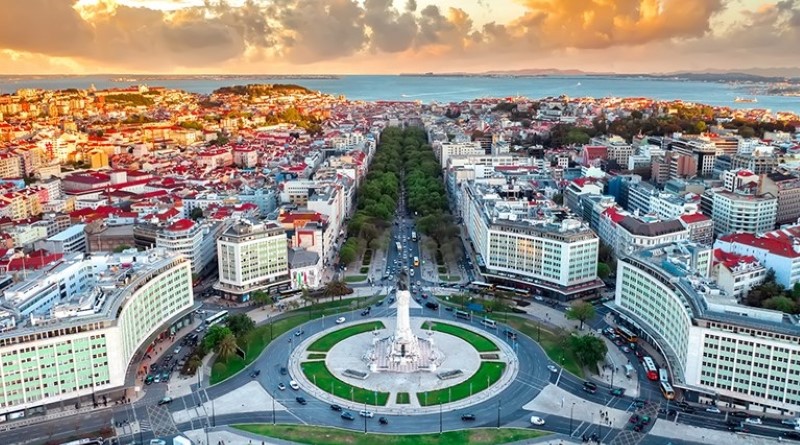
Lisbon (93)
Portugal’s capital holds second place overall. Of its 93 offices, 28 are RCBI Advisories, 24 are Law Firms, and 20 are RCBI Products (mostly Portugal Golden Visa fund managers and their distributors). The composition reflects what Lisbon actually is: The operational center for the Portugal Golden Visa, one of Europe’s most-applied-for investor visas despite multi-year processing delays.
The October 2023 real estate closure under the More Housing reform forced firms to pivot toward fund subscriptions (€500,000 minimum), and Lisbon’s fund manager ecosystem absorbed the redirected capital. The city also anchors Porto, Cascais, and Algarve-based satellite operations, though none of those secondary locations rank in the Rolodex top 20.
London (92)
London holds 92 offices, one behind Lisbon. The composition is different: 49 RCBI Advisories lead, supported by 13 Law Firms and 11 Single-Country Agents. The UK has had no active investor visa since the Tier 1 closed in February 2022, and a £2.5 million investor visa proposal put forward by House of Lords members in November 2025 has drawn no formal government response.
London’s firm density reflects its role as a global wealth-planning center. Major international RCBI specialists (Henley & Partners, Latitude, and several Middle Eastern-owned networks) maintain UK offices because London is where many HNWI clients already hold education, banking, and property exposure. More than 30,000 Tier 1 visas issued during the program’s lifetime left a legacy of advisor relationships that continue even without a new program to sell.
Limassol (87) and Nicosia (85)
Cyprus’s two top-five entries are distinct but interconnected. Limassol’s 87 offices are 48 Law Firms, 17 Professional Services, and 12 RCBI Products.
Nicosia’s 85 break down as 51 Law Firms and 21 Professional Services. The Cypriot hub is a legal-professional cluster more than an advisory cluster.
Between 2013 and 2020, the Cyprus Investment Program was the highest-volume CBI in Europe, and dozens of Cypriot firms built citizenship practices around it. After closure in November 2020, those firms pivoted to the Cyprus Permanent Residence Program (€300,000 real estate minimum), which has approved 28,660 golden visas since 2014, and to general wealth structuring for European and Middle Eastern clients.
Cyprus’s push for Schengen accession, with 2026 as the official target, would make the golden visa more attractive and could amplify the Rolodex concentration further.
Malta (84)
Malta’s Rolodex entry treats the country as a single-city hub, reflecting that firms cluster across Valletta, Sliema, and Saint Julian’s within a geography smaller than most major capitals. Of the 84 offices, 41 are Professional Services, 15 are RCBI Advisories, and 15 are Law Firms.
The April 2025 European Court of Justice ruling against Malta’s CBI triggered a professional reset. The government wound down the Malta Exceptional Investor Naturalization (MEIN) policy in July 2025 and replaced it with an expanded citizenship by merit framework that removes commercial elements.
The Malta Permanent Residence Programme (MPRP), restructured in July 2025 to unify contribution fees at €37,000 and reduce adult dependent fees to €7,500, remains active and has drawn in firms pivoting from CBI to residency. Malta’s four-generation family inclusion, covering spouses, children, parents, grandparents, and in some cases great-grandparents, keeps it editorially prominent even with reduced program variety.
Istanbul (53)
Istanbul houses effectively all of Türkiye’s Rolodex entries. The 53-office count includes 30 RCBI Advisories, 8 RCBI Products, and 7 Law Firms, nearly all focused on one program: The Türkiye CBI, priced at $400,000 in real estate since June 2022.
The city’s profile is an outbound-inbound hybrid. Turkish firms sell Turkish citizenship to Russian, Iranian, and Iraqi clients (the reported three top applicant nationalities by volume), while also advising Turkish HNWIs on Caribbean, Portuguese, and Maltese options. Istanbul’s Provincial Directorate of Migration Management rolled out same-day biometrics for CBI applicants in February 2026, cutting mandatory in-country stays from around seven days to one, a move that has already accelerated processing.

Asia-Pacific
Two cities make the cut, representing two different market shapes.
Kuala Lumpur (62)
Kuala Lumpur’s 62 offices are unusually agent-heavy: 37 are Single-Country Agents licensed to process Malaysia My Second Home (MM2H) applications. Only 8 offices are RCBI Advisories. The city’s hub status is almost entirely tied to MM2H, which the Malaysian government overhauled in June 2024 and which has since approved 3,172 principal applicants in 2025 alone, generating close to $1 billion in economic contributions.
The program’s tiered structure (Silver, Gold, and Platinum, plus separate SEZ and SFZ tracks) has produced a highly localized agent ecosystem. Most Rolodex-listed MM2H agents operate within central Kuala Lumpur, near the Ministry of Tourism, Arts and Culture offices where applications are processed.
Hong Kong (56)
Hong Kong’s 56 offices are led by 31 RCBI Advisories, with the remainder split across General Immigration Advisories, Single-Country Agents, and RCBI Products. The city is the historical Asian RCBI advisory capital, a position it held before the Capital Investment Entrant Scheme (CIES) closed in 2015 and reopened in March 2024.
The reopened CIES (minimum HK$30 million, approximately $3.85 million USD) reached 3,300 cumulative applications by April 13, 2026, pulling in roughly HK$99 billion in anticipated investment. A March 2025 rule change triggered a 440% surge in monthly applications. Hong Kong firms are typically multi-language operations serving Mainland Chinese, Taiwanese, and broader Asian HNWIs seeking mobility beyond the region.

North America
Only Toronto makes the list, and it does so despite Canada having no active federal investor visa for more than a decade.
Toronto (61)
Toronto’s 61 offices split into 23 RCBI Advisories, 19 Single-Country Agents, and 13 General Immigration Advisories. The agent weighting reflects the city’s role as the advisory face of Canadian immigration, even though the federal Immigrant Investor Program ended in 2014 and Quebec’s IIP, relaunched in January 2024 after a four-year suspension, now operates with a French-language requirement and a CAD 200,000 contribution that has narrowed its appeal.
Firms cluster in Toronto because Canada remains a top-tier global destination for investor-class relocation (Start-Up Visa, Intra-Company Transfer, provincial nominee programs), and because several of the largest international RCBI firms trace their origins to Canada’s Federal and Quebec IIPs. Harvey Law Group (now headquartered in Hong Kong), Arton Capital, and Apex Capital Partners all emerged from the Montreal-centered Quebec IIP ecosystem. Canadian offices for those firms remain split between Toronto, Montreal (31), and Vancouver (31), with Toronto holding the largest overall firm count.

What the Hub Map Reveals
Four patterns surface across the list.
Dubai’s lead is the dominant feature, with 173 offices outpacing the next four cities combined. Behind it, the cluster pattern is uneven: Cyprus stacks four cities into the top 20 on legal-professional infrastructure, while Toronto and London hold their slots without a high-volume local program backing them.
The Rolodex captures the supply side. IMI’s editorial shortlist (which keeps Singapore in and leaves Istanbul out) weights HNWI inflow, program prestige, and event gravity differently. Both views describe the same market.



