When the Soviet Union dissolved in December 1991, fifteen republics walked away from the same collapsed system with the same inheritance of command economies, ruble salaries, and borders that had been internal lines on a map a week earlier. What they did next could hardly have diverged more.
Three of them are now inside the European Union; two others turned themselves into low-tax, low-friction destinations for capital and remote work. Central Asia’s two largest economies launched golden visas of their own in 2025, Russia entered the market in 2023, and Belarus said it’s drafting what could become the region’s first citizenship by investment program.
Investment migration turns out to be a surprisingly precise lens for reading these trajectories. What a country offers investors, and what it declines to offer, says a great deal about where it sees itself going.
This guide covers the nine post-Soviet states with a meaningful investment migration story, from the Baltic coast to the Caucasus to Moscow.
The Baltics
Estonia, Latvia, and Lithuania share a distinct Soviet story: independent interwar republics annexed by Moscow in 1940, they never accepted the legality of their incorporation and were the first out the door, restoring statehood in 1990-91 rather than declaring it anew.

All three joined the EU and NATO in 2004 and eventually the euro. Their investor migration routes reflect that arc. These are integration offers, residence that can mature into an EU passport, and every one of them attaches real conditions.
Estonia: capital must work

No former Soviet republic traveled further from its starting point. After restoring independence in August 1991, Estonia ran the region’s most radical liberalization, flat taxes, wholesale privatization, and a digital government project so thorough that the country is now shorthand for e-governance, hosting Europe’s highest density of startups per capita. It adopted the euro in 2011.
Its immigration policy matches the economic philosophy: capital is welcome, but it must be productive. Estonia offers no citizenship by investment and no passive golden visa.
The Estonia Residence Permit for Major Investors requires at least €65,000 invested in the share capital of an Estonian company, with a €1 million tier that brings expedited processing and exemption from the annual immigration quota.
Shell structures are rejected; the investment must genuinely contribute to the economy. The startup-minded can look to Estonia’s busy founder-visa ecosystem instead.
Citizenship requires eight years of residence and Estonian-language proficiency, and Estonia does not recognize dual nationality.
Latvia: the region’s OG golden visa

Latvia’s road ran through rougher terrain, a banking sector that grew faster than its supervision, and the deepest recession in the EU when 2008 hit, but the destination was the same: EU membership in 2004, the euro in 2014.
Along the way it built something neither of its neighbors did: a true golden visa, one of Europe’s earliest.
The Latvia Golden Visa is one of the continent’s most affordable routes to Schengen residence. The headline option is €50,000 into the share capital of a qualifying Latvian company, conditioned on the company’s tax contribution and paired with a one-off state fee, with alternative routes through real estate, subordinated bank capital, and government bonds.
The permit demands almost nothing of the holder’s calendar: no residence obligation, just one entry per year to re-register. Permanent residence is available down the line, and citizenship after ten years, though naturalization requires renouncing other nationalities.
Latvia repeatedly tightened the program after 2014 and again after 2022 as scrutiny of Russian applicants intensified, a reminder that programs born of openness may eventually have to answer to geopolitics.
Lithuania: founders over financiers

Lithuania was the first republic to break, declaring independence in March 1990, a full year before the USSR’s formal end, and paying for it with a Soviet economic blockade and the deadly January 1991 crackdown at the Vilnius TV tower.
It joined the EU in 2004 and completed the Baltic set by adopting the euro in 2015, building a post-Soviet economy that leans hard into fintech and a Vilnius-centered startup scene.
Its immigration offer is the region’s most explicitly entrepreneurial. There is no golden visa and no citizenship by investment; the capital-based route is the Lithuania Startup Visa, a temporary residence permit for founders approved by Startup Visa Lithuania to build innovation-driven businesses.
No minimum investment applies, but applicants must show means of subsistence of roughly €12,000 for the first year, and the permit runs up to five years in total.
The citizenship math is the sternest of the three: typically ten years of lawful residence, a state-language exam, a constitutional test, and, since Lithuania does not recognize dual nationality, renunciation of any existing passport.
The Caucasus
South of the Baltics’ orderly convergence, Georgia and Armenia took a different bet: rather than joining a bloc, they would out-compete on ease. Low thresholds, light presence requirements, and friendly tax regimes are the pitch, and both have become fixtures on plan-B shortlists precisely because getting in asks so little.
Georgia: the reformer at a crossroads

Georgia’s first post-Soviet decade after its April 1991 independence was brutal: civil war, separatist conflicts in Abkhazia and South Ossetia, and economic collapse.
The 2003 Rose Revolution reversed the story, sweeping deregulation, flat low taxes, and an anti-corruption drive, turning Georgia into one of the world’s easiest places to do business. It earned EU candidate status in December 2023, but relations with Brussels have deteriorated sharply since 2024, leaving its European trajectory genuinely uncertain, an ambiguity investors should price in.
The Georgia Investor Visas framework is among the region’s most accessible. The property route grants a renewable one-year residence permit against real estate holdings of at least $150,000, raised from $100,000 on March 1, 2026, and holdings can be combined across multiple properties.
A $300,000 commitment secures an immediate five-year permit covering the applicant, spouse, and minor children, convertible to indefinite stay after five years.
There is no citizenship shortcut: naturalization requires ten continuous years, with permanent residence opening after six for those substantially present.
Georgia taxes residents only on Georgian-source income, leaving foreign earnings untouched.
Armenia: minimum friction

Armenia’s September 1991 independence opened onto hard geography: the long war with Azerbaijan over Nagorno-Karabakh, a sealed Turkish border, and deep economic and security dependence on Russia, ties Yerevan has lately and visibly tried to loosen as it inches toward Europe.
It is not an EU candidate, and it remains inside the Russia-led Eurasian Economic Union, which gives Armenian passport holders free movement across that bloc alongside visa-free access to markets including China, Iran, and the UAE.
What Armenia sells is process, or rather the near-absence of it. The Armenia Permanent Residency route for business owners and investors can be applied for entirely remotely, sets no minimum investment, and imposes no physical-presence requirement, a combination few other countries offer.
Permit holders staying under 183 days a year keep non-resident status, and those who do become tax resident face no capital gains tax and no tax on gifts, inheritance, or net worth.
One caveat for the privacy-minded: Armenia began exchanging financial-account data under the CRS in 2025, so the residency’s discretion no longer extends to banking.
Central Asia
For three decades, Central Asia sat out the investment migration market entirely. That changed in mid-2025, when the region’s two largest economies launched golden visas within weeks of each other, betting that capital that once flowed to Dubai or Lisbon might consider Almaty or Tashkent.
Kazakhstan: the ten-year offer

Kazakhstan was the last republic to declare independence, on December 16, 1991, ten days before the USSR formally ceased to exist. Its post-Soviet path has run on hydrocarbons and a deliberate multi-vector foreign policy, balancing Russia, China, and the West while building Central Asia’s largest economy. It remains a member of the Eurasian Economic Union.
The Kazakhstan Golden Visa took effect on May 10, 2025, granting a residence permit of up to ten years, among the longest validity periods of any investor visa worldwide, against a minimum investment of US$300,000 in the charter capital of Kazakh companies or in locally listed securities.
Real estate does not qualify, a deliberate choice channeling capital toward productive investment. Applications are processed fully electronically, the permit covers spouses and dependent family members, and citizenship becomes possible after five years of residence.
A complementary route runs through the Astana International Financial Centre, whose Investment Tax Residency Programme requires just US$60,000 in securities listed on the Astana exchange for a five-year visa, with tax residency available after only 90 days of presence.
Uzbekistan: the reformer’s pivot
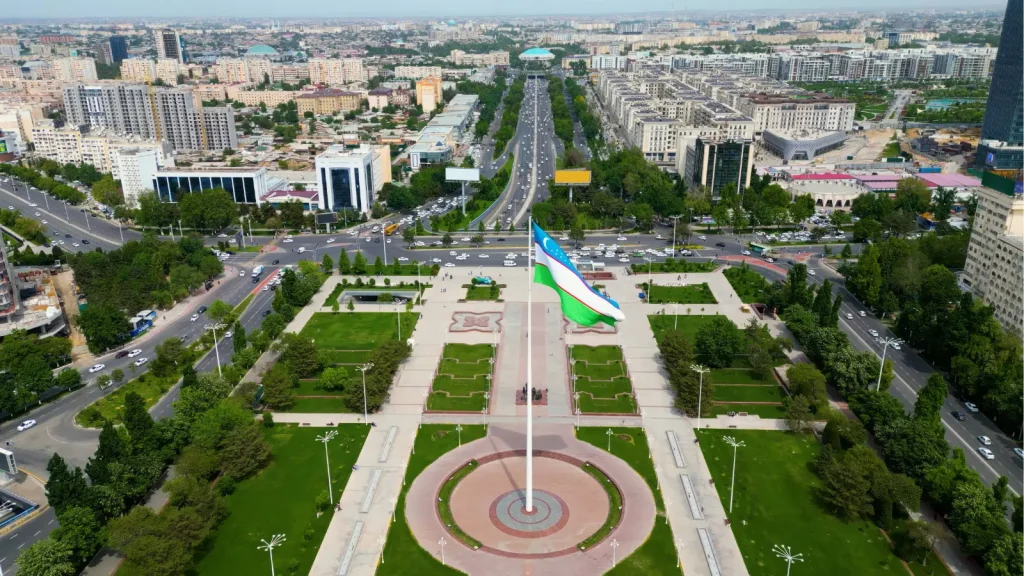
Uzbekistan declared independence on September 1, 1991, then spent a quarter-century under Islam Karimov as one of the most closed economies in the former Union. The turn came after 2017, when President Shavkat Mirziyoyev launched market reforms that have since drawn over US$100 billion in foreign investment. The country floated a US$1 million citizenship by investment bill in 2022 that never materialized; it chose residency instead.
The Uzbekistan Investor Visa framework now runs three tracks. A donation-based golden visa, effective June 1, 2025, grants a five-year permit for a US$250,000 contribution to a state account, plus US$150,000 per family member. An investor route offers a three-year renewable permit for roughly US$250,000 in a locally registered company, or a ten-year permit for US$3 million in productive enterprises, with dependents included at no extra cost.
A real estate route grants permanent residency at regionally tiered thresholds, from US$100,000 in the regions to US$300,000 in Tashkent.
Citizenship remains distant by design: five years of permanent residence, proficiency in Uzbek, and renunciation of all other nationalities, as Uzbekistan does not permit dual citizenship.
The Union State
Russia and Belarus never fully separated. Bound since 1999 in a formal Union State, they share open borders, deep economic integration, and, since 2022, a common position outside the Western financial system. Both now court investor residents, and each grants a measure of access to the other.
Russia: two offers, one unexpected winner
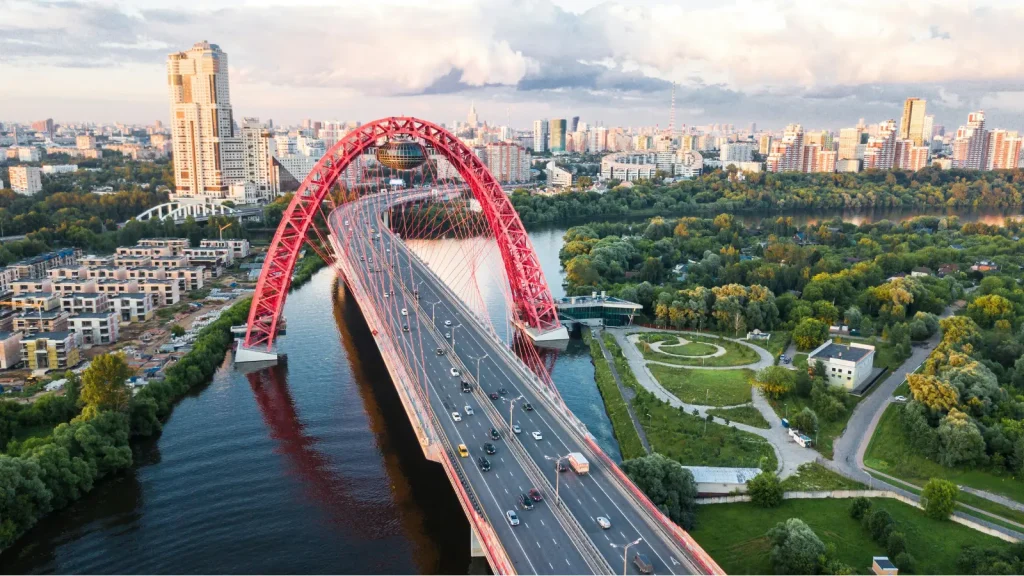
Russia needs no independence date; it is the state the other fourteen left. It inherited the USSR’s seat at the UN and its economic center of gravity, and since 2022 its energy-anchored economy has operated under the most extensive sanctions regime ever applied to a major economy.
It entered the investment migration market in January 2023. The Russia Golden Visa grants permanent residency outright against a minimum investment of RUB 15 million, with routes through business, regionally tiered real estate, and socially significant projects. The terms are generous: five-generation family inclusion, a five-year path to citizenship, and, following a late-2025 amendment, no physical-presence requirement.
Applicants must pass a Russian-language test, unique among major residence-by-investment programs. Uptake has been modest: 40 investors in three years against a target of 300 to 400 annually, with sanctions limiting accessibility for much of the traditional market.
Its second track has fared better. The Shared Values Visa, launched in August 2024, requires no investment: it grants temporary residence to foreigners who declare alignment with Russia’s traditional values, a position Moscow has presented as an offer to Westerners disaffected with their home societies’ direction.
By May 2025 it had drawn over 1,150 applications, led by Germans, Latvians, and Americans, several times the golden visa’s intake.
Belarus: residency now, citizenship maybe
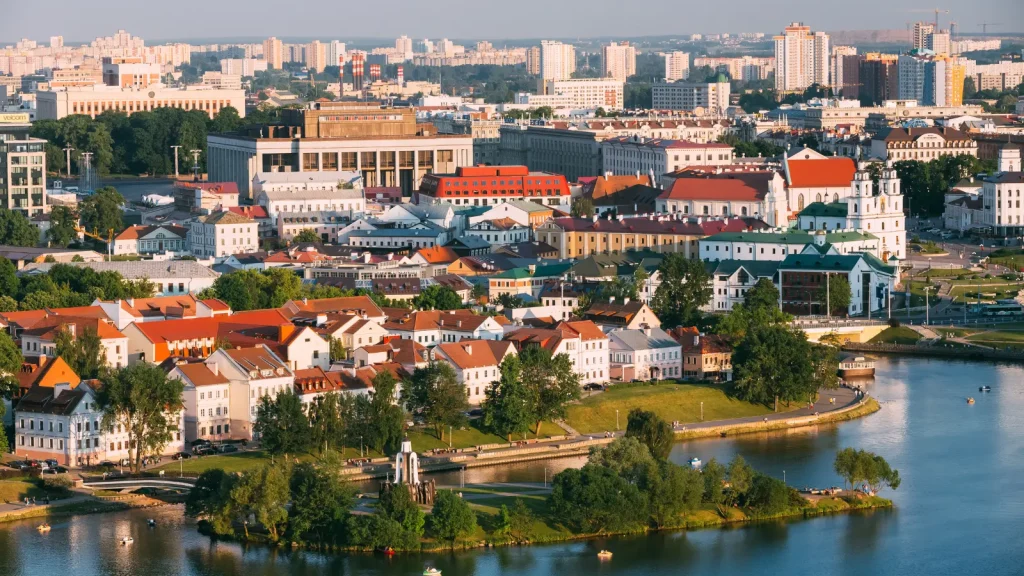
Belarus declared independence in August 1991 and has been governed by Alexander Lukashenko since 1994, making it the post-Soviet state whose political system has changed least. Its economy remains closely tied to Russia’s, a bond formalized through the Union State and the Eurasian Economic Union, and it operates under extensive Western sanctions.
The Belarus Investor Residence permit grants permanent residency against a minimum investment of 15,000 basic units, approximately US$200,000 at current rates, through establishing a business, acquiring intellectual property rights, or participating in public-private partnerships.
Maintaining the status requires genuine presence, with holders expected to spend at least half the year in the country, and naturalization becomes possible after seven years of continuous residence.
The Union State dimension adds a distinctive layer, as Belarusian status carries practical access to Russia, and EAEU membership extends free movement across the bloc.
The offer may soon expand. In January 2026, Belarusian lawmakers advanced a draft law that would grant citizenship to qualifying foreign investors, with practitioners anticipating parliamentary approval within months, though thresholds remain undisclosed. If enacted, it would be the first citizenship by investment program in the former Soviet space.
Choosing your corner of the former Union
Read together, the nine countries form a decision tree rather than a ranking. An investor whose end goal is an EU passport looks to the Baltics and accepts the conditions that come with it, from active capital and language exams to decade-long timelines and, in Tallinn and Vilnius, the surrender of any other citizenship.
An investor who prioritizes speed, low entry costs, and tax efficiency looks to Tbilisi or Yerevan, weighing those advantages against more limited passport mobility and a more complex geopolitical environment.
Russia and Belarus sit in a category of their own, offering generous terms on paper with practical accessibility that depends largely on the applicant’s nationality, banking relationships, and sanctions exposure.
Kazakhstan and Uzbekistan offer a third proposition, regional footholds in economies actively courting capital, though with passports of limited mobility and programs too new to have track records.
The programs above are not the only residency routes into these countries; several also run digital nomad and other residency visa types. For every option in every country, browse the IMI Program Pages.