
For three decades after the Soviet collapse, Central Asia sat on the margins of the investment migration market. That changed in 2025, when Kazakhstan and Uzbekistan, the region’s two largest economies, launched dedicated golden visas within weeks of each other.
Both countries now sell residence permits to foreign investors. Neither sells a passport, and neither launch is the region’s only investor route: Kyrgyzstan and Turkmenistan run quieter investment residence programs that predate both, and only Tajikistan offers nothing at all.
What no country in Central Asia offers is citizenship by investment. Entry prices across the region run from roughly US$60,000 to US$500,000, the naturalization timelines range from under three years to seven, and the rules on keeping the passport you already hold change from one republic to the next.
This guide covers what each of the five offers, what it costs, and where the real value sits.
Kazakhstan
Kazakhstan runs the region’s most developed offer. The Kazakhstan Golden Visa took effect on May 10, 2025, and grants a renewable ten-year residence permit, among the longest validity periods of any investor visa in the world.

The program requires that applicants invest at least US$300,000 in the charter capital of Kazakh companies or in locally listed securities. Real estate does not qualify, a deliberate choice that channels capital toward operating businesses rather than property.
Applications run fully electronically, and the permit covers a spouse and dependent children.
A second, cheaper route runs through the Astana International Financial Centre (AIFC), the country’s common-law financial zone. Its Investment Tax Residency Programme requires that applicants hold roughly US$60,000 in securities listed on the Astana exchange, and grants a five-year visa, with tax residency available after only 90 days in the country.
The tax treatment is the draw. Income earned outside the zone sits outside the Kazakh tax net for AIFC residents, which positions Astana as the region’s answer to Dubai for entrepreneurs who want a low-tax base rather than a new passport.
Kazakhstan also courts remote workers. The one-year Neo Nomad Visa, launched in November 2024, lets foreign nationals live in the country while working for employers abroad, and a separate longer-term residency track targets technology specialists. Neither is an investment route, but both appear in IMI’s Complete Digital Nomad Visa Guide.
Astana picked up an unexpected draw in August 2026, when the Network School reopened there. The co-living and co-working community, founded by former Coinbase chief technology officer Balaji Srinivasan, relocated to Kazakhstan after Malaysian authorities revoked its operator’s business license in Johor in July.
Kazakhstan signed a five-year cooperation agreement with the project covering AI education, research, and technology entrepreneurship, and the school says the Astana campus was built in partnership with the government.
Srinivasan has said the campus will come with expedited visas and easier company redomiciliation. Read that as a stated intention rather than a published immigration route, because the agreement sets a framework and any fast-track processing still has to run through Kazakhstan’s existing visa and corporate rules.
Citizenship is a longer road than the visa timelines suggest. Investors can apply for permanent residency after about two years on the golden visa, and the five-year naturalization clock then runs on permanent-resident status, with a 183-day annual presence requirement.
Applicants must pass an exam on the Kazakh language, history, and constitution, prove financial self-sufficiency, and clear a background check. Kazakhstan prohibits dual citizenship, so naturalizing means renouncing your current passport. In practice, the full path runs closer to seven years than five.
One structural benefit sits behind the passport’s modest travel value. As a member of the Eurasian Economic Union (EAEU), Kazakhstan gives its citizens the right to live and work across the bloc, which also includes Armenia, Belarus, Kyrgyzstan, and Russia.
Uzbekistan
Uzbekistan launched its own donation-based golden visa on June 1, 2025, under a presidential decree signed that April. It sits within a broader Uzbekistan Investor Visa framework that now runs several tracks.
The donation route grants a five-year residence permit for a one-off contribution of US$250,000 to a state account, plus US$150,000 for each family member. It is open to all nationalities.
An investment route offers a three-year renewable permit for around US$250,000 placed in a locally registered company, or a ten-year permit for US$3 million in enterprises that produce goods and services, with dependents included at no extra cost.
A separate real estate route grants permanent residency at thresholds that scale by location, from US$100,000 in the regions to US$300,000 in Tashkent, and unlike the donation route it is limited to a defined list of eligible nationalities.
One caution applies to the donation track. When the decree passed, its implementing resolution had not yet been published, and as of mid-2025 that resolution still appeared to be pending, which left banks unable to accept payments. Confirm the current status before relying on this route.
The investor visa does not lead directly to a passport. Foreigners who hold permanent residence for at least five years, show proficiency in Uzbek, and renounce all other nationalities can apply to naturalize.
Uzbekistan considered going further. The government floated a US$1 million citizenship by investment bill in 2022, but it never became law, and the country settled on residency instead.
Kyrgyzstan, Turkmenistan, and Tajikistan
Neither Kyrgyzstan nor Turkmenistan markets a golden visa, but both keep investor residence routes on the books, and both predate the 2025 launches next door.
The Kyrgyzstan Investment Visa is the cheapest entry in the region and the fastest route to a passport in it. It requires KGS 10 million, roughly US$114,000, invested within the previous three years in a qualifying sector such as industry, manufacturing, agriculture, banking, energy, education, medicine, construction, or information and communication technology.
Approved investors receive permanent residency rather than a temporary permit. Citizenship becomes available after about two years of actively running the business, with the application itself adding roughly six months. The route rests on Resolution No. 632 of 2019 and runs through the State Investment Promotion and Protection Agency.
Because the threshold is set in som, the dollar equivalent moves with the exchange rate.
Turkmenistan, one of the world’s most closed countries, has a route of its own. The Turkmenistan Residence Permit for Investors, established under Law No. 96-VI of 2023, requires US$500,000 invested in a new or existing business, or exceptional achievement in science, culture, art, or sport.
Permanent residency follows two years of continuous residence, and citizenship after seven, conditioned on Turkmen language ability, income earned from legal activity inside the country, and an oath to the constitution.
Tajikistan is the only republic in the region with no investor route at all. Foreign nationals there rely on conventional residence permits.
The Citizenship Reality
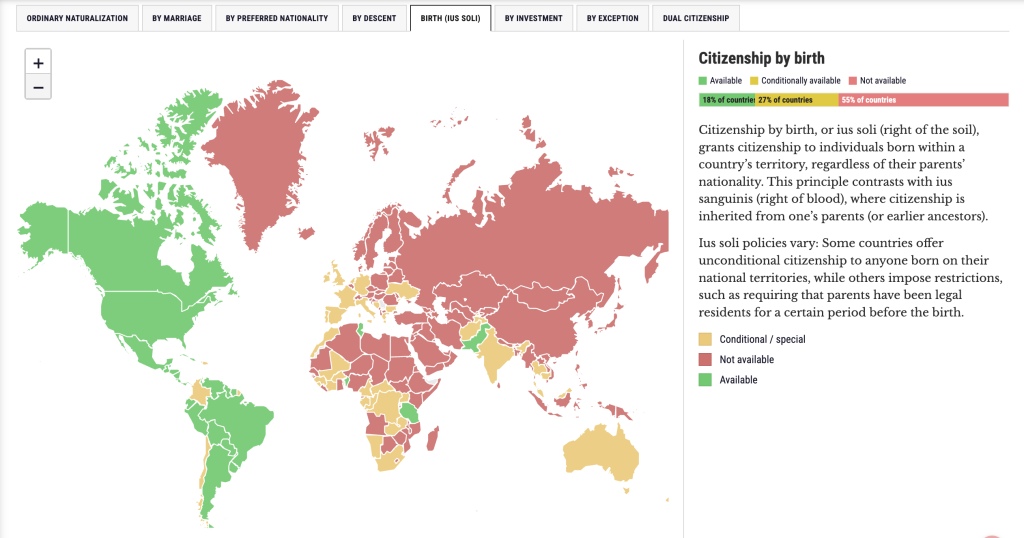
No country in Central Asia sells citizenship. None runs a citizenship by investment (CBI) program, so every investor route to a regional passport runs through naturalization and the residence that requires.
The timelines vary more than the region’s reputation suggests. Kyrgyzstan’s investor route reaches citizenship in under three years. Uzbekistan asks for five years of permanent residence, Turkmenistan seven, and Kazakhstan closer to seven once the step up to permanent residency is counted.
One route skips residence entirely, though it has nothing to do with investment. Under the Quadrilateral Agreement between Kyrgyzstan, Kazakhstan, Belarus, and Russia, anyone born in the former Soviet Union before 1991 can naturalize in a member state without ever living there.
IMI has covered what happened when demand hit that door. More than 7,000 Russians took Kyrgyz citizenship in 2024, a 1,650% jump from 2021, after Caribbean CBI programs closed to Russian applicants. Processing stretched from four months to nine, and Kyrgyzstan suspended Russian applications in February 2025.
The dual-citizenship rules are the sharpest constraint. Kazakhstan and Uzbekistan both require renunciation at naturalization. Turkmenistan does not recognize dual nationality either. Tajikistan bars it too, with one exception, a bilateral treaty with Russia that recognizes Tajik-Russian dual citizenship.
Kyrgyzstan is the outlier. Alone among the five, it recognizes dual citizenship in principle, though not for citizens of neighboring China, Kazakhstan, Tajikistan, and Uzbekistan, and it bars dual nationals from the presidency, parliament, the judiciary, and senior state posts.
Passport strength is the other limit. Kazakh and Uzbek passports open a modest set of destinations visa-free, well below what a Caribbean or European passport delivers, so the citizenship at the end of the road buys limited mobility.
The exception that carries real weight is Eurasian Economic Union membership. Kazakh and Kyrgyz citizens can live and work across Armenia, Belarus, Kazakhstan, Kyrgyzstan, and Russia, which turns either passport into a regional settlement right rather than a global travel document.
Who Central Asia Is For
The value here sits mostly in a foothold and a tax base rather than a second passport.
For a tax-motivated entrepreneur, the AIFC route is the standout. A US$60,000 placement, a 90-day path to tax residency, and no local tax on income earned outside the zone make Astana a credible low-tax base for someone building a company in the region.
For anyone who does want a Central Asian passport, Kyrgyzstan is the only serious option. It has the lowest entry price, the shortest naturalization timeline, and it is the one republic that does not ask you to surrender your existing citizenship, though it expects you to genuinely run the business you invested in.
For an investor who wants a larger footing and a longer permit, Kazakhstan’s US$300,000 golden visa or Uzbekistan’s US$3 million enterprise route each grant a decade of residence and a slow path toward naturalization for those who intend to live there.
For a family that wants residence without running a business, Uzbekistan’s donation and real estate routes are the simplest entry, once the donation track’s operating status is confirmed.
The region suits almost no one whose goal is mobility. There is no Schengen access, the passports are weak, and the citizenship timelines are long. Anyone chasing visa-free travel is better served by Caribbean citizenship or a European golden visa.
How to Read These Programs
Central Asia entered the investment migration market as a residency destination, and that is how it should be judged. The entry costs are low, the tax terms in Astana are genuinely attractive, and the programs are new enough that terms may shift as the two governments refine them.
Treat these as tools for living and doing business in the region, priced for that purpose. Anyone who buys in expecting a strong passport at the end will be disappointed, because the passport was never the product.