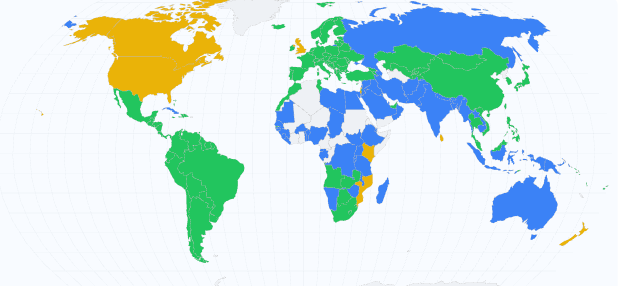

The map of where a foreigner can buy a home is being redrawn faster than at any point in a decade, and it is moving in both directions at once. Canada extended its outright ban, Australia froze sales of existing homes to foreigners, and South Korea added occupancy rules, while New Zealand and Saudi Arabia began opening their doors again.
For anyone buying across borders, two things behind a country’s rules count for more than the headline label: The mechanism that limits foreign buyers, and the direction that rule is heading.
Most markets fall somewhere between full freehold ownership, where you own the land and the building outright, and an outright ban. In between lie condominium caps, coastal exclusion zones, government-consent regimes, and ownership rights that expire.
This guide covers the markets investors ask about most, sorted by how open they are and where each one is going. Every figure below was current as of August 2026.

The Markets Where Foreigners Buy on the Same Terms as Locals
At the open end of the spectrum, a foreign passport changes almost nothing about what you can buy.
The United States places no federal restriction on foreign buyers. You can purchase a home in any state and take title in your own name.
A federal withholding rule known as FIRPTA takes 15% of the sale price when a foreign owner sells, and a handful of states add transfer taxes for non-residents.
The United Kingdom is equally open to the purchase itself. Foreign buyers pay a 2% stamp duty surcharge in England and Northern Ireland on top of standard rates, a cost rather than a barrier.
Most of Western Europe lets foreigners buy freely. Portugal, Italy, France, and Ireland impose no nationality test on a residential purchase, and Greece is open on the same basis.

The recent changes in these markets fall on the residency side. Portugal removed property from its golden visa in 2023, and Greece raised its investor-residency threshold to €800,000 in Athens, Thessaloniki, and the most popular islands.
A foreigner can buy a home in either country today. Using that purchase to obtain a residence permit has become harder or, in some cases, impossible.
Outside Europe, several markets are just as open. Japan applies no restriction to foreign ownership of homes or land, one of the few major Asian markets that treats foreign and domestic buyers identically.
Georgia, Panama, and Brazil all let foreigners own urban property as freehold, with Brazil reserving its limits for rural and border land.
Where You Can Own the Apartment but Never the Land
A large group of markets welcomes foreign money into apartments while reserving land for locals. The distinction decides both what you can buy and how much of any building foreigners can own.
Thailand is the standard case. Foreigners can own a condominium unit outright, with the title in their own name, but the law caps foreign ownership at 49% of a building’s floor area.
Once that quota fills, the routes left are a 30-year lease or a Thai company structure. Foreigners cannot own land, so villas sell as long leases or building-only title.
Proposals to raise the condominium cap to 75% and extend leases to 99 years have circulated, and neither had become law as of August 2026.
The Philippines uses a similar model. Its Condominium Act bars the transfer of a unit to anyone other than Filipino citizens or corporations at least sixty percent Filipino-owned, and foreigners cannot own land.
Vietnam restructured its foreign-ownership rules under its 2023 Housing Law and 2024 Land Law, which let foreigners own apartments on a renewable 50-year term.
The caps are specific. Foreigners may own up to 30% of the units in a building and no more than 250 houses in a single ward, and the underlying land use right never transfers.

The Places Inside a Country Where Foreigners Cannot Buy
Some markets are open in general but exclude specific ground.
Mexico is the clearest example. Foreigners can buy directly and outright across most of the country, including Mexico City and the interior.
Within the restricted zone, defined as land within 50 kilometers of the coast and 100 kilometers of a border, the constitution bars direct foreign ownership. Buyers take beach and border property through a fideicomiso, a bank trust that takes title on the foreigner’s behalf, or through a Mexican company.
Turkey lets foreigners buy across most of the country and grants citizenship to those who invest $400,000 in property. It also bars purchases near military and security zones, and caps foreign ownership at 30 hectares per buyer and 10% of any district.
Turkey replaced its old reciprocity test with a country-list system in 2012, and citizens of a handful of countries remain barred. A buyer can clear a purchase in Istanbul and be refused a few provinces away.

Where Buying Means Permission or a Premium
A third group leaves the door open but adds a gatekeeper, either an approval process or a cost high enough to work as one.
Switzerland is the strictest. The federal Lex Koller law bars most non-resident foreigners from buying residential property and caps the number of holiday homes sold to foreigners each year.
The Federal Council moved to tighten the rules further, opening a public consultation on the draft in April 2026. Most foreigners can buy a Swiss home only once they have Swiss residence.
Singapore leaves condominiums open to foreigners but rations demand with price. A foreign buyer pays a 60% additional buyer’s stamp duty on any residential purchase.
Landed homes need government approval that is rarely granted outside the Sentosa Cove enclave. Nationals of the United States and a few treaty partners are treated as locals for the duty.
Malaysia sets a price floor instead. Foreigners must buy above a minimum value, commonly one million ringgit though it varies by state, and most purchases need state-level consent.
South Korea has added a behavioral test. Under rules that took effect on August 26, 2025, foreign buyers must obtain a permit before buying in Seoul, in 23 cities and counties in Gyeonggi Province, and in seven districts of Incheon.
Approved buyers must then move into the property within four months and own it for at least two years. The designation was set to last one year, to August 25, 2026, and the government can extend it, so confirm its current status before you commit.
India draws its line by who you are. Non-resident Indians and people with the Overseas Citizen of India card can buy residential and commercial property freely.
A foreign national with no Indian origin generally cannot buy a home without central-bank approval, and citizens of several neighboring countries are barred outright.
The Markets That Have Shut the Door
At the closed end are the markets where a foreigner, in practice, cannot buy a home at all.
Canada has banned foreign nationals and foreign-controlled companies from buying residential property since the start of 2023, and Ottawa extended the ban to January 1, 2027.
The law reaches only property inside a census metropolitan area or census agglomeration, so smaller towns and rural Canada are outside it. It also carves out some students, temporary workers, and refugee claimants, and exempts buildings with four or more units.
Australia froze its established-housing market to foreigners in April 2025, and the May 2026 federal budget extended the ban through June 2029, well past its original March 2027 end date.
New builds remain open to foreign buyers who obtain approval, which preserves Australia’s long-standing policy of steering foreign money into new supply rather than existing stock.
China reads as closed for most outside buyers. A foreigner generally may buy only one residential unit for personal use, and only after living, working, or studying in the country for at least a year.
Indonesia bars foreigners from freehold. The strongest title, *Hak Milik*, is reserved for citizens, so foreigners take a right-to-use title, a lease, or property through an Indonesian company, none of which conveys outright ownership of the land.
New Zealand belongs in this closed group too, having banned most foreign residential purchases since 2018. It is also the clearest sign that the trend can move the other way.

The Doors Now Swinging Open
For years the policy momentum moved one way, toward tighter foreign-buyer rules. That is no longer uniform.
New Zealand’s 2018 ban exempted Australians, Singaporeans, and buyers of new apartments, and in 2025 parliament went further, passing amendments that let people with its Active Investor Plus visa buy homes worth NZ$5 million or more.
The change took effect in March 2026, after an earlier delay. It reframes the ban as a tool aimed at the wider market while opening a lane for large investors.
Saudi Arabia is moving further. A new law that took effect in January 2026 lets foreigners buy in designated zones, with foreign residents able to own one home and extra conditions on Makkah and Madinah.
That law replaces a system which had largely confined independent purchases to people with Saudi Arabia’s premium residency.
The reverse is visible too. Spain lets foreigners buy, but it ended its golden visa on April 3, 2025, and its government has put a tax of up to 100% on non-EU, non-resident buyers before parliament, where it stalled for lack of support and, as of March 2026, had not been debated.
Open on paper, Spain is working to make itself less attractive to the same buyers other markets are now courting, part of a wider pattern in which policy risk has overtaken asset risk for cross-border property investors.

What the Label Misses
The map of foreign property ownership is more detailed than any single label suggests, and it is not fixed.
Two markets can read as equally open when one gives you freehold and the other taxes you out of the deal at closing. Among the closed markets, one may be loosening as its neighbor tightens.
The mechanism tells you what you can buy. The direction tells you whether the rule will be there when you transact.
These rules move often, and governments revise them after they land. Canada narrowed its own prohibition in 2023, after provincial and municipal governments and industry raised concerns about how widely it reached.
That is why a market which is closed today can reopen, as New Zealand and Saudi Arabia are now showing.
Before you wire funds anywhere, confirm three things in writing: Whether you can own freehold or only a lease, whether the specific location and building are open to foreign buyers, and what the rule is scheduled to do next.