
Washington’s Senate gave final approval to Senate Bill 6346 on March 12, concurring with House amendments passed two days earlier and clearing the way for the state’s first personal income tax in nearly a century.
Governor Bob Ferguson received the bill on March 13. He has pledged to sign but has not yet done so, and has until April 4 to act.
The tax, if enacted, would impose a 9.9% rate on household income above US$1 million starting January 1, 2028. First payments would come due in 2029. Fiscal analysts project US$3.4 billion in annual revenue from roughly 21,000 filers, less than half of one percent of the state’s population.
No state has adopted a broad-based income tax while operating under a constitution that courts have spent nine decades interpreting to prohibit one.

The Bill’s Path Through Olympia
Six weeks. That is how long SB 6346 took to travel from introduction to final passage, an extraordinary pace for legislation that rewrites a state’s tax identity.

Senate Majority Leader Jamie Pedersen (D-Seattle) introduced the bill on February 4, the opening week of a 60-day short session. Ways & Means advanced it along party lines.
On February 16, after three and a half hours of floor debate, the full Senate voted 27-22 in favor. Three Democrats broke ranks: Senators Adrian Cortes, Drew Hansen, and Deb Krishnadasan sided with all 19 Republicans.
Reaching the House proved harder. Ferguson objected to the bill’s early form, pressing for greater small-business relief. Tech and AI executives sent a letter urging him to raise the capital gains tax instead. With eight days left in the session, SB 6346 had not yet reached the House floor.
April Berg (D-Mill Creek), the House Finance Committee chair, broke the logjam with a striking amendment.
It expanded Working Families Tax Credit eligibility to 460,000 additional households, increased business and occupation (B&O) tax credits for small businesses, and added sales tax exemptions on diapers, hygiene products, and over-the-counter medicines. Ferguson endorsed the amended version on March 7.

What followed was the longest floor debate in Washington’s legislative history. The House took up SB 6346 on the evening of March 9. Republicans deployed over 80 amendments.
Democrats defeated most on party-line votes. Democrats also accepted an amendment tying SB 6346’s validity to the US$1 million standard deduction, a concession linked to I-2111, the legislature’s 2024 prohibition on new income taxes. The debate ran continuously for more than 25 hours.
The House passed the bill on March 10. [EDITOR: vote recorded as 51-46 per WA legislature roll call and WAWG; some sources report 52-46. Please reconcile.] Eight Democrats voted no. Two days later, on the session’s final evening, the Senate concurred with House amendments 27-21 after defeating a Republican procedural challenge. By 8:25 p.m., the session was over.
Mechanics of the Levy
SB 6346 would start with federal adjusted gross income and apply a US$1 million standard deduction per household, indexed for inflation beginning in 2030. That threshold would not double for married couples. Tax advisors have flagged the resulting marriage penalty: Two earners at US$700,000 each would owe nothing if single but would trigger the tax on US$400,000 of combined income if they file jointly.
Real estate sales, gains from qualified family-owned small businesses, and certain retirement income would be excluded. Capital gains already taxed under Washington’s existing 7% to 9.9% levy would receive a credit. Charitable deductions of up to US$100,000 would be permitted.

Nonresidents with Washington-sourced income would also fall within scope, apportioning income based on days worked in the state or, for business income, a single sales factor formula. A pass-through entity tax (PTET) election would allow partnerships, LLCs, and S corporations to pay at the entity level on behalf of qualifying owners.
Seattle’s 18% All-In Rate
For high earners in Seattle, the proposed tax would stack on top of levies that already target the wealthy. The Tax Foundation calculates a combined state and local marginal rate of 18.037% on wage income and restricted stock unit (RSU) vesting above the threshold: 9.9% from SB 6346, 0.58% from the WA Cares long-term care payroll tax, 5% from Seattle’s Social Housing Tax, and up to 2.557% from Seattle’s JumpStart Payroll Expense Tax.
Add federal income tax at 37% and the 2.9% Medicare tax, and the all-in top marginal rate would reach 57.937%. No other US city or state combination produces a higher figure.
RSU vesting makes the proposed tax particularly consequential for Washington’s 360,000-strong tech workforce. Startup employees with “double trigger” RSUs could see five years of accumulated stock vest at once upon an IPO, pushing them over the US$1 million threshold in a single year despite average annual compensation well below that level.
One partial shield exists. Founders selling stock that qualifies as Qualified Small Business Stock (QSBS) under federal Section 1202 would avoid the new tax, since gains excluded at the federal level never enter Washington’s tax base. A separate bill (SB 6229) that would have stripped QSBS protections at the state level failed to advance this session.
Schultz, Bezos, and the Florida Pipeline
Former Starbucks CEO Howard Schultz announced during the legislative debate that he and his wife would relocate from Seattle to Miami after more than four decades.
Bloomberg estimates his net worth at US$6.6 billion. He purchased a US$44 million penthouse at the Surf Club, Four Seasons Private Residences in Surfside, Florida. His post did not mention the tax directly but expressed hope that Washington “will remain a place for business and entrepreneurship to thrive.”

Schultz is not the first billionaire to leave. Jeff Bezos relocated from Washington to Florida in 2023, saving at least US$610 million on Amazon share sales by avoiding the state’s capital gains tax. Marc Barros, longtime CEO of Seattle startup Moment, said last week he is moving his company to Wyoming.
Whether these departures represent a trickle or a flood is contested. Steven Schindler of Everbridge Law Group told GeekWire that Washingtonians are leaving and citing taxes as a primary motivation, but added that whether the numbers “register on the economic radar generally” remains “hard to tell.” Madhu Singh, chief legal officer at Foundry Law Group, offered a different signal: no slowdown in startup activity.
A companion bill, SB 6347, would reverse estate tax increases passed in 2025, lowering the top rate from 35% to 20% for decedents dying on or after July 1, 2026. Supporters fear that without the rollback, the cumulative tax burden will push more residents toward the exits.
93 Years of Precedent Against It
Even if Ferguson signs SB 6346, the tax faces near-certain legal challenge. In Culliton v. Chase (1933), the Washington Supreme Court held that income is property under the state constitution, which requires that property be taxed uniformly at a maximum rate of 1%. Courts have upheld that precedent roughly a dozen times since. Voters have rejected income tax proposals at the ballot box ten times since 1934.
SB 6346 frames the levy as an excise on the “receipt of income,” mirroring the legal theory that sustained Washington’s capital gains tax in Quinn v. State (2023).
In that case, the court sidestepped the income-as-property question entirely, characterizing the capital gains levy as an excise. House Majority Leader Joe Fitzgibbon (D-Seattle) has argued publicly that the 1933 precedent rests on a 5-4 decision and is ripe for reversal.
SB 6346 was procedurally possible only because the legislature adopted I-2111 directly in 2024 rather than sending it to voters. A legislatively enacted initiative can be amended by a simple majority; a ballot-approved one would have required two-thirds within two years.
Former Attorney General Rob McKenna disagrees. He has pointed to roughly a dozen cases reinforcing Culliton and maintains that the proper avenue is constitutional amendment, not judicial reinterpretation.

An emergency clause in SB 6346 blocks a simple referendum, meaning voters cannot overturn it by direct vote. Opponents will likely pursue a voter initiative targeting the November 2026 ballot.
Recent polling shows 54% of Republicans, 52% of independents, and 71% of Democrats support taxing millionaires. Republican state party chair Jim Walsh dismisses the framing. “Washingtonians have voted down an income tax 11 times,” he said. “That should mean something.”
California, Sanders, and the Federal Flank
Washington’s bill arrives alongside parallel wealth-taxation efforts in other states and at the federal level. California’s proposed 2026 Billionaire Tax Act, a ballot initiative backed by the SEIU-UHW healthcare workers’ union, would impose a one-time 5% tax on residents with a net worth above US$1 billion.
David Lesperance, Managing Director of Lesperance & Associates, told IMI in November that his California clients had already begun departure strategies upon the mere filing of the proposal. “With this whiff of Tax the Rich smoke, the targets are bolting from California now,” he observed at the time.
Senator Bernie Sanders (I-VT) and Representative Ro Khanna (D-CA) introduced the Make Billionaires Pay Their Fair Share Act on March 2, proposing a 5% annual wealth tax on the approximately 938 Americans with a net worth above US$1 billion. Sanders projects US$4.4 trillion in revenue over a decade.
Buried in the bill is a punitive anti-expatriation provision: a 40% exit tax on total net worth below US$1 billion, and 60% above, for any wealthy individual who renounces citizenship to avoid the levy.
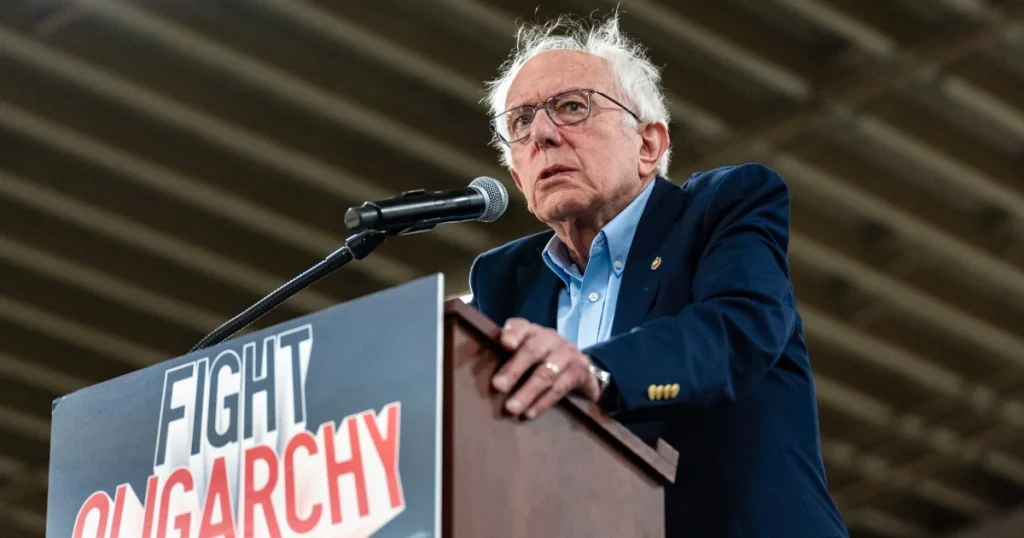
Reporting in the Washington Post has framed the proposal as a potential litmus test for 2028 Democratic presidential candidates, in the mold of Sanders’s Medicare-for-all plan during the 2020 primary.
Khanna, who represents Silicon Valley and has tested the waters of his own presidential bid, co-sponsors the House version. Governor Gavin Newsom, another likely 2028 contender, opposes California’s state-level wealth tax, placing him on the opposite side of the intra-party divide.
From Interstate Move to International Exit
For Lesperance the convergence of state and federal proposals compresses a timeline most wealthy Americans have not yet grasped.
“Bernie Sanders and Ro Khanna have made endorsing their federal Wealth Tax proposal a litmus test for giving their support to any Democratic 2028 Presidential Candidate,” Lesperance observed. “Their fellow Democrats from AOC to Cory Booker seem eager to join them in this crusade.”
He draws a sharp distinction between domestic relocation and international departure. “Those who fled California’s proposed Wealth Tax by moving to other states could execute their departure in a matter of weeks. Developing an Expatriation Plan requires significantly more time as it involves acquiring another citizenship and pre-expatriation tax planning to reduce the impact of the Exit and Inheritance Tax,” Lesperance said. “Such plans take well over a year to implement.”
The 2028 election cycle, he argues, demands action now. “While the November 2028 election may seem far away, prudence requires starting planning immediately. The decision to trigger the plan can then be made as soon as the election results are known and finalized in the two months before a new administration is sworn in.”
IRS quarterly data show that 4,820 covered expatriates renounced US citizenship in 2024, a 48% increase from 2023 and the third-highest annual total on record. Lesperance has previously estimated the backlog for renunciation appointments now exceeds 30,000 individuals at US consulates worldwide.
The arithmetic favoring early action, he contends, becomes stark when comparing the current exit tax with what a federal wealth tax would impose on departing taxpayers.
“While many wealthy Americans have never previously considered expatriation, they understand once they learn that the majority of the world’s wealth have never held a US passport and still enjoy a very nice life,” Lesperance said. “The biggest trigger to deciding to get an Expatriation Plan is when they realize the Exit Tax under the current regime is only a 23.8% capital gains tax on unrealized gains, while the new proposed federal Wealth Tax applies an immediate 60% tax on total net worth to expatriates.”
Under current law (IRC §877A), a covered expatriate, anyone with a net worth above US$2 million or average annual federal tax liability exceeding US$206,000, faces a deemed sale of all worldwide assets at fair market value on the day before expatriation.
After a gain exclusion of approximately US$910,000 (2026 figure), the resulting capital gains are taxed at 23.8%. Sanders’s proposal would replace this with a 40% levy on total net worth below US$1 billion, and 60% above, for those seeking to leave.
Jimmy Sexton previously argued on IMI that US tax hikes will not cause a millionaire exodus because the cost of expatriation, including the mark-to-market exit tax and the 40% inheritance tax on covered gifts and bequests to US-citizen heirs under §2801, exceeds the cost of staying for most wealthy Americans.
Whether that calculus shifts if a federal wealth tax dramatically raises the cost of remaining is the open question Lesperance’s clients are now confronting.
Washington’s bill alone cannot trigger expatriation. Only the federal government taxes based on citizenship; relocating from Seattle to Miami or Austin eliminates state-level exposure entirely.
Federal wealth taxation would close that domestic escape route. For those determined to leave the US tax system altogether, international departure would become the only remaining option, and the price of that exit would multiply many times over under the Sanders proposal.
Whether SB 6346’s revenue projection holds depends on how many of its 21,000 targeted filers remain in Washington when the tax would take effect in 2028, how courts rule on the inevitable constitutional challenge, and whether federal proposals advance far enough to foreclose the interstate migration that has already begun.