
British Prime Minister Andy Burnham has raised the prospect of the UK rejoining the European Union after the next general election. No sitting premier had entertained the idea since the country voted to leave in 2016.
Speaking to BBC Radio 4’s Today program on September 30, Burnham listed staying put, a customs union, and the single market as options before adding that Britain could go “all the way,” hinting at rejoining.
He plans to present these options at a UK-EU summit expected in November and then seek agreement on one. A day earlier, in his first conference speech as Labour leader, he had told delegates in Liverpool that Brexit did “more harm than good.”
Leaving, he argued, cost Britain some control over both its economy and its borders.

Serhan Aysever, the UK-based Managing Partner of Beyond Global Partners, believes Burnham “is right to reopen the conversation.” Ten years on, he observes, “we have a clearer picture of some of Brexit’s economic and political consequences, while the world itself has changed considerably.”
Three Options, Three Potential Outcomes
Nothing changes before the next election, due by 2029. Burnham has promised to honor Labour’s 2024 manifesto, which rules out a return to the single market, the customs union, or freedom of movement during this parliament.
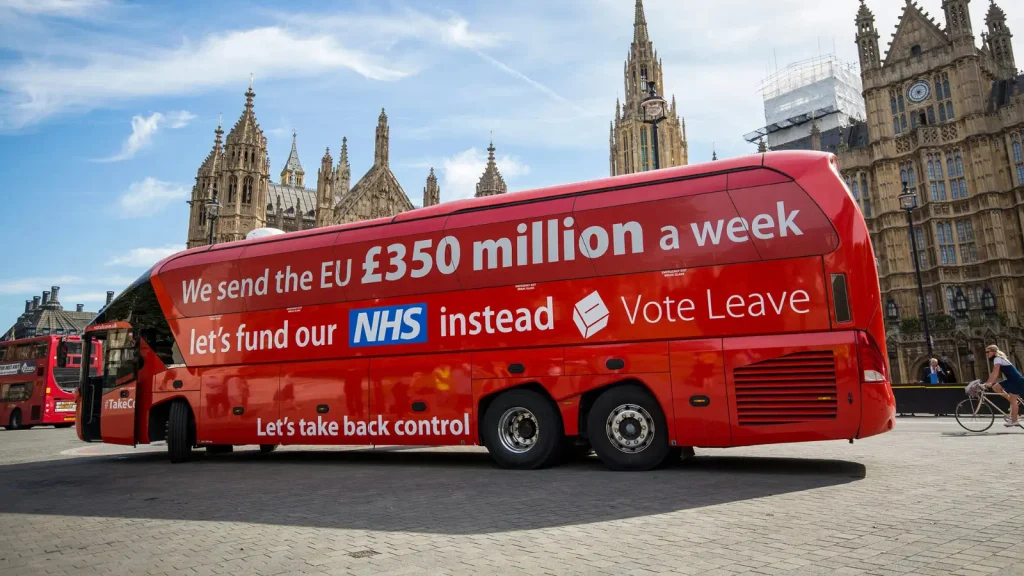
What he campaigns on afterward will matter to anyone whose plans depend on where a British passport lets him live. A customs union governs tariffs on goods. Single market membership, by contrast, comes bundled with the free movement of people, and full accession would make Britons EU citizens again.
Polls suggest the public has moved in his direction. Public First, surveying for Politico, found 70% of voters favoring closer EU ties. An early-summer poll put support for full membership at roughly 55%.
Richard Tice, deputy leader of Reform UK, nonetheless accused the prime minister of trying to return Britain to Brussels by stealth. Burnham’s own constituency, Makerfield, ranked among the country’s strongest Leave-voting seats in 2016.
“Rejoining would clearly not be simple, nor could Britain assume it would return on its previous terms,” Aysever warns. In his assessment, the process would demand “serious national debate and negotiation with European partners.”
“Welcome Back,” With Conditions
On the same day as Burnham’s statements, French President Emmanuel Macron greeted the idea in Madrid with a “Welcome back” in English, and Spanish Prime Minister Pedro Sánchez promised to applaud a British application.
Macron attached a caveat: Britain could not select among the union’s freedoms and discard the rest.

Brussels was cooler. Paula Pinho, the European Commission’s chief spokesperson, told reporters she had “no crystal ball,” while a colleague added that London must first say what relationship it wants.
Aysever reads the mood the same way. He detects “considerable interest in having the UK back, but certainly not at any price,” and no appetite for a “pick and choose” form of membership.
Twenty-seven governments would set that price, since accession requires unanimity under Article 49 of the Treaty on European Union.
Britain’s opt-outs from the euro and the Schengen Area lapsed when it left. A returning UK would open negotiations holding none of them.
Looser forms of attachment are also under discussion in Brussels. On September 16, Commission President Ursula von der Leyen proposed making Canada the bloc’s first “associate member,” a status the treaties do not yet define.
“Even Canada is now seeking a closer strategic and economic relationship with the EU,” Aysever notes. Cooperation on trade, defense, energy, and technology, he argues, counts for more after the pandemic, the war in Ukraine, and tensions involving the United States, Israel, and Iran.
Brexit Ended Free Movement, But Not Migration
Burnham’s sharpest attack concerned borders. The British right promised control, he argued, and delivered less of it.
Free movement with the EU ended on December 31, 2020. According to the UK Office of National Statistics, net migration then climbed to a record 944,000 in the year to March 2023, with arrivals from outside the EU driving the increase.
By calendar year 2025 it had dropped to 171,000.
“Leaving the EU changed the legal framework and ended freedom of movement,” Aysever acknowledges, but “it did not, by itself, resolve Britain’s wider migration challenges.”
Deciding who could arrive from Paris or Warsaw was only a small part of what voters wanted fixed.
What Brexit Cost
For British citizens, the end of free movement cut both ways. Their passport lost the right to settle across the EU and European Economic Area (EEA), arguably the biggest first-world passport downgrade in modern history.

Only the Common Travel Area with Ireland survived. Elsewhere in the Schengen Area, Britons may stay 90 days in any 180.
Those with the means went looking for a replacement. Between 2016 and 2023, 123,819 British citizens naturalized in another European country, against an annual average of 2,710 in the eight years before the referendum, according to Eurostat data compiled by researcher Maarten Vink of the European University Institute.
Roughly 120,000 more claimed Irish citizenship through a parent or grandparent. Vink puts the Brexit-driven total above 210,000, which he calls a lower bound, and stresses that it represents a fraction of those who lost their rights.
Others paid. As EU citizens, Britons had been ineligible for European golden visas; by 2023 they were appearing regularly in the monthly top five nationalities of the Portugal Golden Visa. In 2024, they received 147 investor permits there, the fourth-highest count of any nationality.
Tax, more than mobility, drove a separate wave of departures. After Britain abolished its non-dom regime in April 2025, wealthy residents such as Lakshmi Mittal and Goldman Sachs’s Richard Gnodde left for Dubai and Milan, the latter drawn by an Italian flat tax that caps the bill on foreign income at €300,000 a year.

Henley estimated 10,800 millionaire departures in 2024, and a Financial Times analysis of Companies House records found 3,790 company directors moving their residence abroad between October 2024 and July 2025, a 40% rise on the year before.
What Rejoining Could Change for the IM Market
A UK inside the single market or the EU would remove the main reason Britons buy European residence or pursue citizenship by descent. Tax and lifestyle motives would persist. Mobility would drop off the list.
For inbound investors, the effect runs the other way. British citizenship would again carry settlement rights across the EU and EEA on top of the Common Travel Area, the same double-bloc reach that lets an Irish passport cover 34 jurisdictions.
Britain has little to offer to the investment migration market at present. Its Tier 1 Investor visa closed in February 2022, and a proposed £5 million invite-only successor (approximately US$6.8 million) remains unconfirmed.
An earned settlement model, meanwhile, has stretched the standard path to permanent residence from five years to ten for most migrants.
Membership would also limit what London could design. In April 2025, the European Court of Justice ruled against Malta’s citizenship by investment program.
A British investor route built inside the EU would face the same scrutiny.
“Internationally mobile families, entrepreneurs, and investors increasingly look beyond tax or individual visa programs,” Aysever explains, with stability, market access, legal certainty, and wealth preservation “becoming equally important.”
He credits the UK with assets no trade arrangement can remove, from London’s financial center to its education system and legal framework.
“The question is not whether Britain can succeed outside the EU,” in his view, “but what relationship with Europe would best allow it to maximize those strengths.”
“Whether the future means full membership or a much closer partnership,” Aysever concludes, “the status quo should not be treated as the only option.”
Burnham has promised to set out his options around the November summit. Until an election settles the matter, Britons who want European rights will keep acquiring them one passport or permit at a time.