

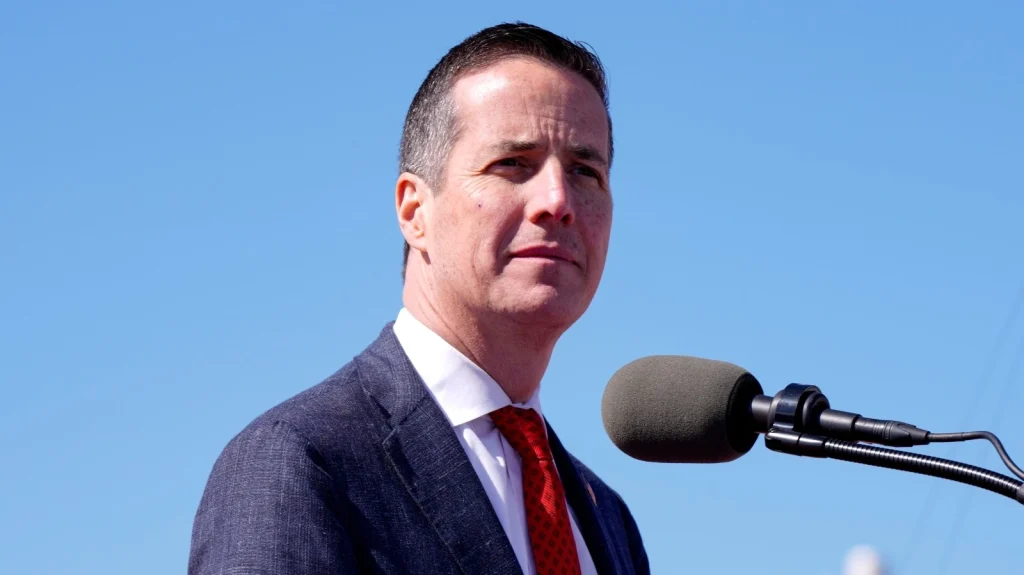
In December 2025, US Senator Bernie Moreno of Ohio introduced a bill that would ban Americans from holding dual citizenship.
The Exclusive Citizenship Act of 2025 would force existing dual citizens to choose one nationality within a year or forfeit their American passport. GovTrack’s forecasting model gave it a 3% chance of enactment.
That number alone should tell you something about the bill’s prospects. But what makes the proposal truly remarkable is not its odds in Congress; it is how spectacularly it runs against the direction of the rest of the planet.
Three out of four countries now permit their citizens to acquire a second nationality without forfeiting the first. That figure comes from the MACIMIDE Global Expatriate Dual Citizenship Dataset maintained by Maastricht University, which tracks 200 countries from 1960 to 2020.
A caveat before we go further. MACIMIDE measures only one side of the coin: whether a country strips citizenship from nationals who voluntarily naturalize abroad. It does not capture whether countries require that immigrants renounce when naturalizing.

For anyone weighing a second passport, though, that first question is the one that keeps him up at night. Will my home country let me keep what I already have?
For governments designing residence and citizenship by investment (RCBI) programs, the answer to that question is what makes the entire product viable.
Moreno’s bill would place the United States in the company of China, the Gulf states, and a handful of others. It would contradict Supreme Court precedent going back to 1967 (Afroyim v. Rusk).
The US government does not even track who holds dual citizenship. An estimated 500,000 to 5.7 million Americans are dual citizens, with some estimates suggesting over 40 million may qualify through ancestry alone. Good luck enforcing that.
For governments designing residence and citizenship by investment (RCBI) programs, the global acceptance of dual citizenship is what makes the entire product viable. To understand just how out of step the Moreno bill is, it helps to look at how the world got here.

Started with Bigamy, Basically
Dual citizenship spent most of the 20th century in the same moral category as tax evasion or draft-dodging. The comparison to bigamy was common in legal literature of the period, and not always tongue-in-cheek.
International treaties from the 1930s through the 1960s treated overlapping nationalities as a problem to be solved, not a right to be protected.
Then the consensus started cracking. Europe’s 1963 Convention on the Reduction of Cases of Multiple Nationality had required signatories to strip citizenship from nationals who acquired another. States began withdrawing from those provisions through the 1970s and 1980s.
By 1997, the European Convention on Nationality had flipped entirely, taking a neutral stance on whether multiple nationality was even undesirable.
Vink et al. (2019) recorded 75 policy changes in MACIMIDE’s binary measure. Of those, 85% were liberalizations, clustered in the 1990s and 2000s.
The trajectory, roughly:
- 1960: approximately 38% of countries accepted dual citizenship
- 1990: approximately 50% (estimate based on the MACIMIDE trend line)
- 2000: approximately 60%, following reforms across Latin America and post-Cold War Europe
- 2017: approximately 73%, per Vink et al.
- 2020: 76%, per MACIMIDE’s most recent update
What took centuries to build as orthodoxy took about 30 years to dismantle.
Four Things That Made It Happen
Gender equality in nationality law
This one gets overlooked. Once countries allowed mothers to transmit citizenship to their children, the number of people born with two nationalities rose automatically. Stripping citizenship from people whose only act was being born became, eventually, untenable.
Diaspora politics
Colombia (1991), the Dominican Republic (1994), Costa Rica and Ecuador (1995), Brazil (1996), and Mexico (1998) all reformed their laws within a single decade.
In each case, overseas communities had lobbied hard. The old rules forced them to choose between political belonging at home and practical integration abroad. They chose neither; they demanded both.
Regional diffusion
Vink et al. found that countries were far more likely to liberalize if their neighbors had already done so. Peer pressure, it turns out, works on nation-states too.
The end of the Cold War
When military conflict between states was routine, dual nationality raised genuine questions about battlefield loyalties. Once that fear faded, so did the strongest argument for restriction.
The Holdouts and the Converts
Most of the world has come around. The Americas and Oceania moved fastest. Most EU member states impose no restrictions.
All five Eastern Caribbean CBI jurisdictions recognize dual citizenship; without that, CBI programs would be functionally unworkable. Nobody acquires a Caribbean passport to give up the one they already have.
Germany’s June 2024 reform was the most consequential recent shift, eliminating the requirement that naturalizing immigrants renounce their prior citizenship while cutting the residency requirement from eight to five years. Record naturalizations followed.
South Africa’s Constitutional Court struck down automatic revocation in May 2025, retroactive all the way to 1995. Nigeria, Liberia (2022), and Malawi (2019) joined the permissive column.
The resisters are a shrinking but stubborn group. China officially prohibits dual citizenship, though enforcement is selective (and anyone in the CBI market can tell you that demand from Chinese nationals for second passports remains among the highest in the world).
Japan formally requires that dual nationals choose by age 22, though enforcement has been inconsistent. Singapore, Malaysia, and Indonesia also don’t recognize dual citizenship, making Southeast Asia one of the world’s most restrictive areas when it comes to dual nationality.
Austria permits it only where it arises involuntarily. The GCC states all formally prohibit it.
The IMI Citizenship Catalog maps where every country stands.
Geopolitical Leverage
Slovakia’s 2010 restriction is the single sharpest reversal in the dataset, and it had nothing to do with principle.
On the same day that Hungary offered simplified naturalization to ethnic Hungarians abroad, Slovakia, home to roughly 500,000 ethnic Hungarians, decreed that any citizen who voluntarily acquired another nationality would lose Slovak citizenship.
Geopolitics, pure and simple. The law was partially relaxed in 2022, but the core restriction persists.
Fewer and Isolated
CBI programs exist because people want to add a nationality, not swap one. Global acceptance of dual citizenship is what makes that possible.
And the relationship runs both ways. Every time a CBI program grants citizenship to someone who has never set foot in the country, and nothing bad comes of it, the case for restriction gets a little weaker.
The programs, by normalizing multiple nationality on a mass scale, are themselves part of the engine driving this trend.
The holdouts are becoming fewer and more isolated. For a market built on layering citizenships, that is the most important structural fact of all.
Senator Moreno’s bill is not going to reverse 60 years of global liberalization. The holdouts are becoming fewer and more isolated, and the trajectory is not ambiguous.
For a market built on layering citizenships, that is the most important structural fact of all.
Data drawn from the MACIMIDE Global Expatriate Dual Citizenship Dataset (Vink, De Groot, and Luk, 2015; V5, 2020), via Harvard Dataverse, and Vink et al., “The International Diffusion of Expatriate Dual Citizenship,” Migration Studies 7, no. 3 (2019): 362-383. MACIMIDE tracks expatriate dual citizenship policy and does not measure destination-country naturalization requirements.
