Western Europe’s golden visa market is contracting. Spain closed its program in April 2025. Portugal’s fund-only model is drowning in a 39-month processing backlog. Greece has tripled its minimum thresholds in two years. Ireland and the UK shut theirs down entirely.
While those closures dominate headlines, three Western Balkan countries have been quietly building investor residency pathways that almost nobody is talking about. Albania, Montenegro, and Serbia each offer a route to European residency through investment at price points that would barely cover the application fees in Portugal or Greece.
These are not equivalent programs. Albania grants residency through business investment or property purchase with some of Europe’s lowest entry costs. Montenegro codified a property-based residence pathway in January 2026 at €150,000. Serbia offers an investor visa from €50,000 and a real estate route with no minimum threshold at all. Each carries different trade-offs in residency type, physical presence requirements, citizenship timelines, and dual nationality rules.
All three are official EU candidate countries. Montenegro is the frontrunner in the Western Balkans enlargement process, with a stated goal of joining by 2028. Albania opened accession negotiations in 2022. Serbia has been a candidate since 2009.
None are EU members today, but all are aligned with the EU’s orbit, and all offer Schengen visa-free travel on their passports. For investors willing to look past the established Western European programs, the Western Balkans offer access and affordability that the rest of the continent no longer provides.

Albania: Europe’s Most Accessible Investor Permit
Albania’s Unique Permit for Investors is one of the least known residency programs in Europe, and one of the cheapest.
The program allows foreign nationals to obtain long-term residency by establishing or managing investments in Albania. Qualifying investment routes include business formation, property purchase, and government securities. IMI Daily’s program page lists no minimum investment requirement, a feature that distinguishes Albania from virtually every other European investor residency program.
A January 2026 amendment to Albania’s Law on Foreigners (Law 43/2025) may have introduced new minimum thresholds, with some legal sources citing €100,000 for business or government securities and €300,000 for real estate. These figures have not been confirmed by IMI Daily or by official Albanian government publications in English. Prospective applicants should verify the current requirements directly with Albanian immigration authorities or qualified legal counsel before proceeding.
The permit requires active involvement in the investment or business. This is not a passive golden visa where you wire money into a fund and never visit. You need to demonstrate engagement with your investment, maintain tax compliance, and provide documentation including a certificate from Albanian tax authorities confirming registration and payment of obligations.
The initial permit is valid for one year and is renewable. Renewals require proof of continued investment.
Path to citizenship: Albanian permanent residency requires five continuous years of legal residence. Citizenship becomes available after a total of seven years, subject to meeting Albanian language proficiency requirements, demonstrating integration into Albanian society, and maintaining a clean criminal record. You must be physically present in Albania for at least six months per year to satisfy the continuity requirement.
Tax: Albania applies progressive personal income tax rates: 0% on employment income up to approximately €5,000 per year, 13% on income between approximately €5,000 and €25,000, and 23% on income above that threshold. The corporate tax rate is 15%. Dividends are taxed at 8%. These rates are competitive by European standards, though higher than Serbia’s flat 10%.
Dual citizenship: Albania generally permits dual citizenship. Unlike Montenegro and Serbia (for naturalized citizens), acquiring Albanian citizenship does not require you to renounce your existing passport. This is a meaningful advantage for investors who want a European second citizenship without sacrificing their primary nationality.
Visa-free travel: An Albanian passport grants access to approximately 120 destinations, including all Schengen Area countries. Albania’s passport ranking is weaker than Serbia’s (138 destinations) or a Bulgarian EU passport (173), but Schengen access covers the primary mobility need for most applicants.
EU candidacy and CBI ambitions: Albania has been an EU candidate since 2014 and opened accession negotiations in July 2022. The country is also actively pursuing a Citizenship by Investment (CBI) program. Prime Minister Edi Rama has publicly supported the concept, but Albania suspended its CBI plans pending the outcome of an EU court case examining Malta’s program. The European Commission has repeatedly warned Albania to refrain from opening a CBI program, calling it incompatible with EU accession. If the legal landscape shifts, Albania could become one of Europe’s most affordable citizenship-by-investment destinations. For now, the residency route is the only pathway.
Albania’s main limitation as an investment residency destination is structural. The program lacks the codified precision of Bulgaria’s golden visa or Montenegro’s new property threshold. Requirements around “active involvement” and investment evaluation by a government commission introduce discretion into a process that investors typically prefer to be predictable. The legal framework is evolving, and the rules may look different in 12 months than they do today.
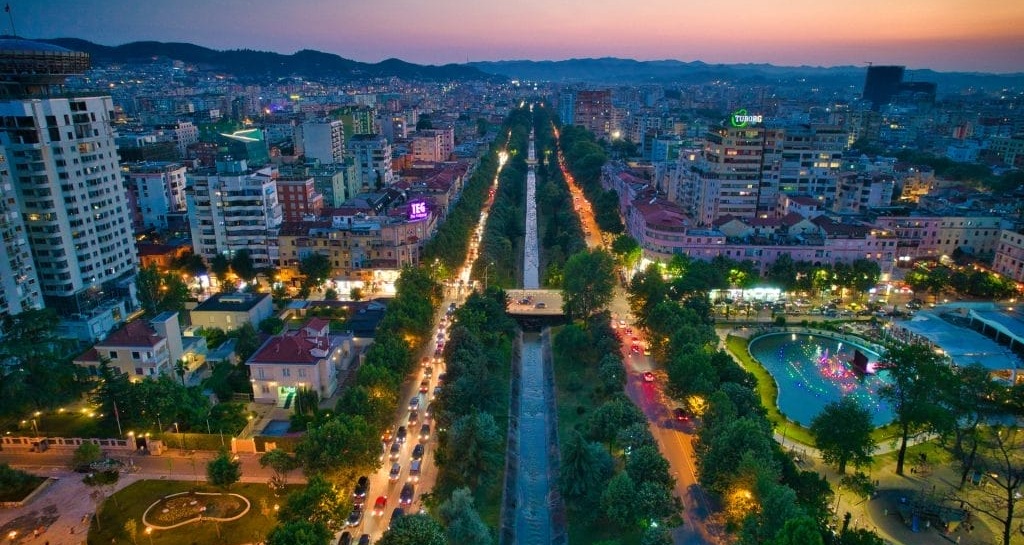
Montenegro: Europe’s Newest Property-Based Residency at €150,000
Montenegro formalized a property-linked residence pathway in January 2026 through amendments to its Law on Foreigners. The reforms transformed what had previously been a loosely regulated route into a structured program with codified thresholds.
Third-country nationals who purchase property with a taxable value of at least €150,000, as assessed by Montenegro’s Tax Authority, can apply for temporary residence. The permit is valid for one year and is renewable.
Property-based residence does not permit employment or business activity in Montenegro. You must prove both ownership and actual use of the property, and all property tax obligations must be current.
The €150,000 threshold arrived after parliamentary debate lowered the government’s initial proposal of €200,000. Foreign nationals who obtained property-based residence before the law took effect are grandfathered in and can renew their permits without meeting the new minimum.
Path to citizenship: Montenegrin citizenship requires ten years of continuous legal residence: Five on a temporary permit, followed by five on a permanent permit. This is one of the longest naturalization timelines in Europe.
Montenegro does not recognize dual nationality. If you naturalize as a Montenegrin citizen, you must renounce your existing citizenship.
EU accession: Montenegro has been an EU candidate since 2010 and opened accession negotiations in 2012. It is the most advanced candidate in the Western Balkans enlargement process. As of March 2026, 14 of 33 negotiating chapters have been provisionally closed. The government aims to close all remaining chapters by the end of 2026 and achieve EU membership by 2028. EU Enlargement Commissioner Marta Kos has said that closing all chapters by the end of 2026 is achievable; the 2028 membership target is the Montenegrin government’s stated ambition.
If Montenegro joins the EU, the value of its residency and citizenship programs would increase considerably. A Montenegrin permanent residence card would grant Schengen access, and Montenegrin citizenship would become EU citizenship. Investors who buy in at €150,000 today could find themselves holding EU residence permits within a few years, a prospect that no other sub-€200,000 European property investment currently offers.
Montenegro already uses the euro, having unilaterally adopted it in 2002. There is no currency risk on property investments.
Entrepreneur route: Alongside the property pathway, Montenegro introduced a minimum annual tax obligation for foreign business owners. Executive directors and registered entrepreneurs who own more than 51% of a Montenegrin company must show that their company paid at least €5,000 in taxes and social contributions in the preceding year to renew their work and residence permits. The measure targets shell companies established primarily to secure residency.
The former CBI program: Montenegro operated a Citizenship by Investment (CBI) program from 2019 to 2022 that attracted approximately 1,100 applications and over €400 million in investment. The EU pressured Montenegro to close it as a condition of continued accession progress. The new property-based residency pathway is a more modest successor, designed to attract investment capital without triggering Brussels’ opposition to economic citizenship programs.
Serbia: The €50,000 Investor Visa With No Minimum on Real Estate
Serbia’s Investor Visa is the cheapest structured investor residency program among the three Balkan countries covered here.
A minimum investment of €50,000 in a registered Serbian company grants temporary residence for one year, renewable annually. The investment must be documented through a certificate of investment, and applicants need to hold at least €50,000 in a Serbian bank account.
Serbia also offers residency through real estate purchase with no government-mandated minimum investment threshold. You can buy property at any price point and qualify for a residence permit, provided the purchase meets basic legal requirements and your home country has a reciprocity agreement with Serbia allowing property ownership.
Temporary residence permits are typically issued within one to two months.
Physical presence: Unlike Bulgaria’s zero-presence golden visa, Serbia requires 183 days of annual presence for tax residency. The residence permit itself requires you to maintain an address in Serbia, and renewals depend on demonstrating continued ties to the country.
Path to citizenship: Permanent residency becomes available after three continuous years of legal residence. Serbian citizenship follows after three more years of permanent residency, for a total timeline of approximately six years.
Serbia’s dual citizenship rules are nuanced. Standard naturalization generally requires renunciation of prior citizenship. Exceptions exist for ethnic Serbs, spouses of Serbian nationals, individuals who acquire citizenship by descent, and those granted citizenship by exception for contributions of national interest.
If your home country prohibits or does not facilitate renunciation, Serbia may waive the requirement. Consult an immigration lawyer before assuming dual citizenship is available through the investor pathway.
Tax: Personal income is taxed at a flat 10%. Corporate income faces a 15% rate. These are among the lowest in Europe, though Serbia is not an EU member and does not offer the same tax treaty network as Bulgaria.
Visa-free travel: A Serbian passport grants access to 135 destinations according to the Henley Passport Index, including all Schengen Area countries, China, Russia, and Japan. Serbia is one of very few countries whose citizens can enter both Russia and China visa-free while also enjoying Schengen access. For investors from countries with restricted passports, this combination is unusual.
EU candidacy: Serbia has been an EU candidate since 2012, with accession negotiations opening in 2014. Progress has been slow. EU membership is unlikely in the near term, which means Serbian residency does not carry the same EU-accession upside as Montenegro’s.
Russian and Chinese demand: Serbia’s residency program has attracted substantial interest from Russian nationals, who now lead foreign property purchases in the country. Belgrade and Novi Sad are the primary markets. The combination of low entry costs, favorable tax rates, Schengen visa-free access for Serbian passport holders, and Serbia’s diplomatic proximity to both Russia and China has made it a popular destination for investors from both countries.

Choosing Between the Three
All three programs are live and accepting applications. None will show up in a Google search for “best European golden visas.” They occupy a different tier entirely: affordable, underexplored, and positioned in a region that the EU is actively working to absorb. Whether that absorption happens on the timelines these governments promise is an open question. But the residency permits are available now, and the entry prices will not stay this low forever.