Tax authorities around the world are closing in on cryptocurrency profits. The Dutch House of Representatives passed a 36% levy on unrealized crypto gains in February, though the Finance Minister has since said the bill needs amendment before it can clear the Senate.
Brazil imposed a flat 17.5% tax on all digital asset profits. South Korea has proposed freezing the crypto accounts of suspected market manipulators, even as the country’s own crypto capital gains tax remains indefinitely postponed.
If you hold crypto and live in a high-tax country, your gains are shrinking before you ever spend them. But the list of jurisdictions that impose zero or near-zero taxes on crypto capital gains is longer than most people realize.
Some operate blanket zero-tax regimes. Others achieve the same outcome through territorial taxation, holding-period exemptions, or the absence of specific crypto legislation.
Here are 20 livable countries where your crypto gains can remain untaxed, along with what it takes to establish residency in each one.

United Arab Emirates
The UAE has no personal income tax and no capital gains tax. For individuals acting in a personal capacity, crypto trading, staking, and mining do not trigger a tax liability. If your activity rises to the level of a business, however, the UAE’s 9% corporate tax may apply.
A 5% value-added tax (VAT) covers goods and services, but crypto transactions have been VAT-exempt since November 2024 under Cabinet Decision No. 100 of 2024, applied retroactively to January 2018.
The UAE Golden Visa grants a ten-year renewable residence permit to investors who purchase property or investment fund units worth at least AED 2 million (roughly $545,000). The visa covers immediate family members.
The UAE has committed to implementing the OECD’s Crypto-Asset Reporting Framework (CARF), with automatic data exchanges expected by 2028. Your crypto will not be taxed locally, but your home country’s tax authority will eventually know about it. The UAE does not offer a path to citizenship.

Singapore
Singapore has no capital gains tax. Gains from the disposal of cryptocurrency are generally not taxable for individuals, provided the activity is not income in nature. If you trade crypto as a business, or if the Inland Revenue Authority of Singapore (IRAS) determines that your trading activity constitutes a trade, those profits are subject to income tax at rates up to 22%.
The distinction matters. Occasional buying and holding is treated differently from frequent, high-volume trading conducted with the intent to profit. IRAS applies a facts-and-circumstances analysis, so the line between personal investment and business activity depends on factors like frequency, intent, and the degree of organization involved.
The Global Investor Programme (GIP) requires a minimum investment of SG$10 million (roughly $7.78 million) and grants immediate permanent residency. A more accessible route exists through the Employment Pass. Citizenship is available to permanent residents on a discretionary basis, with no fixed statutory timeline.
Singapore has committed to CARF implementation with data exchanges beginning in 2028.

Germany
Germany treats cryptocurrencies as private money rather than capital assets. If you hold your crypto for longer than 12 months before selling, your gains are completely tax-free regardless of amount.
Sell within that one-year window, and short-term gains above €1,000 per year are taxed at your personal income tax rate, which can climb as high as 45%. Mining and staking income also face income tax.
The Self-Employment Visa under Section 21 of the Residence Act offers a path. You need to start or invest in a business with regional economic benefit. Investment amounts vary by case, but advisory firms typically recommend starting around €250,000 to €350,000 to demonstrate viability. Permanent residency is available after three years and citizenship after five, following reforms that took effect in 2024. That citizenship grants full EU freedom of movement.

Portugal
Since 2023, gains from crypto held for less than one year are taxed at a flat 28%. Hold for longer than 12 months, and your gains remain entirely tax-free. Crypto-to-crypto swaps are also exempt.
The D7 Passive Income Visa provides a residency pathway if you can demonstrate stable passive income of at least €920 per month. Portugal’s golden visa, restructured in 2023, now channels investment into approved funds starting at €500,000. Both routes currently lead to citizenship eligibility after five years.
That five-year timeline may not last. Portugal’s Parliament approved amendments in October 2025 that would double the citizenship residency requirement to ten years for most applicants. The Constitutional Court struck down parts of the bill in December 2025, and the legislation must return to Parliament for revision. The current five-year rule remains in force, but the political direction is clear.

Switzerland
Switzerland imposes no capital gains tax on cryptocurrency for individual investors. The country classifies crypto as movable property, treating it much like stocks or bonds held outside a professional trading context.
The catch is wealth tax. Swiss cantons tax the total value of your assets annually, including your crypto holdings. Rates vary by canton but generally fall between 0.1% and 1%.
Residency options for the wealthy include lump-sum taxation, where your tax bill is based on living expenses rather than actual income. The federal minimum for lump-sum arrangements is CHF 400,000 per year, with cantonal floors ranging higher depending on location. Switzerland does not offer a conventional investor visa, and residency for non-EU nationals usually requires a genuine connection through employment, business, or the lump-sum route.
Switzerland is joining CARF, with data exchanges beginning in 2028.
Hong Kong
Hong Kong does not impose capital gains tax. Its territorial tax system means that profits from crypto held as a personal investment are generally not taxable. If you operate a crypto trading business in Hong Kong, or if the Inland Revenue Department considers your trading to constitute a business, profits are subject to Hong Kong’s profits tax at a rate of 16.5%.
In 2025, Hong Kong eased rules for licensed Virtual Assets Trading Platforms, part of its broader effort to reclaim its position as a crypto hub. It offers no specific investor visa for crypto, but the Quality Migrant Admission Scheme and the Top Talent Pass Scheme provide routes for high-net-worth and skilled individuals. Permanent residency is available after seven years of continuous ordinary residence, and citizenship is not available.

Monaco
Monaco levies no personal income tax and no capital gains tax on residents. This applies to all asset classes, including cryptocurrency. There are no carve-outs, holding-period conditions, or business-activity thresholds for individual investors.
One exception: French nationals residing in Monaco remain subject to French tax under the 1963 bilateral agreement. This is the only nationality-based exclusion.
The barrier to entry is high. Residency requires demonstrating financial self-sufficiency and securing local housing, typically through a significant bank deposit (at minimum €500,000, though banks may require more) and a rental or property purchase. There is no formal golden visa and no path to citizenship through investment.

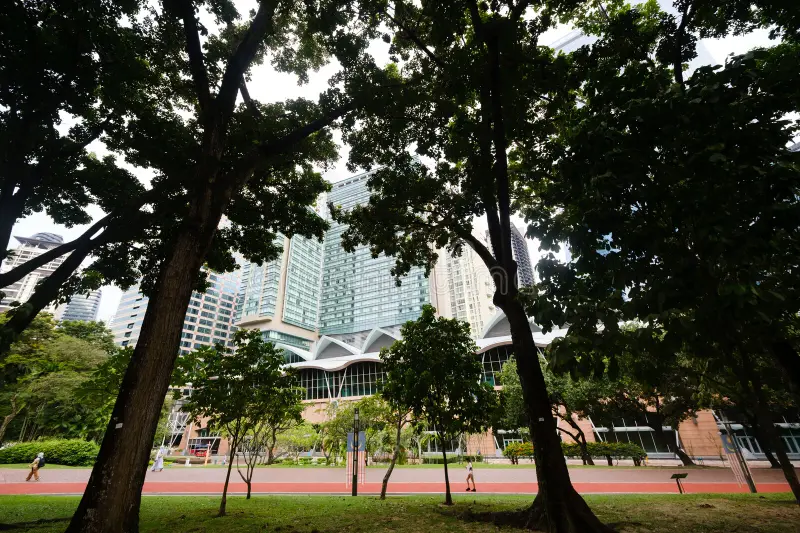
Malaysia
Malaysia does not have a general capital gains tax on most financial assets, and crypto gains for individual investors are typically not taxed. That said, this is not a blanket exemption. If the Malaysian tax authority determines that your trading activity is revenue in nature under a badges-of-trade analysis, those profits may be treated as business income and taxed accordingly. The distinction depends on factors like trading frequency, holding period, and the degree of organization.
The Malaysia My Second Home (MM2H) program offers long-term renewable residency through a tiered system. The Silver tier requires a $150,000 fixed deposit; Gold requires $500,000; and Platinum requires $1 million. All tiers require a property purchase. Participants under 50 must spend at least 90 days per year in the country, while those 50 and older face no minimum stay requirement.
Thailand
Thailand has exempted capital gains from crypto transactions conducted through locally licensed digital asset exchanges, brokers, or dealers through December 31, 2029. The government eliminated this tax as part of its strategy to position the country as a regional digital asset hub. It had already removed the 7% VAT on crypto gains in early 2024.
The exemption is specific in scope. It applies to gains realized through licensed operators, not to all crypto activity in the country. Transactions conducted outside the licensed framework may be treated differently.
The Long-Term Resident (LTR) Visa provides a ten-year residency option for wealthy global citizens who invest at least $500,000 in Thai government bonds, local companies, or property. Thailand does not offer a path to citizenship through any of its residency programs.
The expiration date on this exemption matters. If you plan around Thailand’s tax break, build in a contingency for what happens after 2029.

El Salvador
El Salvador adopted Bitcoin as legal tender in 2021 and has built one of the most explicitly crypto-forward regulatory environments in the world. Under its digital asset framework, the country has eliminated capital gains tax on certain digital asset transactions and provides favorable treatment for Bitcoin-related activity. The territorial tax system means foreign-sourced income is generally not taxed, and specific exemptions cover gains from Bitcoin transactions within the scope of the relevant laws.
This does not mean all Bitcoin-derived income is universally exempt from income tax in every context. El Salvador has a general income tax system, and the favorable treatment is anchored to specific legal provisions.
The Freedom Passport grants citizenship through a $1 million donation in Bitcoin or USDT, limited to 1,000 participants annually. A digital nomad visa provides two-year renewable residency for those with a stable monthly income of $1,460, and may lead to permanent residency over time.
El Salvador is a different proposition from other countries on this list. Infrastructure is improving but remains developing. What makes it distinctive is the depth of its commitment to crypto as policy.

Georgia
Georgia is one of the most favorable jurisdictions for individual crypto investors. A 2019 public decision from the Ministry of Finance classifies income from cryptocurrency sales as non-Georgian source income, making it fully exempt from personal income tax. There is no capital gains tax and no VAT on crypto transactions for individuals.
For companies, the picture is different. Georgia uses an Estonian-model corporate tax system, where the standard 15% rate applies only when profits are distributed. Reinvested earnings are not taxed.
Tax residency requires spending 183 days per year in the country or qualifying through the High Net Worth Individual program, which requires demonstrating assets of at least $500,000 held in Georgia plus a Georgian residence permit. Georgia’s low cost of living, simple tax system, and growing crypto infrastructure have made it increasingly popular among digital nomads and crypto investors. Citizenship is available after ten years of permanent residency.

Panama
Panama’s territorial tax system means that income generated outside the country is not taxable. Crypto traded on international exchanges is generally treated as foreign-sourced, making gains tax-free for residents. There is no capital gains tax on foreign-sourced income, and no VAT on crypto transactions.
Panama does not yet have specific crypto legislation, though new VASP registration requirements are being introduced. The legal basis for the zero-tax outcome rests on the territorial principle, not a crypto-specific exemption.
The Qualified Investor Permanent Residency program grants immediate permanent residency through a $300,000 investment in real estate, securities, or bank deposits. The Friendly Nations Visa offers a more accessible route at $200,000 for citizens of roughly 60 eligible countries. Citizenship is available after five years of residency, contingent on Spanish proficiency.

Paraguay
Paraguay applies a territorial tax system, and individual crypto gains from activity on international exchanges are generally not taxed. There is no specific crypto tax legislation. Individuals pay 0% on crypto capital gains that are not classified as business income. The country also charges no VAT on crypto transactions.
The caveat is that Paraguay’s territorial principle applies only to foreign-sourced income. If a transaction touches Paraguayan banks or local brokers, the tax authority may reclassify the income as locally sourced, potentially triggering income tax at 8% to 10%.
Residency is straightforward. Paraguay’s independent means visa requires proof of recurring income, and a tax ID (RUC) can be obtained relatively quickly. Nearly 43,000 people applied for Paraguayan residency in 2025. Citizenship is available after three years for some nationalities or after a standard naturalization period. The cost of living is among the lowest in Latin America.

Costa Rica
Costa Rica operates a territorial tax system. Foreign-sourced crypto gains are not taxed, and there is no specific guidance from the government on crypto taxation. Crypto traded on international exchanges is generally considered foreign-sourced income.
If crypto activity generates local-source income, standard income tax rates of up to 25% may apply. The absence of formal crypto tax guidance means the system relies on the general territorial principle rather than a specific exemption.
The rentista visa requires demonstrating stable monthly income of at least $2,500 for two years. Independent means pathways also include an investor visa for those who invest at least $150,000 in a Costa Rican business or property. Citizenship is available after seven years of residency. Costa Rica’s high quality of life, natural environment, and established expat infrastructure make it a practical option for long-term relocation.

Mauritius
Mauritius imposes no capital gains tax on individuals. Crypto gains treated as capital in nature are not taxed. If the Mauritius Revenue Authority determines that your trading activity is revenue in nature, standard income tax rates apply, ranging from 10% to 15%. A special 1% tax regime exists for small crypto trading businesses, plus a 2% corporate social responsibility contribution.
The Mauritius Permanent Residency Permit requires an investment of $375,000 in approved real estate and grants immediate permanent residency. Citizenship is available after two years. The country’s political stability, English-speaking environment, and strategic position as a gateway to Africa and Asia make it an attractive option for investors seeking a low-tax base with strong institutional frameworks.

Malta
Malta does not impose capital gains tax on crypto held as a long-term store of value. The country recognizes cryptocurrencies as a unit of account, medium of exchange, or store of value under its Virtual Financial Assets Act. Frequent or short-term trading, however, is treated as business income and taxed at a headline rate of 35%, which can be reduced to between 0% and 5% through structuring and residency arrangements.
The Malta Permanent Residence Programme requires a property purchase (minimum €375,000) or lease (minimum €14,000 per year), plus a government contribution. The Malta citizenship program grants EU citizenship through a contribution of €600,000 to €750,000 after a residency period of 12 to 36 months.
Malta is an EU member state, which means MiCA regulations apply and DAC8 reporting requirements will increase transparency. For long-term holders, the combination of EU citizenship access and zero capital gains tax on investment holdings remains competitive.

Luxembourg
Luxembourg exempts crypto gains from taxation when the holding period exceeds six months. Gains on crypto sold within six months of purchase are treated as speculative income and taxed at the individual’s progressive rate of 22% to 25%, though speculative gains under €500 per year are exempt.
There is no dedicated crypto tax legislation. The tax treatment flows from a 2018 circular issued by the Luxembourg direct tax authorities applying general income tax principles to crypto assets. Mining and staking income are taxed separately as business income or miscellaneous income.
Luxembourg does not have a crypto-specific residency pathway, but its investor visa program is available. As an EU member, Luxembourg offers freedom of movement across the bloc. The country’s strong financial sector and regulatory clarity make it a credible option for institutional crypto investors, though the six-month holding period is shorter than Germany’s 12-month threshold.
Czechia
Czechia exempts crypto gains from personal income tax after a three-year holding period, under reforms that took effect in January 2025. Transactions below CZK 100,000 (roughly $4,200) per year are also exempt. An annual cap of CZK 40 million (roughly $1.6 million) applies to the exemption for crypto gains specifically, even though the equivalent cap for securities was abolished in 2026.
Gains on crypto sold within three years are taxed at standard income tax rates of 15% or 23%, depending on income level.
Czechia is an EU member with a growing tech sector and a relatively low cost of living compared to Western Europe. The Prague startup ecosystem is particularly active in blockchain. Tax residency requires spending 183 days in the country. There is no specific golden visa, but several work and business visa options exist for non-EU nationals seeking long-term residency.

South Korea
South Korea currently imposes no capital gains tax on cryptocurrency. A 22% tax on annual crypto gains exceeding 2.5 million won (roughly $1,750) was legislated in 2020 but has been postponed three times, most recently to January 2027. Researchers at the Capital Market Research Institute have warned that core deficiencies in the taxation framework remain unresolved, and a fourth delay is widely considered possible.
This is a regulatory gap, not a deliberate exemption. The government has signed the OECD’s CARF agreement, with data exchanges scheduled to begin in 2027. Enforcement activity is also intensifying; the National Tax Service has expanded its use of blockchain analytics to track assets in cold wallets.
South Korea does not offer investment migration programs in the conventional sense, though the F-2 visa allows long-term residency for professionals and investors. The country’s world-class infrastructure, fast internet, and active crypto trading community make it attractive, but anyone relocating for tax purposes should treat the current 0% rate as temporary.

Turkey
Turkey does not currently tax crypto capital gains. There is no specific crypto tax legislation, and gains from cryptocurrency transactions are not explicitly captured under the existing income tax framework. This is a regulatory absence rather than a policy choice.
Comprehensive crypto legislation is pending parliamentary approval and is expected to introduce capital gains taxes and exchange licensing requirements. Turkey’s Financial Crimes Investigation Board (MASAK) already monitors crypto transactions for anti-money-laundering purposes.
Turkey’s Citizenship by Investment (CBI) program, which requires a $400,000 real estate investment or $500,000 bank deposit, grants Turkish citizenship. The country offers a low cost of living, a strategic geographic position, and a large domestic economy. But anyone choosing Turkey for crypto tax purposes should do so with the understanding that legislation is actively being drafted and the current zero-tax position is likely to change.

Before You Move
As David Lesperance once explained, failing to plan your departure properly can be more expensive than the taxes you were trying to avoid.
The global trend is moving toward greater transparency and information sharing, not less. As of January 2026, 48 jurisdictions began implementing the OECD’s Crypto-Asset Reporting Framework, with the first automatic data exchanges between tax authorities set for 2027. The 183-day rule that nomad blogs promote as a tax escape is a myth that can backfire with serious consequences.
Pick a country where you genuinely want to live. Establish real tax residency. Consult a qualified cross-border tax advisor before making any moves. The eight countries above offer a legitimate starting point, but your specific situation will determine which one actually works for you.