
10 On The Weekend is a weekly (-ish) feature in IMI, the concept of which is simple: Each time, we ask the same ten questions of a different IMI Pro, letting readers get to know the interviewee on a more personal and informal level than they might during the ordinary course of business.
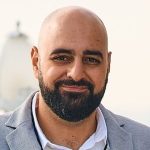
Our guest this week is Joseph Boll, Founder and CEO of Frederick Capital.
How do you spend your weekends?
My weekends at 47 look very different to how they did in my twenties. Saturdays are generally dedicated to health and fitness: A good gym session or a long hike. Sundays are for slowing down.
A quality Argentinian steak and a decent bottle of Malbec is my idea of a perfect Sunday. Living in Brazil, I have no shortage of either.
What are your top three business goals this year?
- First, to grow Frederick Capital’s presence in the US and UK markets. Both are seeing a significant increase in CBI inquiries, and I want to be the go-to advisor for those clients.
- Second, to develop our Russian-language platform, which we launched recently and is already gaining traction.
- Third, to build more strategic partnerships with trusted advisors globally so we can offer clients a truly joined-up service.
What’s your biggest business concern right now?
I have two distinct concerns right now. The first is regulatory: The pace of change in the Caribbean CBI space is relentless, with the EU applying increasing pressure on programs that have served clients well for decades. Staying ahead of that and ensuring clients make decisions based on the most current information is a constant challenge.

The second is broader: The speed at which AI is reshaping the way we all work. It is genuinely exciting, but also unsettling for many industries. That said, I take some comfort in the fact that global migration and citizenship planning is one of the few fields where AI will have limited impact.
Which book is on your nightstand right now?
I am a little late to the party on this one, but I recently read Shoe Dog by Phil Knight, the memoir behind the building of Nike. A fascinating story and a genuinely enjoyable read.
I also picked up The Three-Body Problem for the beach, which is an outstanding piece of science fiction. Two very different books, but both completely absorbing in their own way.
How and when did you first get into the investment migration industry?
My background is in technology: I spent 12 years as CEO of a technology firm in the UK. But throughout that time, my business dealings took me across the USA, Barbados, Australia, and Europe, which gave me an early and very personal understanding of what it means to operate across multiple jurisdictions.
I have done the international relocation journey myself, and I know first-hand how confusing and poorly served that process can be. When I eventually departed the UK and settled in Brazil, the idea for Frederick Capital came naturally.
What was your proudest moment as a service provider?
There have been a few proud moments, but the ones that stay with me are the personal stories behind the work. What I did not fully anticipate when I started Frederick Capital was how deeply personal citizenship and passport planning can be.
It is not always about tax or travel. Sometimes it is about families. I have had more than one situation where my work has helped families reunite, or obtain a common passport that allowed them to finally live in the same country.
Those moments are difficult to put a value on, and they remind me why this industry matters beyond the financial transaction.
Which investment migration market development has surprised you the most in the last year?
The speed at which US and UK clients have entered the CBI market. Historically, this was dominated by Chinese and Middle Eastern HNW individuals.
In the last 12 to 18 months, the inquiry profile has shifted dramatically. We are now seeing significant demand from Americans and British nationals who already have strong passports but are looking for asset protection and a Plan B. That shift has been faster than I expected.
If you could go ten years back in time, what business decision would you change?
If I could go back ten years, I would have entered this market much earlier, and specifically, I would have made the move at the start of COVID. The pandemic triggered a clear and permanent shift in how people think about global mobility, including my own.
I watched the world change in real time and knew instinctively that the demand for second citizenships, residency options, and international planning was about to accelerate. I was right, but I was still transitioning out of my technology business at that point. With hindsight, I would have been fully positioned in this market from day one of that shift.
What investment migration industry personality do you most admire?
Rather than singling out one individual, the people I admire most are the early pioneers of global mobility, those who were facilitating international relocation and citizenship planning long before the internet made it straightforward. Today we have smartphones, instant communication, video calls, and global banking at our fingertips.
When I first started working internationally, I was relying on a fax machine. The people who built this industry in those conditions, navigating complex cross-border processes without any of the tools we take for granted today, deserve enormous credit.
If all goes according to plan, what will you be doing five years from now?
If all goes according to plan, I would like to significantly strengthen Frederick Capital’s position in the Southern Cone of South America. We operate globally across multiple jurisdictions, but this region holds a special place for me, both professionally and personally.
I genuinely enjoy living here, and I believe the Southern Cone is one of the most exciting and underserved markets in the global mobility space right now. Paraguay, Argentina, and Brazil: The interest is growing fast. I would like to see the investment migration industry develop this region further, and I intend to be part of that.



