In the space of a few days, the public has been told two very different things about Andrew Tate’s Vanuatu citizenship.
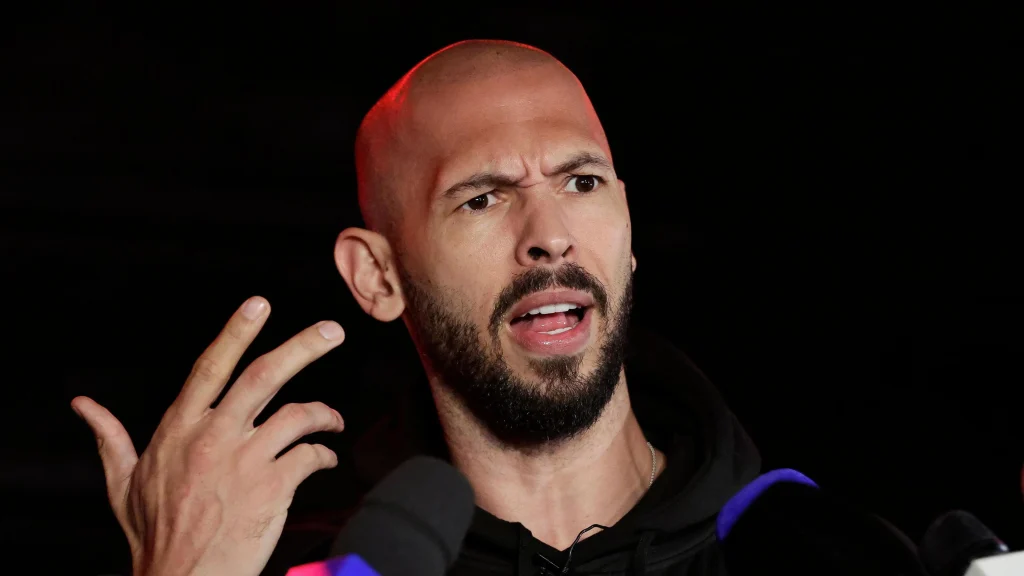
First, a Vanuatu government spokesman was reported as saying that Tate’s citizenship and passport had been revoked. Then Vanuatu’s Citizenship Office issued a clarification: The Citizenship Commission had not decided to revoke the grant, the evidence on file did not support a revocation, and Tate remains a Vanuatu citizen. A process may still be ongoing, but no final revocation has been formally confirmed.
For some, this will look like another messy Andrew Tate story. I think it reveals something much more important.
A country should never leave the world unclear about whether one of its citizens is, in fact, still a citizen. That is not simply a communications issue. It goes to the heart of sovereignty, the rule of law, and what citizenship by investment (CBI) is actually meant to provide.
Citizenship is not a rental agreement. It is not a subscription that can appear secure one week and uncertain the next because its holder has become controversial.

Once a sovereign nation grants citizenship under its laws, it creates a real legal relationship with that person. Whether the citizenship came through birth, descent, marriage, naturalisation, or investment, the principle should be the same: The citizen becomes part of that country and is entitled to its protection under the law.
A passport is a document. Citizenship is the promise behind it.
For many families, a second citizenship is not about running from the law or avoiding obligations. It is about building a lawful Plan B: A long-term option for their children, their mobility, their business, and their future. It is a decision made precisely because the world can become politically or economically uncertain.
The sovereign protection of that citizenship is one of the main reasons people value it.
That does not mean it is a shield from justice. A second citizenship does not erase criminal liability, tax obligations, sanctions, reporting duties, or the authority of a court. No serious person should suggest otherwise.
But there is an equally important principle: Criminal allegations, political controversy, or damaging headlines that arise after someone becomes a citizen do not automatically mean that citizenship was never real. A country must apply its own law, through its own lawful process, and explain its decision when citizenship is to be removed.
The Citizenship Office’s latest statement makes this distinction clear. It says the law separates allegations, investigations, charges, convictions, and a finding that citizenship was obtained through fraud. It also says the information available when Tate was naturalised did not show an adverse record sufficient to refuse him.
That is how the rule of law is supposed to work. A person may be unpopular. They may be under investigation. They may face serious allegations. But legal status cannot simply be rewritten according to the temperature of a news cycle.
A sovereign state must be sovereign after the passport is issued
The phrase “sovereign protection” is used freely in the citizenship industry, but it needs to mean something practical.
A sovereign state has the right to decide whom it admits. It has the right to impose strict due diligence. It has the right to reject applicants whose source of funds, reputation, political exposure, or background does not meet its standards. It also has the right to revoke citizenship where the law clearly allows it, including where there was fraud, false representation, material concealment, or another proven statutory basis.
Vanuatu’s Citizenship Commission publishes revocation grounds that include fraud, a grant made contrary to the Citizenship Act or Constitution, and post-grant non-compliance with statutory restrictions. The latest Citizenship Office statement also identifies other statutory routes, including a court finding of fraud in the original application and, in certain circumstances, a naturalised citizen receiving a prison sentence of ten years or more.
Those are legal grounds. They are not headline grounds.
This is why the confusion around Tate’s status matters. The initial report came from a government spokesman. The subsequent clarification came from the Citizenship Office, which says the Citizenship Commission has the authority to decide revocation and has not done so. The public should not need to guess which voice of government determines whether a citizen has lost their nationality.
A country that wants to be taken seriously as a sovereign jurisdiction should be able to say, clearly and consistently: This is the legal authority; this is the process; this is the decision; and this is the reason.
You cannot offer citizenship as a product and treat it as a lease
CBI programmes are under constant scrutiny. That is simply the reality of the modern world. Some people object to them on principle. Others question how they are run. The answer cannot be to make citizenship look temporary once an applicant has become commercially or politically inconvenient.
A country can accept a lawful qualifying contribution or investment as part of a citizenship process. But if it does so, it must honour the citizenship it grants unless a clear legal basis requires otherwise.
Otherwise, applicants are not being offered citizenship. They are being offered a travel document on a revocable lease.
That may sound blunt, but it is the question every serious family should ask. When I acquire a nationality, am I joining a country under its law, or am I only borrowing a passport while no one objects to my name appearing in the press?
The answer matters far beyond one individual case. Families do not make six-figure decisions lightly. They put their trust in a country’s institutions, its law, and its promise that citizenship has permanence.
If the answer is that it can be withdrawn whenever a holder becomes high-profile, then the programme has a credibility problem. If the answer is that it can be withdrawn only for defined legal reasons, properly evidenced and applied consistently, then that is very different. That is citizenship.
High-profile citizens should not have fewer rights
Andrew Tate is not an easy figure to defend, and this article is not written to defend him.
The question is whether the law is applied differently because someone is high profile. Would the same public confusion have emerged around an unknown citizen? Would the same revocation discussion have arisen if the person had never appeared in the international media? Would an ordinary citizen be treated as having lost their nationality before the legally authorised body had made and communicated its decision?
No country should give celebrities special treatment. But neither should it give them less legal certainty.
A citizen who is famous, unpopular, or embarrassing is still a citizen. If the state wishes to remove that status, it must do so on a lawful basis. The rights of citizenship should not become weaker because a person is difficult to defend in public.
I have seen the sensitivity of the Tate story first-hand. Over the past two years, I have posted more than 500 videos about citizenship, residency, and international planning.
The first time one of our Facebook pages was suspended was after a relatively light post about Tate’s Vanuatu passport. TikTok flagged the content and later restored the account on appeal. Facebook went straight to suspension.
That does not prove anything about why Vanuatu’s officials have given conflicting accounts. It does show how quickly the name “Andrew Tate” can end a sensible discussion before it begins.
But this is exactly the case where the industry should have a sensible discussion. Serious allegations should be treated seriously. Due diligence should be robust. Fraud should have consequences. Yet citizenship itself must still mean something once it is granted.
Do the hard work before citizenship is granted
The most effective protection for any CBI jurisdiction is rigorous due diligence before approval.
Countries should reject applications where the facts do not satisfy them. They should not accept a qualifying contribution, issue citizenship, and only later discover that their own initial screening was inadequate. If there was fraud or concealment in an application, the law should deal with it. If there was no fraud or concealment, later allegations must be assessed according to the law rather than used to rewrite the past.
This is not an argument for making citizenship impossible to revoke. It is an argument for making revocation a serious legal act, not a public-relations response.
The original Vanuatu screening, as described by the Citizenship Office, involved checks against Interpol, the Vanuatu Financial Intelligence Unit, immigration authorities, and other mechanisms. The Office says that no relevant adverse record was identified at the time.
If that position changes because reliable new evidence shows fraud in the original file, the law provides a route to deal with it. If the position does not change, the country must be confident enough to distinguish between a controversy and a legal ground for removing citizenship.
The real test of sovereign protection
The Tate case may still develop. A formal process may lead to a different outcome, and if it does, the legal basis should be stated clearly.
But the mixed messages already offer a lesson for every CBI jurisdiction.
Sovereignty is not simply the right to issue citizenship. It is the responsibility to administer citizenship through law, consistently and without panic. A sovereign country should neither protect wrongdoing nor be pushed into looking as though it is making nationality decisions by press release.
Citizenship is not a rental agreement. It cannot be cancelled because the tenant has become controversial.
A passport is a document. Citizenship is the promise behind it. If a country makes that promise, whether through birth, naturalisation, or investment, it should be prepared to honour it.