Armenia plans to tighten its simplified citizenship track for ethnic Armenians after applications reached an all-time high of more than 32,000 in 2025, most of them filed by ethnic Armenians holding Russian passports.
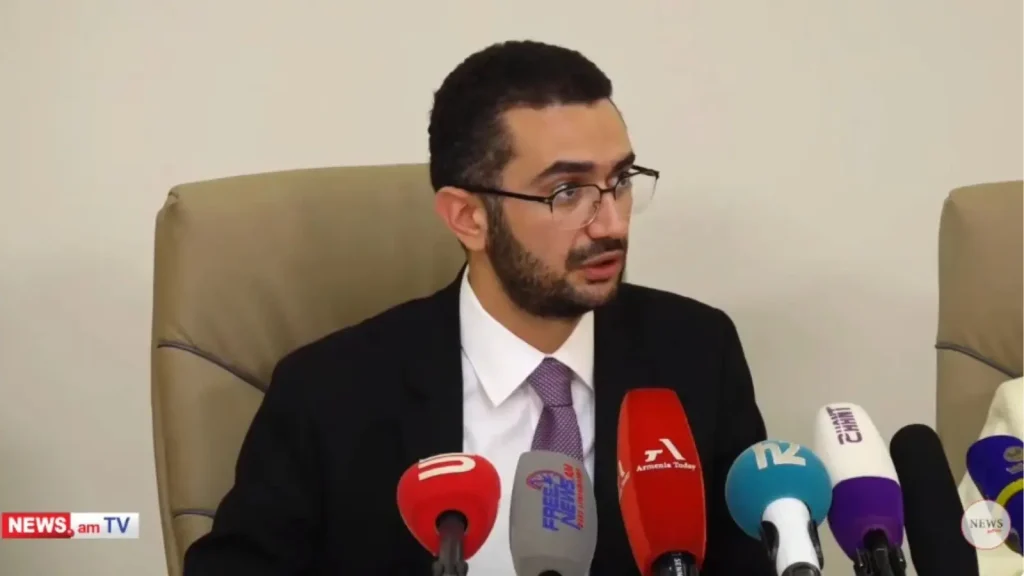
At a recent press conference in Yerevan, Acting Deputy Minister of Internal Affairs Armen Ghazaryan promised draft legislative amendments “in the near future,” according to multiple local media reports.
Applications averaged 7,000 to 8,000 a year before Russia’s 2022 invasion of Ukraine, according to Ghazaryan. They then surpassed 20,000 in both 2023 and 2024 before setting a record last year.
Ordinary applicants qualify for naturalization only after three years of residence in Armenia, plus tests on the Armenian language and constitution. Ethnic Armenians are exempt from all of these conditions and can, in practice, naturalize without ever having lived in the country.
That gap, in Ghazaryan’s view, has turned the passport into a workaround for the travel restrictions Western countries imposed on Russian citizens after the invasion.

Armenian citizenship is being instrumentalized “simply to obtain a travel document,” he told reporters, adding that the state imposes essentially no requirements on ethnic Armenians and that “this, in my professional opinion, is a problem.”
The pool of potential applicants is enormous. Russia hosts the world’s largest Armenian diaspora community, which the 2010 Russian census put at just above 1 million; the 2021 census counted approximately 946,000.
As such, even 2025’s record 32,000 applications, most of them from Russia according to the ministry, represent a small fraction of those eligible under the current no-conditions track.
A Residence Requirement Is the Likeliest Fix
The ministry’s reading matches what Nerses Isajanyan, Managing Attorney at Vardanyan & Partners, observes in his own caseload.

Ethnic Armenians holding Russian citizenship now make up “the large majority of our citizenship work,” he tells IMI, whereas before 2022 “they were one group among several.”
He adds that most are not relocating to Armenia: “They are acquiring an Armenian passport while continuing to live in Russia.”
Authorities haven’t specified what the restrictions would look like. Isajanyan expects “almost certainly a residence requirement,” pointing out that officials have spent the past year arguing simplified naturalization should serve ethnic Armenians who actually move to Armenia.
Article 13(3) of the Citizenship Law “waives the ordinary three-year residence condition outright,” he explains, and that is precisely the gap a draft would close.
What the residence condition would actually require is still open. It “could mean simply holding a residence permit, which ethnic Armenians obtain easily, or actual physical presence for a set period,” Isajanyan notes.
He expects the lighter version: a permit alone, with no obligation to physically live in Armenia. “It answers the political concern without creating an administrative burden,” since officials would not have to verify anyone’s actual days spent in the country.
For now, the announcement remains just that. The government’s e-draft register “carries no 2026 bill amending the Citizenship Law,” Isajanyan cautions, “so this remains a policy statement.”
A Shelved 2022 Bill Hints at the Scale
Yerevan has been here before. In July 2022, Armenia’s National Security Service proposed that ethnic Armenians qualify for fast-track citizenship only if they had spent at least 60 days in the country over the preceding two years, singling out applicants who “have nothing to do with Armenianness.” The bill never reached parliament.
Isajanyan still sees it as a useful benchmark. The 2022 draft “shows the scale drafters here reach for,” he observes, “which is lighter than the regime applying to ordinary applicants.”
Ghazaryan, the Acting Deputy Minister of Internal Affairs, also wants legislators to close a loophole in how citizenship is renounced. Today, nothing stops a person from renouncing Armenian citizenship and applying to get it back minutes later, which strips the renunciation of any real consequence.
Most renunciations, he told reporters, involve minors: current law lets parents remove a child from citizenship if one parent has renounced theirs. The apparent point of the maneuver is military service, since a boy taken out of citizenship before draft age never becomes liable for conscription, and the easy restoration rule would let him reclaim his passport as an adult once the service window has passed.
The Broader Reshuffle
The proposal lands amid a wholesale redesign of Armenia’s migration framework. An overhaul adopted this year abolishes the ten-year special passport long used by diaspora Armenians, digitalizes residence procedures, and introduces an investor fast track to immediate permanent residence.
Citizenship rules also feature in Armenia’s visa liberalization dialogue with the EU, whose Commission handed Yerevan a 74-point action plan in November 2025. Ghazaryan insisted, however, that the citizenship debate predates that process.
Not all ethnic-Armenian applicants are passport shoppers, either. Most of the 14,770 individuals who received Armenian passports in the first half of 2026 were refugees from Nagorno-Karabakh, Migration and Citizenship Service Acting Head Nelly Davtyan told reporters at the press conference. She did not specify how many were Russian citizens.
Up to a million Americans may also qualify for Armenian citizenship by descent, a pool that any new residence requirement would equally affect.