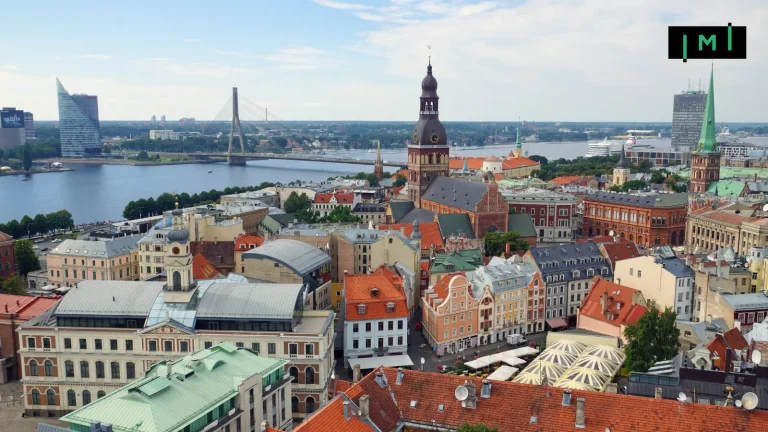

For two decades, one Gulf city served as the default answer to a question that wealthy families across the Middle East, Iran, and South Asia were all asking at once: Where do I park capital outside my home country? The answer was so obvious it barely needed defending. Until it did.
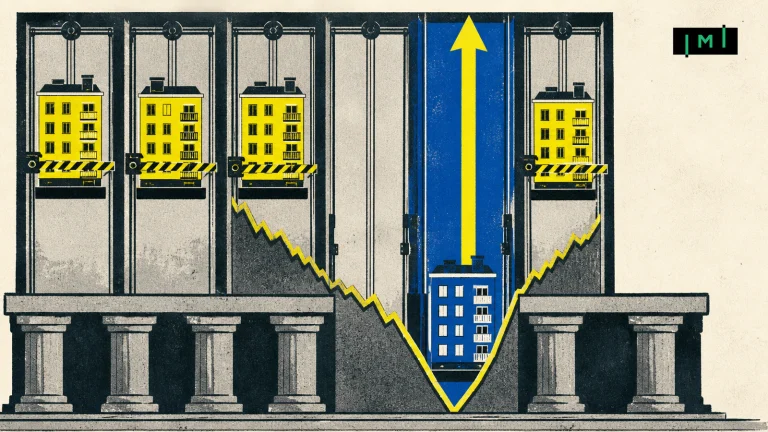
Between early February and late March 2026, the conflict between the United States, Israel, and Iran did what years of overbuilding and regulatory ambiguity could not. Property sales in the Gulf’s largest real estate market dropped 30.5 percent in four weeks.
Transaction volumes fell 36 percent, from $16.53 billion to $10.58 billion. Analysts tracking the fallout put the recovery timeline at 12 to 18 months, and many consider that optimistic.
The numbers matter, but the psychology matters more. What broke was not a market; it was a consensus. Investors who had treated Gulf property as a permanent store of value are now, for the first time in a generation, asking about exit strategies.

The Redirect
Three destinations are absorbing the bulk of Dubai’s redirected capital: Turkey, a southern European golden visa jurisdiction, and a Central American qualified-investor program. Only one offers full citizenship through a real estate purchase, delivers it in under three months, and sits close enough to the Gulf that you can fly home for dinner.
Turkey’s citizenship by investment (CBI) program has processed more than 40,000 applications and drawn over $15 billion in foreign investment since 2017. By volume, it is the most popular direct-citizenship program on Earth. Those figures came before the Gulf crisis.
Taymour Polding, who co-founded CIP Turkey more than 15 years ago, describes what the firm is seeing now as qualitatively different from previous demand surges. “We’ve always had strong Gulf inquiry, but the profile has shifted,” Polding explains.
“Six months ago, the typical caller was exploring options on a two-year horizon. Now they want to know how fast we can close. The urgency is personal, not theoretical.”
That urgency is most acute among Iranian nationals living across the Gulf, a population estimated at nearly five million. For this group, Turkey is not an exotic bet.
It is a country where the food tastes familiar, the call to prayer sounds the same, and a direct flight from any Gulf capital takes two hours. Add a G20 economy, NATO membership, and a legal system modeled on European civil law, and the case feels less like Plan B and more like a correction of an overdue oversight.

$400,000 Today. Probably Not Tomorrow.
The program’s mechanics are deceptively simple. Buy property worth at least $400,000, hold it for three years, and receive Turkish citizenship for yourself, your spouse, and your children under 18. There is no residency requirement, no language test, and no renunciation of existing nationality.
Investors with longer memories recall that this same program cost $250,000 from 2018 to 2022. Ankara raised the threshold to $400,000 with days of notice, catching mid-transaction buyers off guard.
Industry consensus now points to a further increase to $500,000, though no date has been announced. The last time a date was announced, it was already too late for thousands of applicants.
Aran Hawker, co-founder of CIP Turkey, has watched two threshold changes from the inside. “People always assume they’ll have warning,” Hawker observes. “They didn’t in 2022.”
“The gazette published on a Friday, and by Monday the market had repriced. Anyone who tells you there’s no rush hasn’t been through a Turkish regulatory shift.”
Beyond pricing, Ankara is tightening the program’s procedural architecture in ways that reward preparation and punish improvisation. INTERPOL checks are now standard, and source-of-funds documentation has grown more granular.
Undeveloped land without a building permit no longer qualifies. Both the main applicant and spouse must appear in person for biometrics, though a same-day fast-track service introduced in February 2026 has compressed what once required a week into a single appointment.
These changes are the program growing up. A CBI program that vets rigorously produces citizenship that holds up under international scrutiny.
But the margin for error has thinned considerably. Paperwork that would have passed without comment two years ago now gets sent back.
The July 1 Variable
One more shift is coming, and this one carries a fixed date. On July 1, 2026, Turkey will mandate the Güvenli Ödeme Sistemi (Secure Payment System) for all real estate transactions.
The system works like escrow: the buyer’s funds sit in a blocked digital account until the tapu (title deed) transfer is recorded at the land registry, at which point payment releases automatically. Originally scheduled for May 1, the launch was delayed two months to finish technical integration.
For foreign buyers, this is ultimately protective; it eliminates the old anxiety of wiring $400,000 before ownership is legally confirmed. But new systems create friction, and friction costs time.
Polding sees the transition as a competitive advantage for firms that prepare early. “Notaries, banks, and registry offices will all be adjusting simultaneously,” he argues. “Investors who close before July 1 avoid the friction entirely.”
“Those who close after will want a legal team that has already mapped the new process. We’ve been running test transactions against the technical specifications since March.”
The implication is plain. Begin now and close under the current payment framework, at the current $400,000 threshold, with same-day biometrics already in hand. Wait three months and face a possible price increase, a new payment mechanism, and a queue of applicants who all hesitated in unison.
What a Turkish Passport Actually Gets You
Strip away the brochure language, because the utility of Turkish citizenship is more interesting than any list of visa-free destinations.
A Turkish citizen can obtain a five-year C-2 Schengen visa and move across 27 European countries for 90 days at a stretch. They can secure a 10-year U.S. tourist visa and, because Turkey holds an E-2 treaty with the United States, apply for a renewable investor visa that allows them to live and work in America, a pathway closed to citizens of China, India, Pakistan, and most Gulf states.
Access extends to 126 countries in total, and the number is climbing. Ankara granted visa-free entry to Chinese citizens on January 2 and to Australians on April 17, part of an accelerating diplomatic push that has added multiple nationalities in the first quarter of 2026 alone.
“Our hope is always for these agreements to become reciprocal,” Hawker explains. “Every time Turkey opens its doors to a new country, it strengthens the case for that country to open its doors back, and that is what makes a passport more powerful over time.”
Access extends to 126 countries in total. But the deeper value is structural.
Turkey permits dual citizenship and does not notify the investor’s home government. Citizenship is permanent; sell the property after three years, and the passport stays.
Children born to a Turkish parent acquire citizenship at birth, anywhere in the world. For a family thinking in generational terms, this is optionality that compounds quietly and costs nothing to maintain.
Non-resident Turkish citizens owe nothing on foreign-sourced income. Dividends, capital gains, and business profits earned outside the country are not subject to Turkish taxation, and a network of double-taxation treaties with most developed economies provides further insulation.
The Real Cost, Without the Spin
The $400,000 property purchase is the qualifying threshold, not the total outlay. Transparency on this point separates credible advisors from the rest.
Title deed transfer tax (tapu harcı) runs at 4% of the declared sale price. VAT ranges from 1% to 18%, though foreign investors can qualify for a full exemption if the filing is timed correctly and the documentation is airtight.
Hawker is blunt about why the fine print matters. “Half the complaints we hear from clients who started with other providers come down to fees they didn’t know about until closing day,” he explains.
“VAT exemption alone can save tens of thousands of dollars, but qualifying for it requires filing at the right moment with the right documentation. We’re one of the few legal teams in Turkey that has consistently delivered it.”
During the holding period, the property works. Rental yields in Istanbul and other major Turkish cities run between 5% and 8% gross, and CIP Turkey’s own portfolio carries an 8% rental guarantee.
After year three, the investor sells freely. Citizenship is permanent.
CIP Turkey
CIP Turkey processed its first citizenship case 15 years ago, before the service was widely available in the country. Two decades of experience in Turkish residency and immigration processing make it one of the longest-operating providers in the market.
The firm’s VIP fast-track service compresses the standard six-month timeline to approximately two months. Same-day biometrics coordination, pre-verified property portfolios, and an in-house legal team that handles every stage from consultation to passport issuance make that timeline reliable rather than aspirational.
CIP Turkey operates from Istanbul with affiliate offices across several continents. The firm provides concierge-level support through the holding period and beyond.
Polding frames the firm’s positioning in terms the current moment demands. “Speed is not a luxury right now; it is the product,” he argues.
“When a client in the Gulf tells me they need a second citizenship before the end of the quarter, I need to be able to say yes and mean it. That requires a property already vetted, a legal file already templated, and a biometrics appointment already scheduled.”
Next Steps
For Gulf-based investors weighing whether to act before the threshold changes, before the Güvenli Ödeme Sistemi adds procedural complexity, or before the current wave of demand drives Istanbul property prices higher, CIP Turkey offers a no-obligation initial consultation to assess eligibility, timeline, and investment structure.
To learn more, contact CIP Turkey today.