
Most travelers flying into Antigua pass through an airport terminal that China Civil Engineering Construction Corporation (CCECC) built with Chinese financing and opened in 2015. Designed for volume, it can handle 1.5 million passengers a year.

A decade on, the Chinese engineering giant is back on the island with a very different brief. At Long Bay on the Atlantic coast, it is building Long Bay Zen Resort, a US$200 million retreat with 113 keys, where the focus is not on how many guests arrive, but on how well they are looked after.
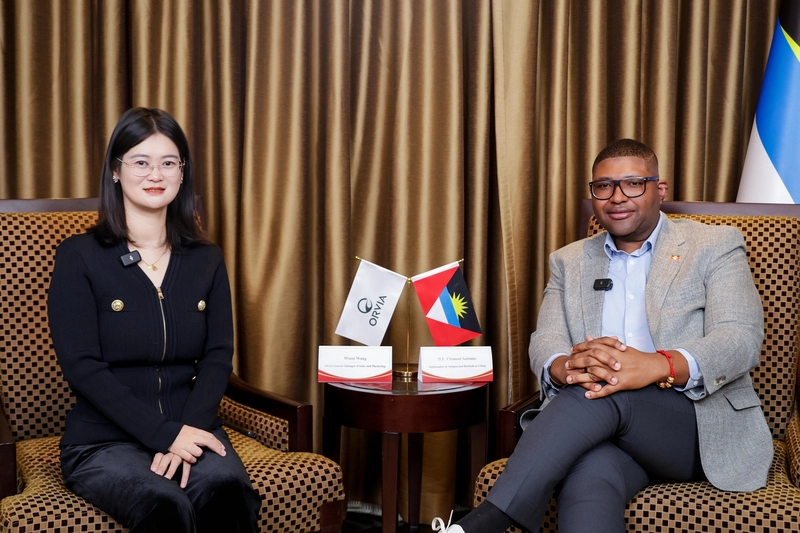
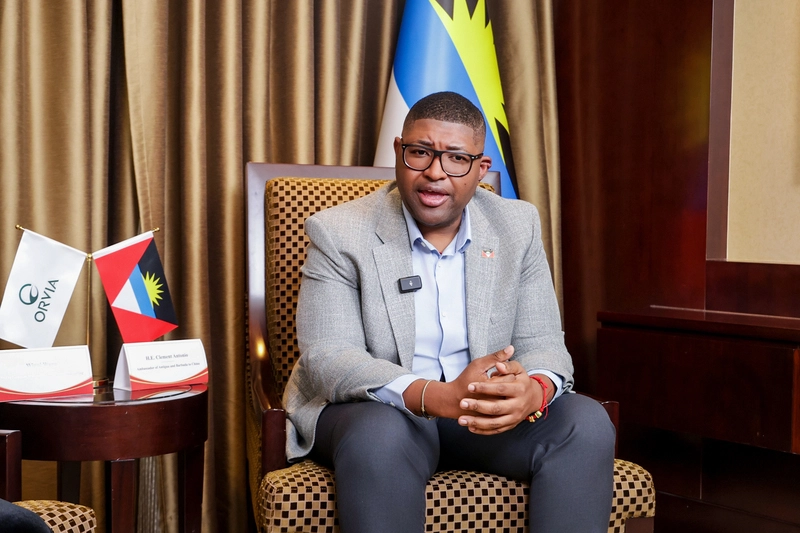
That shift, from infrastructure to high-end hospitality, is the story Clement Antonio is now telling investors from his new post in Beijing. Antigua and Barbuda’s ambassador to China describes his country as “a small nation with big ambitions.”
In an exclusive interview with ORVIA, he set out what those ambitions mean for investors. ORVIA is a global investment migration and advisory firm with a strong presence in Asia and a long-standing working relationship with the Government of Antigua and Barbuda, which it represents as a licensed agent of the country’s citizenship by investment program; its Global Dialogue series brings government leaders into conversation with its international client base.
A Relationship Entering Its Practical Phase
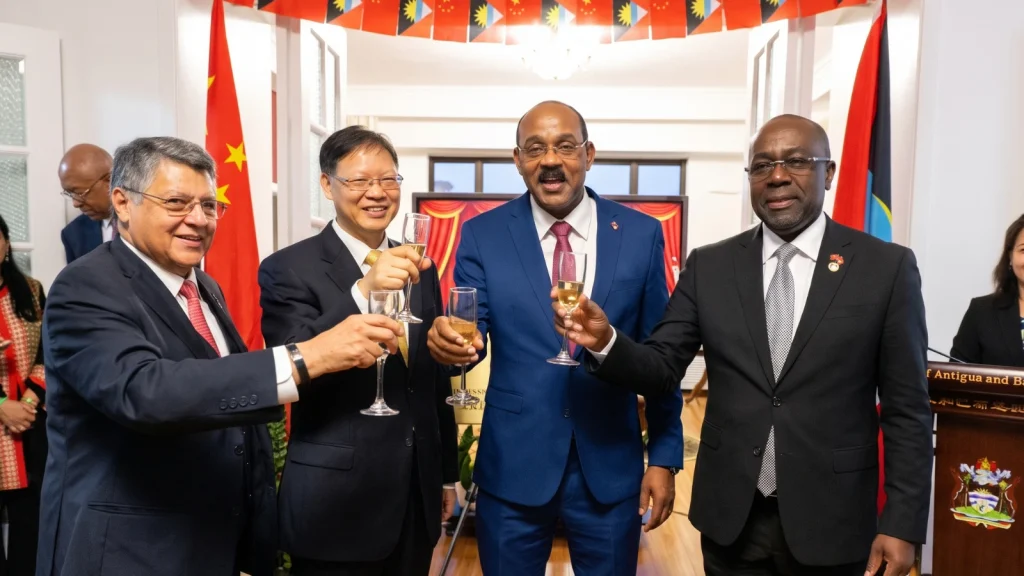
Antigua and Barbuda established relations with China on January 1, 1983, barely a year after independence, and the two have grown steadily closer since. By 2018, Antigua had become the first Eastern Caribbean state to sign up to the Belt and Road Initiative.
Prime Minister Gaston Browne’s visit in January 2024 then produced a meeting with President Xi Jinping, a mutual visa exemption agreement, and the opening of Antigua’s first embassy in China.
Antonio, a former senator who took up the Beijing post in July, now calls the relationship “mature, warm and increasingly practical.”
The practical part is his job: more Chinese visitors on the islands, more Antiguan students in China, and Chinese investment in tourism, renewable energy, and the blue economy “in ways that create local jobs and transfer skills.”
“If, at the end of my term, more ordinary people in both countries know each other better and feel the benefits of our cooperation, I will consider that a success,” he affirms.
Quality Over Quantity
Antonio says tourism is “the lifeblood of our economy,” and the numbers back him up.
Antigua and Barbuda recorded 110,832 stayover arrivals in the first quarter of 2026, up 6.7% on a year earlier and its strongest first quarter ever, and the International Monetary Fund (IMF) puts gross tourism receipts at 45% of GDP.
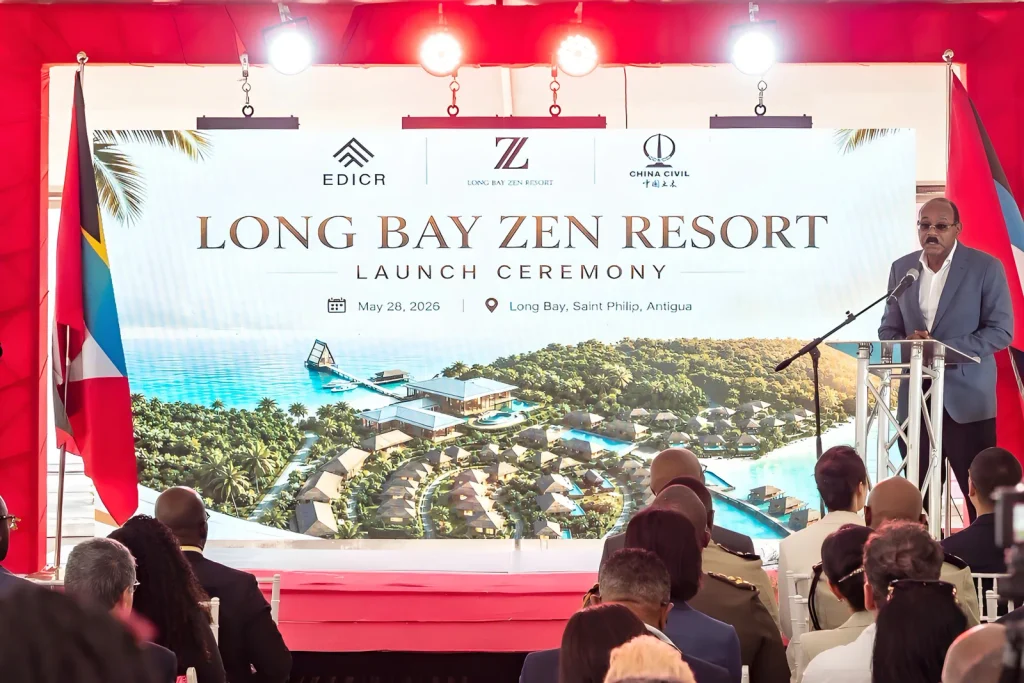
The government’s ambition, however, is not more visitors but higher-spending ones. “We’re looking for quality, more so than quantity,” Browne said at the Long Bay Zen groundbreaking in May.
Antonio makes the same argument from the demand side. Today’s travelers want “privacy, wellness, fine cuisine, sailing, diving and genuine cultural encounters,” and the resorts that use renewable energy, conserve water, and protect their coastlines “will lead the future.”
He also knows where the untapped demand sits. The US, Europe, and Canada supplied 92% of first-quarter stayovers, while China still doesn’t register as a market of its own, even though Antigua has admitted Chinese citizens visa-free since 2014. Chinese travelers, he says, “are increasingly sophisticated and are seeking high-quality long-haul destinations”; what is missing is airlift, Chinese-language service, and awareness.
The pitch rests on stability: a parliamentary democracy with a common-law system, English as the official language, and a currency pegged at EC$2.70 to the US dollar since 1976.
On the IMF’s estimates, the economy grew 3% in 2025, and public debt is down by 33% since 2020.
Long Bay Zen
Long Bay Zen is where the ambassador’s arguments take physical form, and where the government’s backing is most visible. The Prime Minister, the Governor General, and the Tourism Minister all attended the May groundbreaking, and Tourism Minister Charles Fernandez called the resort “a new direction for tourism in Antigua and Barbuda” and a project that advances the country’s Vision 2030 tourism agenda.
The resort replaces the Long Bay Hotel, a 20-room property the Lafaurie family ran from 1966, with 113 keys designed around understated luxury rather than scale. Over-water villas, beach pool villas, and an over-water wedding chapel put it in the top tier of Caribbean hospitality.
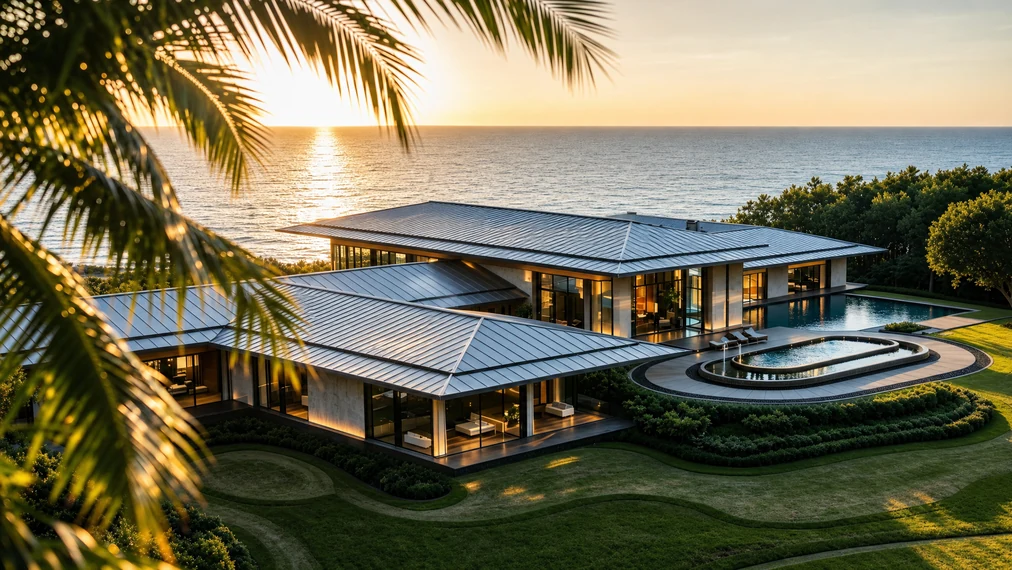


Technology, though deeply integrated, stays out of sight. An AI concierge, delivery robots, and smart rooms run in the background, built to be felt rather than seen, so that guests notice only the calm, the comfort, and the sea.
Because the site is a sea turtle nesting beach, environmental performance is not optional. Renewable energy, an on-site desalination plant, and low-carbon operations are all in the plan.
That environmental work has run through official channels from the start. Antonio says the project has kept up “frequent dialogue” with the Development Control Authority and the Department of Environment, committing “to go the extra step” to remain compliant, and is the kind of sustainable, high-end development the government’s tourism strategy is built around.
That, in his view, is what sets the project apart: “the type of sustainable, environmentally friendly, low-impact development that I endorse.” Demolition followed the groundbreaking, and CCECC begins major construction in the fourth quarter of 2026.
Through the Proper Channels
On his own role, Antonio draws a firm line. An embassy opens doors and connects investors with the right agencies, but approvals and incentives “rest with the relevant authorities at home under our laws and procedures.”
His advice to any investor is the same: start with the Antigua and Barbuda Investment Authority, do thorough due diligence, and take independent advice, because “that discipline protects investors, and it protects our country.”
ORVIA works within that framework, and Antigua is one strand of its global outreach. In July, it hosted the head of Antigua’s Citizenship by Investment Unit at a conference in Guangdong attended by nearly 400 professionals. Antonio welcomed the effort: “Raising awareness of our country is exactly what we hope our friends and partners will do.”
Long Bay Zen is also among 30 projects approved under the real estate option of the Antigua and Barbuda Citizenship by Investment Program, which requires a purchase of at least US$300,000 held for five years.
That route now has an end date in sight. On October 24, Browne said cabinet was leaning toward confirming to the EU, by November 12, that the program will close in June 2028. Until then it would keep accepting applications, subject to whatever transition terms Brussels attaches.
Citizenship, however, was never the whole case for Long Bay. The resort is a world-class hospitality asset in a market that just posted its best quarter on record, where tourism receipts are worth 45% of GDP and the government is steering toward fewer, higher-spending guests.
For buyers who want the passport as well, ORVIA can advise on timing; for those anywhere in the world who want a stake in the upper end of Caribbean hospitality and lifestyle real estate, the case stands on its own.
Antonio signed off with an invitation. Antigua and Barbuda is “open, friendly and ready for partnership,” he said, for anyone who engages “through the proper official channels, with transparency and a long-term vision.”