

Moustafa Daly
Cairo
The Gulf Cooperation Council (GCC) countries are not only financial powerhouses but are also becoming prime destinations for wealthy foreigners and skilled professionals. Due to its tax-friendly policies, competitive business environment, low levels of corruption, and high levels of safety and security, the US$2.3 trillion GDP region is becoming a magnet for foreign businesses and wealthy individuals.
Before 2019, residency in GCC countries was strictly based on employment and/or sponsorship. The UAE’s introduction of the Golden Visa in 2019 was a turning point, introducing a path to long-term residency for wealthy individuals and skilled professionals, prompting similar moves across the region. While residency options have since expanded, in some cases, including permanent residence, citizenship remains largely unattainable except in rare cases.
Here are the five established investor residency programs in the GCC.
Contents
United Arab Emirates: The Golden Visa Program
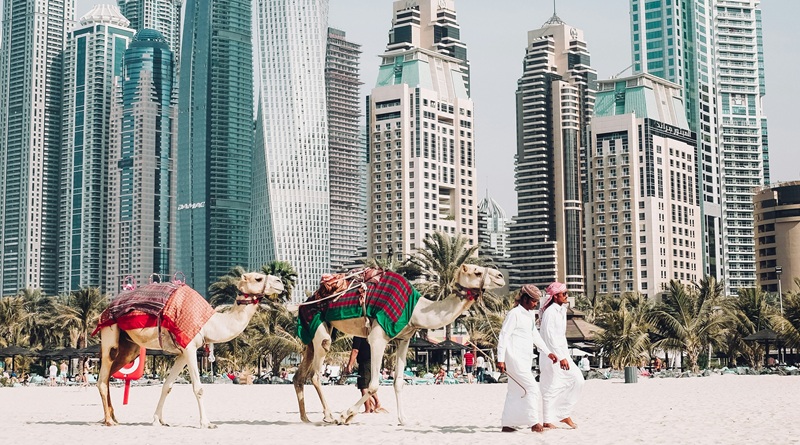
In 2019, the UAE introduced its Golden Visa program to grant long-term residency to investors, entrepreneurs, and specialized talents. The government designed the program to help the country remain competitive in an increasingly globalized world.

Depending on the qualification type, the visa remains valid for five or ten years and is renewable. However, the UAE does not provide a pathway to permanent residency or citizenship, granting them only by a royal order.
Core Details
- Investment Routes:
- Invest AED 2 million (US$545,000) in real estate or investment funds.
- Entrepreneurs must own an economic project worth AED 500,000 (US$136,000), supported by an accredited UAE incubator.
- Non-Investment Routes:
- Specialized Talents: The program welcomes individuals excelling in medicine, science, arts, commerce, sports, and other fields.
- Abu Dhabi Golden Quay: This initiative offers Golden Visas to superyacht owners (minimum of 40 meters in length) and executives in the yacht industry.
- Dubai Creators HQ: This program targets digital influencers, podcasters, and visual artists, backed by a US$40.8 million Content Creators Support Fund.
- Benefits:
- Investors and talents do not need to meet physical presence requirements.
- The program includes immediate family members in the residency.
- Residents enjoy full access to the UAE’s tax-free business environment.
- Golden Visa holders gain free movement across GCC countries.
- Application processing time is typically one month or less.
Saudi Arabia: Premium Residency Investor Visa (Saudi Green Card)

In 2024, Saudi Arabia officially launched its Premium Residency Investor Visa, often called the “Saudi Green Card,” as part of the Kingdom’s Vision 2030 initiative that aims to wean the country’s economy off its chronic oil dependence. The program aims to attract foreign investment and talent by offering permanent residency immediately upon approval, a first for the country.
Core Details
- Investment Options:
- Real Estate Investment:
- Purchase property worth SAR 4 million (US$1.1 million).
- Government-accredited appraisers must assess the property and confirm full payment.
- Business Investment:
- Invest SAR 7 million (US$1.9 million) in economic activities within two years of obtaining residency.
- Employ at least 10 Saudi nationals in the business.
- Real Estate Investment:
- Benefits:
- Investors receive permanent residency immediately after approval.
- Residents can live, work, and own property or businesses.
- The program extends residency to immediate family members.
- Application processing time is at least one month.
Qatar: Residence Visa for Real Estate Owners
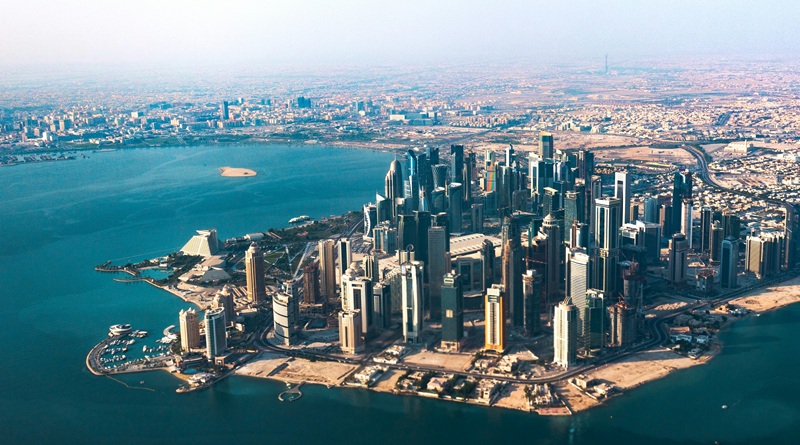
Qatar introduced its Residence Visa for Real Estate Owners program in 2021, enabling foreign investors to obtain long-term residency through property investments. For larger property purchases, the program also offers permanent residency with greater benefits.

Core Details
- Investment Requirements:
- Invest QAR 730,000 (US$200,000) to obtain renewable residency without sponsorship.
- Invest QAR 3,650,000 (US$1,000,000) to qualify for permanent residency, including a Permanent Residency Card.
- Benefits:
- Permanent residents gain access to public healthcare and education.
- The program eliminates the need for sponsorship (kafala).
- Applicants must meet a physical presence requirement of 90 days per year.
- Citizenship becomes possible after 25 years, though the process requires meeting strict criteria and approvals and eventually falls to the discretion of the government.
- Application processing time ranges between two to six weeks.
Qatar also has a five-year residency program for entrepreneurs who invest an equivalent of US$70,000 to launch startups there.
Oman: Investor Residency Program
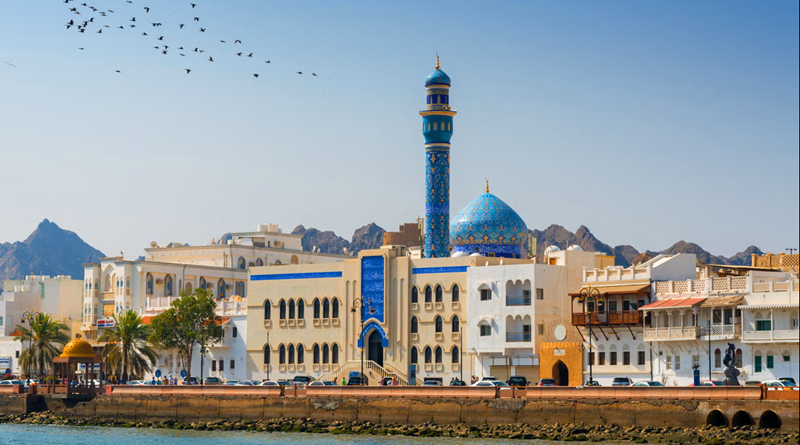
Oman launched its Investor Residency Program in 2021 to attract capital and reduce dependence on oil and gas. The program offers five and ten-year residency permits depending on the investment category.
Core Details
- Investment Options:
- Tier 1 (ten-year residency):
- Invest RO 500,000 (US$1.3 million) in real estate, business ventures, or government bonds.
- Establish a company that employs at least 50 Omani nationals.
- Tier 2 (five-year residency):
- Invest RO 250,000 (US$650,000) in real estate or business ventures.
- Retirees must prove a monthly income of RO 4,000 (US$10,400).
- Tier 1 (ten-year residency):
- Benefits:
- Main applicant can include direct family members in the application.
- Residents enjoy low taxes, a mild climate, and high levels of safety.
- Applicants must meet a physical presence requirement of 180 days per year.
- Application processing time is around two months.
Bahrain: Golden Residence Program

In 2022, Bahrain introduced its Golden Residence Program to provide long-term residency options for foreign investors, retirees, and talented individuals. The program offers multiple pathways based on property ownership, retirement, or employment history.
Core Details
- Qualifying Routes:
- Property Ownership: Purchase properties worth at least BHD 200,000 (US$530,000).
- Retirees (Non-Residents): Prove a monthly income of at least BHD 4,000 (US$10,600).
- Resident Employees: Show a minimum five-year work history with an average monthly salary of BHD 2,000 (US$5,300).
- Local Retirees: Demonstrate a 15+ year work history in Bahrain with a pension exceeding BHD 2,000 (US$5,300).
- Talented Individuals: Receive a nomination from a government agency.
- Benefits:
- The program includes immediate family members in the residency.
- Residents face no physical presence requirements.
- Bahrain provides long-term stability with renewable ten-year permits.
- Investors gain access to Bahrain’s free trade agreements and tax-friendly environment.
- Application processing time is around three weeks.
Rapid Residency Evolution Hindered by Lack of Naturalization
The GCC’s foray into the residency by investment scene has helped transform the region into one of the world’s most critical and fastest-growing economic hubs. Countries, especially the UAE, have continued developing their Golden Visas to include non-traditional qualification criteria, allowing them to target specific niches of high-net-worth individuals or talented professionals.
That innovation and quick implementation have helped the GCC programs carve out market shares and compete against established Golden Visas in Europe or elsewhere, but they still lack when it comes to naturalization. The vast majority of GCC countries do not offer a direct path to naturalization, and although Qatar does have a mechanism in place, it falls under government discretion, and that usually ends up in a road block for many of those who do apply.
The Gulf Cooperation Council represents one of the world’s most integrated Supranational Settlement Blocs (SSB), allowing citizens of each member state to reside and travel freely across borders without visas or permits. This 58-million-strong economic powerhouse offers substantial advantages to its citizens.
If GCC countries were to integrate naturalization pathways into their investor residency programs, the value proposition would increase exponentially. A coordinated naturalization paradigm shift would grant investors access to the entire bloc rather than just a single country.
