Dominica, Barbados, Belize, and Saint Vincent & the Grenadines implemented full free movement of their nationals on October 1, allowing citizens to live, work, and remain indefinitely across the four countries without visas or work permits.
The arrangement represents the Caribbean Community’s (CARICOM) first implementation of unrestricted regional mobility beyond temporary economic purposes.
The agreement eliminates the six-month stay limit that previously applied to CARICOM nationals traveling for non-economic reasons. Citizens from the four participating nations now receive indefinite stay authorization upon arrival, with access to emergency and primary healthcare as well as public primary and secondary education for their children.
The move departs from CARICOM’s existing skills regime, which permits only qualified workers to seek employment across member states without work permits. The previous framework left family members unable to access essential services, creating practical barriers to regional mobility.
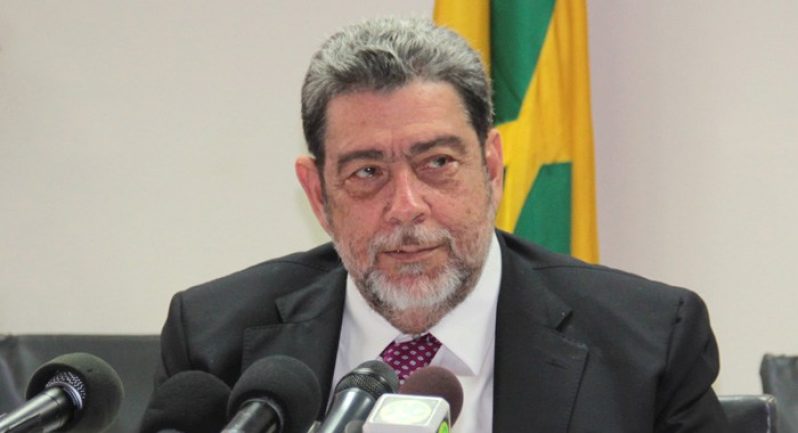
Saint Vincent & the Grenadines Prime Minister Ralph Gonsalves framed the limitation clearly: “If you can move for work, but your spouse or children cannot access education or health care, the right is hollow.”

The Politics Behind the Deal
The four governments have established registration systems to track incoming nationals and manage demand for public services.
Security protocols include data-sharing arrangements coordinated through the CARICOM Implementation Agency for Crime and Security (IMPACS), which administers the Advanced Passenger Information System (APIS) requiring passenger data submission before travel.
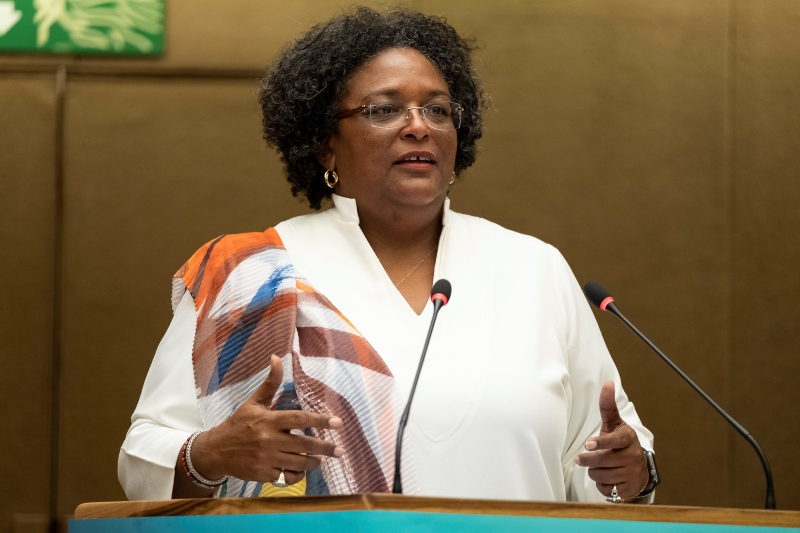
Barbados Prime Minister Mia Mottley emphasized that protective measures remain in place. Governments retain authority to refuse entry on national security or public health grounds, and officials will continue to vet names against INTERPOL, U.S. Homeland Security, and CARICOM watch lists.
Mottley acknowledged both the excitement and anxiety among Barbadians in a national address on October 2, noting that “all of your questions and feelings are valid.”
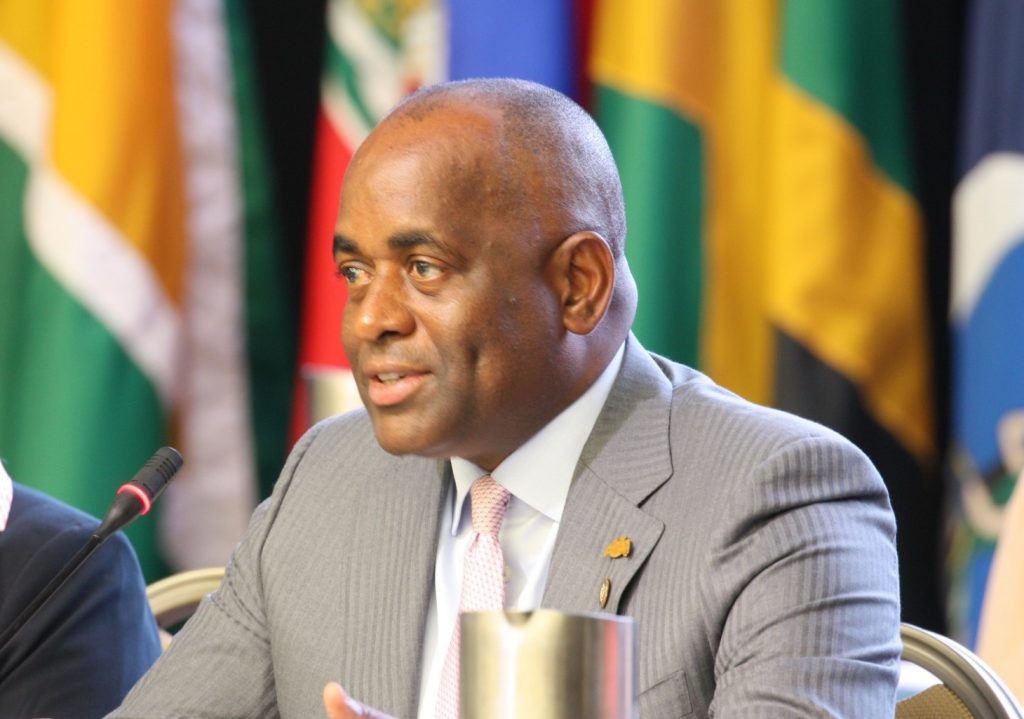
Dominica Prime Minister Roosevelt Skerrit addressed security concerns directly during a press conference on September 30, assuring citizens that robust systems of cooperation, vetting, and regional security remain in place.
He dismissed fears of mass migration between member states, noting that “there is no evidence to show that there is a dramatic move from one island to the other.”
The Barbadian leader positioned the initiative as a response to demographic challenges, noting that a shrinking workforce and aging population require new labor sources.
Mottley argued that incoming workers will fill employment gaps, support businesses, and contribute tax revenue while remaining subject to Barbados’ minimum wage and labor protections. She drew a clear line on enforcement: “We are not closing our eyes and swiping. We do not welcome criminality. We welcome contributions.”
Check out IMI’s Supernational Settlement Block Page to learn more about groups of countries where citizenship in one lets you live in multiple others.
Skerrit echoed this economic rationale, arguing that “free movement allows us to fill gaps in critical areas, while giving our own citizens greater access to opportunities across the Region. It is a win-win for all.”
He encouraged Dominicans to approach the change with optimism, urging them to “embrace this change with an open mind as it will bring huge opportunities for your families.”
The arrangement emerged through CARICOM’s Enhanced Cooperation Protocol to the Revised Treaty of Chaguaramas, which CARICOM adopted in March 2022.
The protocol permits groups of at least three member states to pursue deeper integration independently, even without consensus from all 15 CARICOM members. CARICOM Heads of Government approved the four-nation agreement during their July 2025 meeting.
Dominica and Saint Vincent & the Grenadines already participate in a similar arrangement through the Organization of Eastern Caribbean States (OECS), making the expansion to include Barbados and Belize a first for those two nations.
Dominica’s participation carries particular weight given its established Citizenship by Investment (CBI) program, opening additional mobility options for investors who have acquired Dominican nationality.
Saint Vincent & the Grenadines has long flirted with the idea of establishing a CBI program, and its Prime Minister, Ralph Gonsalves, has even claimed that the opposition, which promised to establish a CBI program if elected, is allegedly already working with “hyperactive” investment migration companies. A 2025 survey found that 62% of Vincentians support establishing a program.
The remaining 11 CARICOM member states continue operating under the existing skills-based movement framework, maintaining the right to facilitate the movement of their nationals as skilled workers, service providers, and business operators.
CARICOM has established a complaints mechanism for nationals experiencing difficulties at ports of entry or after entry. Forms are available at all entry points, and officials review complaints within two weeks and complete investigations within eight weeks where necessary.
The CARICOM Secretariat confirmed that systems for indefinite stay stamping, digital record-keeping, and service registration are operational across all four participating nations.
Barbados’ Parliament is scheduled to debate supporting legislation on October 7, though the agreement has already taken effect. Jamaica has expressed commitment to implementing free movement but has not announced a timeline, and its participation would substantially expand the geographic and economic scope of the arrangement.
Skerrit expressed hope that other CARICOM members will join the initiative, stating he is “hopeful that our other CARICOM Member States will soon join us in this historic step so that we can realise the full promise of a true Caribbean Community.”
Mottley framed the policy in terms of regional identity and economic necessity. She dismissed concerns about the exploitation of workers and emphasized that the initiative builds on Barbados’ history of regional leadership.
Calling it a continuation of Caribbean integration efforts, she argued that “we don’t only need investment and money for countries’ growth and development. We need people and skills.”
The Prime Minister positioned the agreement as part of broader regional unity: “In a world where many are building walls, the Caribbean must build bridges.”
The four nations are characterizing themselves as pioneers, with the expectation that other CARICOM states will join once the arrangement proves viable.
The success of the four-nation framework will likely influence whether additional CARICOM members adopt unrestricted mobility.
The practical implications for labor markets, public services, and regional trade patterns will emerge as citizens begin exercising their new rights to relocate across the participating countries.
Antigua and Barbuda Expands Visa-Free Access
In other Caribbean news, Antigua & Barbuda signed a visa waiver agreement with the United Arab Emirates on September 27, expanding travel and business opportunities between the Caribbean nation and the Gulf state.
Foreign Minister E.P. Chet Greene and UAE Minister of State for International Cooperation Reem bint Ebrahim Al Hashimy executed the agreement during the 80th session of the United Nations General Assembly.