Headline donation figures lie. A citizenship by investment (CBI) program quoting US$200,000 can run to US$267,944 once a government stacks due diligence (DD), processing, interview, oath, and passport fees on top.
And the program that costs least for one person may not cost least for six; dependent pricing follows wildly different logic from one jurisdiction to the next.
Every program below offers routes beyond donation, such as real estate, government bonds, and business investment. This comparison isolates the lowest-cost qualifying route in each country, because that is what determines the floor.
Methodology
We standardized family composition across all programs so the numbers could sit side by side:
- Single: One applicant
- Family of four: Applicant, spouse, two children under 12
- Family of six: Applicant, spouse, four children under 12
- Family of eight: Applicant, spouse, six children under 12
Children under 12 means no DD fees trigger in programs that charge DD only above 16 or 17. This is a static structure chosen for comparability.

Real families look different: add a teenager, a parent over 55, or an adult sibling, and the totals shift, sometimes by tens of thousands of dollars.
The notes below each program flag where eligibility extends beyond this baseline, but the table reflects only the standardized composition.
Included in every total: Base donation or minimum investment, processing fees, DD, interview fees, certificate and oath charges, and passport issuance. These are fixed government costs regardless of which agent files the application.
Where passport issuance fees do not appear on a program’s main CBI webpage, they have been sourced from supplementary government schedules or cross-referenced against licensed agent breakdowns (US$361 per person in Dominica, for instance, confirmed by Immigrant Invest, a licensed CBIU agent).
Excluded: Agent fees, tax, wire transfer fees, document authentication, courier charges, travel, and other ancillary costs (medical exams, police clearances, notarization, apostilles, translations). These vary by firm, jurisdiction, and applicant circumstance.
The Comparision
Lowest-cost qualifying route per program. Sorted by family-of-four per-passport cost, ascending.
* Under the Egyptian program, the applicant’s spouse does not receive citizenship simultaneously; she becomes eligible through spousal naturalization after two years. The denominator includes her, but her passport arrives late.
Antigua operates two donation funds. The National Development Fund (NDF) costs less for families of four or fewer. The University of the West Indies (UWI) Fund costs less for families of six or more. The table shows whichever fund produces the lower total at each family size.
The Newcomers: São Tomé vs. Nauru
São Tomé and Príncipe and Nauru both price their base contribution at US$90,000. Nauru’s figure comes via a limited-time offer running until June 30, 2026; after that, the standard contribution reverts to US$115,000. From that shared starting point, the fee structures diverge in ways that favor São Tomé at every family size.
São Tomé charges a flat US$5,000 submission fee and US$750 per person for documents (passport, national ID, certificate), per the official CIP schedule. No separate DD fee. Marginal cost per additional family member: US$5,750 (US$5,000 dependent contribution plus US$750 documents).
Nauru layers more. Each additional family member adds US$2,000 to the contribution and US$2,000 in application fees.
DD runs US$6,000 for the principal applicant and US$3,000 per dependent aged 16 and over; minors under 16 are exempt. Marginal cost per child under 16: US$4,000. Per adult dependent: US$7,000.
Nauru’s lower per-child marginal (US$4,000 vs. US$5,750) narrows the gap as families grow, but never closes it:
- Single: São Tomé by US$5,250. (US$95,750 vs. US$101,000)
- Family of four: São Tomé by US$13,000. (US$103,000 vs. US$116,000)
- Family of six: São Tomé by US$9,500. (US$114,500 vs. US$124,000)
- Family of eight: São Tomé still, by US$6,000. (US$126,000 vs. US$132,000)
The gap only reverses at a family of roughly 12. For any realistic household, São Tomé is the least expensive program.
Launched in August 2025, São Tomé drew 98 applications in its first four and a half months. Neither passport opens the Schengen area, the UK, or North America. Nauru’s 87 visa-free destinations took a hit when the UK revoked access in December 2025. São Tomé covers 75.
One wrinkle: Nauru’s LTO expires June 30. After that, the base contribution rises to US$115,000, and the spread at every family size widens further.
The Caribbean Five
Five sovereign programs sit between US$258,000 and US$270,544 for a family of four. A US$12,544 spread. Inside that band, the ranking shifts with family size, and two widely held assumptions about Caribbean pricing turn out to be wrong.
Saint Lucia
Saint Lucia’s National Economic Fund (NEF) is widely quoted as the Caribbean’s priciest CBI option. That is a conflation of two different routes. The US$30,000 to US$45,000 administrative fee layer applies to real estate applicants, not NEF donors. The government website lists no such fees under the NEF.
What actually sits on top of the US$240,000 contribution:
- Processing: US$2,000 (main applicant) + US$1,000 per dependent
- DD: US$8,000 (main applicant) + US$5,000 per dependent aged 16+
Family-of-four total: US$258,000. Per passport: US$64,500. That edges out every other Caribbean program at this family size.
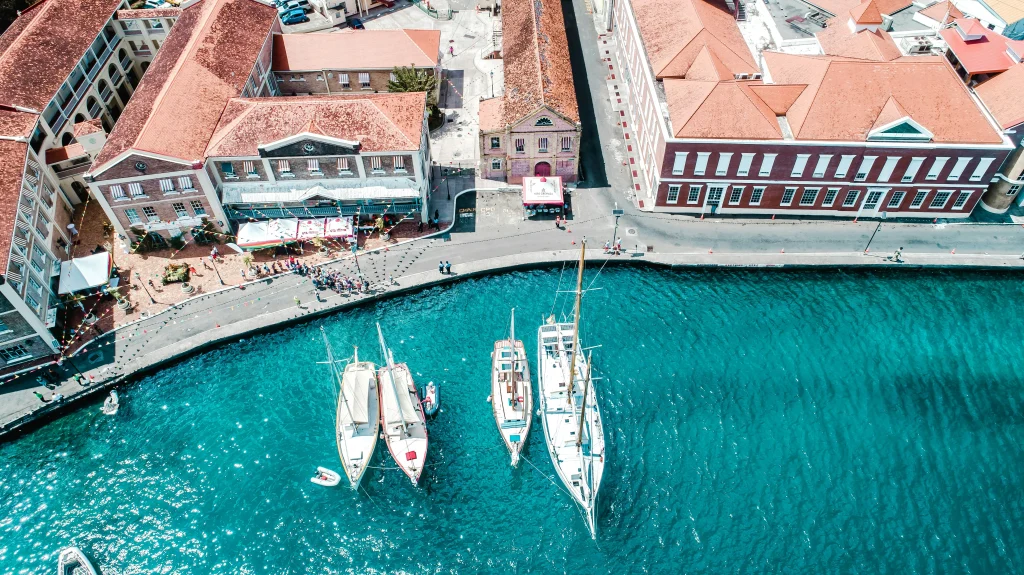
Grenada
Grenada sits US$300 behind Saint Lucia for a family of four (US$258,300 vs. US$258,000). All fees per the official IMA schedule:
- NTF contribution: US$235,000 (single or family up to four)
- Application: US$1,500 per person (all ages)
- DD: US$5,000 per person aged 17+
- Processing: US$1,500 per person aged 17+ (US$500 under 17)
- Mandatory interview: US$1,000 per person aged 17+
- Passport: US$350 adult, US$250 minor
- Oath of allegiance: US$50 per person aged 18+
For families larger than four, each additional dependent under 55 adds US$25,000 to the NTF contribution (siblings cost US$75,000). That escalation pushes Grenada’s per-passport cost higher than Saint Lucia at every family size above four.
Antigua & Barbuda
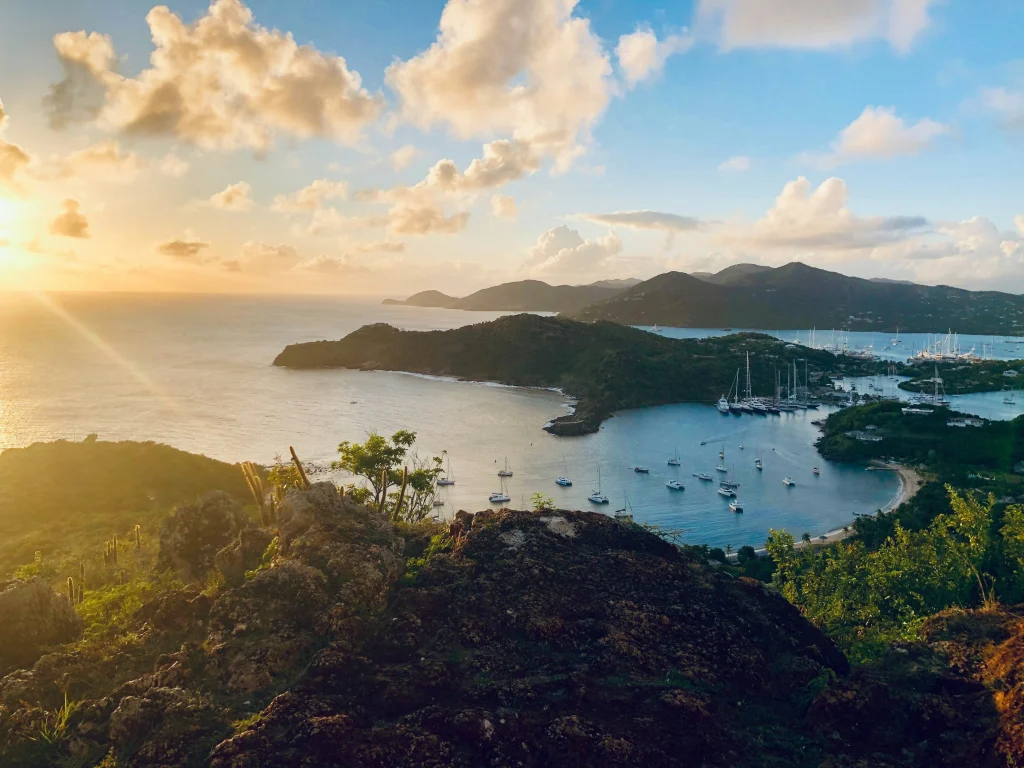
Antigua runs four investment tracks (NDF donation, UWI Fund donation, real estate, business investment). On cost, only the two donation funds matter.
The NDF charges US$230,000 plus US$20,000 in processing for any family size. The UWI Fund charges US$260,000 with processing rolled in for the first six members. Below six, the NDF wins. At six or above, the UWI Fund wins. At US$36,988 per passport for a family of eight, the UWI Fund delivers the Caribbean’s best value for large households.
Antigua also casts the widest eligibility net in the region: spouse, children under 30, parents and grandparents over 55, and unmarried siblings of any age.
Dominica
Dominica’s Economic Diversification Fund (EDF) offers the Caribbean’s lowest solo entry at US$210,361. For families, the contribution jumps to US$250,000 (up to three dependents), and each additional minor adds US$25,000. That jump moves Dominica behind Saint Lucia, Grenada, and Antigua for a family of four.
Government fees on top of the EDF contribution:
- DD: US$7,500 (main applicant) + US$4,000 per dependent aged 16+
- Certificate of naturalisation: US$500 per person
- Interview: US$1,000 per person aged 16+
- Processing: US$1,000 per application
- Passport: US$361 per person
One structural advantage: the EDF carries none of the government fee layer (US$75,000 to US$100,000) that Dominica imposes on real estate applicants.
Saint Kitts & Nevis
Saint Kitts charges US$250,000 under its Sustainable Island State Contribution (SISC) for a single applicant or a family of up to four. No separate government processing fee sits on top, the only Caribbean program built that way. The ancillary charges add up differently:
- DD: US$10,000 (main applicant) + US$7,500 per dependent aged 16+
- Application processing: US$250 per applicant
- Passport: US$361 per applicant
- Certificate of naturalisation: US$50 per applicant
- Bank due diligence: US$100 per applicant
Beyond the initial four: US$25,000 per additional dependent under 18, US$50,000 for those 18 and over.
Outside the Caribbean
Turkey
Turkey sits alone at US$400,000 for a real estate purchase (three-year hold). Spouse and children under 18 ride on the same application at no additional CBI-specific cost.
The costs on top of the US$400,000 are standard property transaction and citizenship application charges, not standardized CBI fees:
- Title deed fee (tapu harcı, nominally 4% but typically split with the seller)
- Notary and translation (approximately US$1,000 or more)
- Residence permit application fee
- Citizenship application filing fee
These vary by property and municipality. A conservative estimate for mandatory government costs above the investment itself: approximately US$5,000.
Two things distinguish Turkey from every other program on this list. First, the property trades on an open market, meaning the investor may see appreciation rather than writing the entire sum off as a sunk cost.
Second, dependent eligibility runs narrow: No parents, no adult children, no siblings. Turkey prices are attractive per passport for large nuclear families, but it cannot accommodate multi-generational applications.

Egypt
Egypt charges a US$250,000 donation plus a flat US$10,000 state fee, regardless of family size. Children under 21 qualify.
Much like Turkey, Egypt operates on an open market policy when it comes to its US$350,000 property investment. We included its donation option, however, as it remains the lowest price point on offer.
The catch sits in the fine print. The spouse does not receive citizenship simultaneously; she becomes eligible through spousal naturalization after two years. On day one, a family of four holds three passports, not four.
Sierra Leone
Sierra Leone’s GO-FOR-GOLD program charges US$140,000 for the main applicant and US$10,000 per normal dependent (spouse, children under 18, parents, grandparents).
DD fees sit on top: US$5,000 for up to five applicants, US$10,000 for six to ten. Following an October 2025 expansion, the eligibility net stretches to siblings under 30, multiple spouses, adult children, and unrelated business partners (US$30,000 each).
Mobility is at the low end: 66 visa-free destinations, concentrated within the Economic Community of West African States (ECOWAS). As of January 2026, Sierra Leone falls among countries under full US entry suspension.
Vanuatu
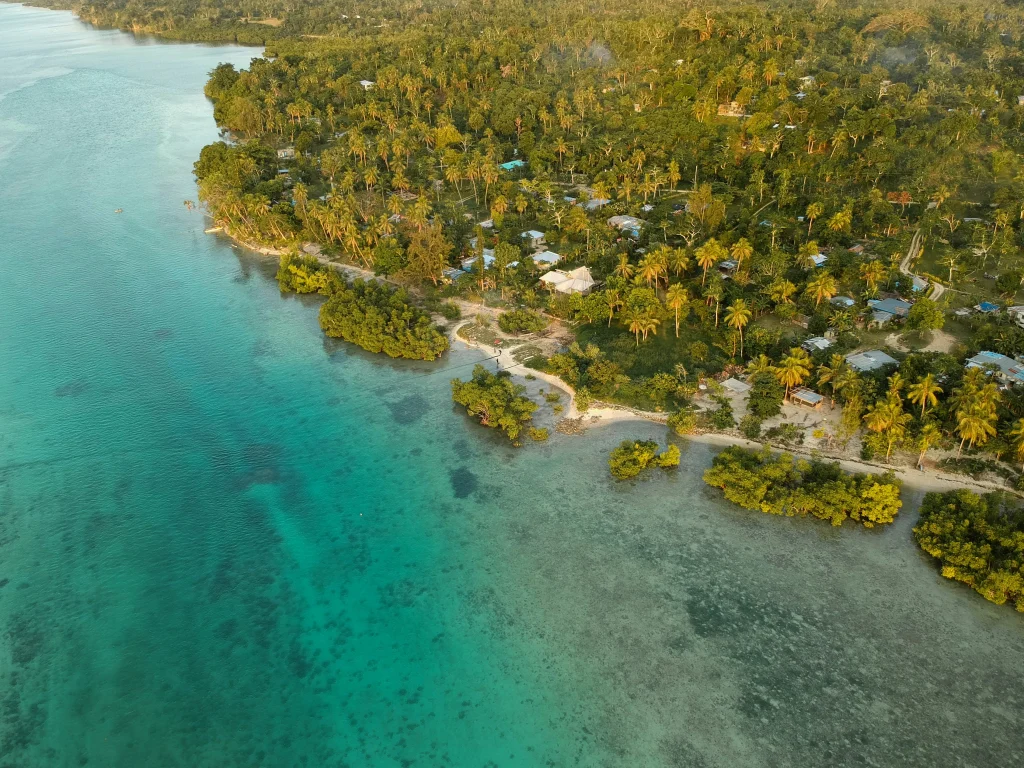
Vanuatu’s Development Support Program (DSP) charges US$130,000 for a solo applicant, scaling to US$180,000 for a family of four, with US$10,000 per additional member. The FIU due diligence fee of US$5,000 applies once per application, not per person.
Processing runs 30 to 60 days. Nothing else in CBI comes close on speed. The passport lost Schengen and UK visa-free access in recent years; what remains is Pacific and Asian mobility.
When Real Estate Beats Donation
On paper, donation routes produce lower mandatory costs for every family size. Caribbean real estate routes layer government fees (US$50,000 to US$100,000) on top of the property investment itself.
The case for real estate is capital recovery. A US$270,000 Grenada property, sold after the five-year hold, could return most of the outlay. If it does, Grenada’s net unrecoverable cost for a family of four drops to roughly US$38,300, or US$9,575 per passport: the lowest effective figure in the Caribbean.
Turkey’s open-market model makes the recovery arithmetic more interesting. Caribbean CBI properties circulate primarily among successive CBI applicants, a shallow secondary market. Turkish real estate trades in a liquid national market with genuine price discovery.
Consider a family of four that buys at US$400,000 and pays approximately US$5,000 in taxes and fees. If the property sells for US$410,000 after the three-year hold, the family pocketed US$5,000 net and walked away with four passports.
If it sells for US$390,000, the total loss is around US$15,000, or roughly US$3,750 per passport. Even a modest depreciation scenario puts Turkey’s effective per-passport cost below São Tomé’s.
Both recovery scenarios, Caribbean and Turkish, depend on resale. Neither is guaranteed.
A Note on Timing and Family Structure
Prices change. Promotional offers expire (Nauru’s LTO runs out on June 30, 2026). Governments revise fee schedules without advance notice. Any figure in this article is a snapshot, not a quote.
Every total above assumes the same static family: a principal applicant, spouse, and minor children under 12. Real families rarely fit that mold.
Adding a parent over 55 to a Grenada application costs US$50,000 in additional NTF contribution alone; adding an adult sibling costs US$75,000.
In Dominica, a parent over 65 triggers a US$40,000 additional EDF contribution and US$4,000 in DD. In Antigua, a sibling of any age adds only US$20,000 under the UWI Fund. These differences can rearrange the entire ranking.
The only reliable way to price a specific family structure is to consult a qualified, licensed agent who can map the exact composition against each program’s fee schedule and produce a binding quotation. The table above sets the baseline; the agent sets the price.
Disclaimer: All figures in this article are derived from official government sources, including stpcip.com, imagrenada.gd, cipsaintlucia.com, cip.gov.ag, cbiu.gov.dm, ciu.gov.kn, and goforgold.center, accessed in February 2026. Passport issuance fees for Dominica (US$361/person) were confirmed via Immigrant Invest, a licensed CBIU agent. Governments may update fee schedules, contribution thresholds, or eligibility rules at any time; any discrepancy between the figures published here and those on the relevant government website should be resolved in favor of the government source. This article is for informational purposes only and does not constitute legal, financial, or immigration advice. Readers should consult a qualified licensed agent or legal professional before making any investment or application decisions.