For most of the past decade, the golden visa sales pitch wrote itself: buy an apartment in Lisbon, list it on Airbnb, and let tourists pay, at least in part, for your European residency.
The model worked so well that several governments eventually concluded the only fix was to remove the asset class altogether.
Portugal moved first. Law 56/2023, in force since October 2023, struck every real estate route from the Portugal Golden Visa and barred the surviving fund pathways from touching property even indirectly, though existing holders kept their permits and renewal rights.
Spain went further, closing its entire program on April 3, 2025, rather than bothering to separate the property from the permit.
Hungary produced the strangest exit of all: the government deleted the €500,000 property option from its Guest Investor Program on December 20, 2024, twelve days before the route was due to open.

Those three countries answered the rental question by abolishing it. Everywhere else that still grants residence or citizenship through real estate has had to decide what investors may actually do with the asset, and the answers now range from “anything you like” to “a €50,000 fine and a revoked permit if you rent it out.
What follows is a country-by-country map of where renting out a golden visa property is permitted, where it comes with conditions, and where it is banned outright, from the most restrictive regime to the most permissive.
Greece: A Short-Term Ban With Teeth

Greece is now the only major program that welcomes property investment while expressly banning its most lucrative use. Article 64 of Law 5100/2024 prohibits short-term letting of golden visa properties, and violations carry a €50,000 administrative fine alongside revocation of the residence permit.
The definition matters more than the platform. Greek law treats any rental under 60 days as short-term whether or not it appears on Airbnb or Booking, so a private holiday let arranged offline is just as prohibited as a listed one.
The ban applies across all tiers, from the €800,000 zones of Athens, Thessaloniki, Mykonos, and Santorini down to the €250,000 commercial-conversion route.
Long-term leasing remains fully legal, and investors have taken the hint.
Of roughly 16,000 properties foreigners had acquired by the end of 2024, nearly 15,000 entered the long-term rental market immediately after purchase.
Advisors now peg gross yields on compliant lets at roughly 3% to 6%, well below the tourism-inflated returns of the Airbnb era.
Circular 1/2026, a 31-page directive issued in April, instructs one-stop services to refer sham property transactions to the tax authority and the Anti-Money Laundering Authority, and property-use compliance is re-examined when permits come up for renewal.
The Conditional Middle
Malta: A Prohibition, Reversed

Malta ran the opposite play. Until last year, rules under the Malta Permanent Residence Programme (MPRP) barred beneficiaries from letting their qualifying property during the five-year holding period; Legal Notice 146 of 2025 reversed that prohibition.
Purchasers (minimum €375,000) may now lease the property out for periods when they are not residing in Malta. Renters (minimum €14,000 a year) may sublet after the initial five years, provided the landlord consents and the sub-tenant is not another MPRP applicant.
Ordinary Maltese rules still apply: Leases must be registered within ten days, an unregistered tenancy is a criminal offense carrying fines of up to €10,000, and rental income may be taxed at a flat 15% final rate.
Cyprus: Free to Rent, With a VAT Catch

The €300,000 fast-track permanent residency in Cyprus places no rental restriction on the qualifying property. The catch sits in the tax code: the reduced 5% VAT rate on a new home applies only if it serves as the buyer’s sole residence and is not rented out, so would-be landlords must budget for the standard 19%.
Stricter rules govern the slower Category F route, where the qualifying property must be for the applicant’s own residential use and cannot be let at all.
Turkey: A Lock on the Sale, Not the Lease

Turkey’s $400,000 citizenship route restricts disposal rather than use. A three-year no-sale annotation is recorded on the title deed and policed at the Land Registry, but the investor may rent the property throughout the holding period and keep the income, which Turkey taxes at progressive rates of 15% to 40%.
Malaysia: The Gray Zone

Malaysia’s revamped My Second Home (MM2H) program requires that participants purchase a home, from RM600,000 (approximately US$142,000) depending on tier and state, and hold it for ten years.
What they may do with it is genuinely unsettled: several advisories state that the compulsory property cannot be let by an individual and that rental income requires a Malaysian company structure, while others report no restriction at all.
Until the authorities publish clearer guidance, a rental plan for an MM2H property is a question for a licensed local agent, not a settled entitlement.
Indonesia: Rent, But Get Licensed

Indonesia’s Golden Visa accepts qualifying residential apartments (US$1 million for the ten-year permit; standalone villas do not qualify because foreign ownership of landed property runs on different rules).
Letting is permitted, but the operating environment has tightened: since March 2026, every short-term rental listed on platforms such as Airbnb must hold a business identification number (NIB), with unlicensed units facing delisting, and foreign-run rental operations should typically be structured through a local company.
Where Landlords Are Welcome
The Gulf
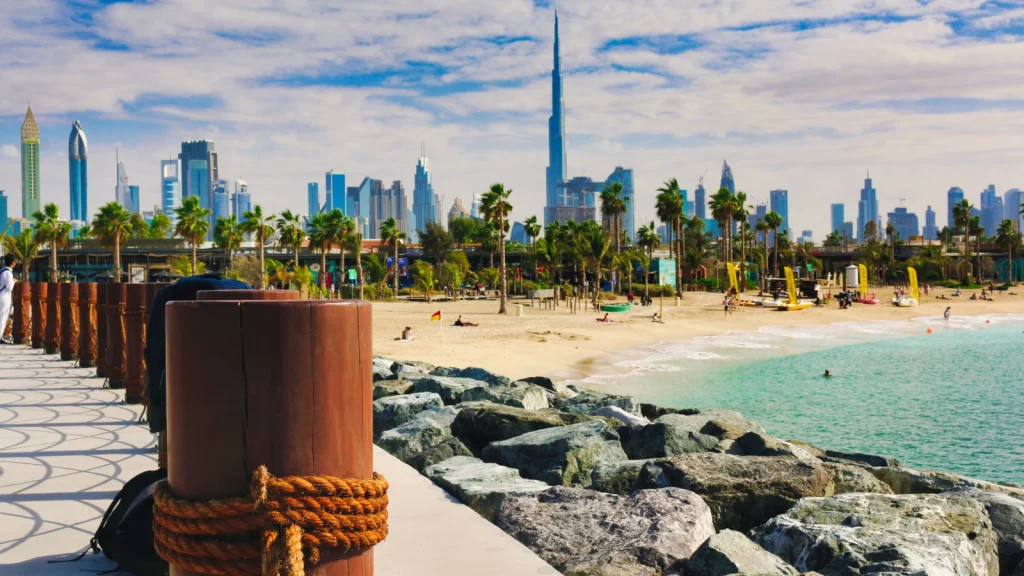
Dubai treats occupancy as irrelevant. The UAE’s AED 2 million (approximately US$545,000) golden visa is assessed purely on the registered value of the title deed, and holders may live in the property, lease it long-term, or run it as a holiday let with the requisite tourism permit.
The rest of the Gulf follows the same logic. Saudi Arabia’s Premium Residency real estate track (SAR 4 million, approximately US$1.07 million) attaches its conditions to the asset itself, which must be residential, completed, and mortgage-free, rather than to how it is used, and investment properties qualify just as readily as primary homes.
Qatar grants renewable residency from QAR 730,000 (approximately US$200,000), issues the permit within days of title registration, and levies no personal income tax on the rental proceeds.
Oman joined the club in September 2025 with a ten-year Golden Residency admitting real estate from OMR 200,000 (approximately US$520,000).
The Caribbean

In the five Caribbean citizenship programs, rental income is not merely tolerated; it is the product.
Real estate options consist chiefly of shares in government-approved resort developments, from US$200,000 in Dominica through US$270,000 in Grenada to US$300,000 in Antigua and Barbuda and St. Lucia, and developers market projected rental distributions of roughly 2% to 5% a year during the mandatory holding period.
Mauritius

Mauritius takes a similar view. A US$375,000 purchase in an approved development (under the Property Development Scheme, Integrated Resort Scheme, Real Estate Scheme, or Smart City Scheme) carries residence for as long as the owner holds the property; short and long lets alike are permitted, and rental proceeds may be repatriated without restriction.
Egypt

Egypt’s citizenship program imposes a five-year hold on its US$300,000 real estate route but says nothing against letting the asset in the meantime.
Selling early is the expensive move: an investor who exits within five years must pay a US$250,000 contribution to the central bank to preserve the citizenship.
Latvia, for Now

Latvia remains the European anomaly: a €250,000 purchase confers Schengen residence, and the property may be let short-term, let long-term, or left empty.
This leniency may not survive much longer, though. Parliament passed a new Immigration Law on June 11, 2026, that would strike real estate from the list of qualifying investments, and although the president returned the bill for a second reading eight days later, the direction of travel is unmistakable.
The draft’s own explanatory notes record that property purchases accounted for nearly half of all investor permits issued in 2025, which is precisely why legislators want the route gone.
Three Checks Before You Buy
Europe either polices the use of investor-owned housing or removes it from the menu; the Gulf, the Caribbean, Turkey, and the Indian Ocean built their programs on the assumption that investors will be landlords.
Three checks matter more than the headline threshold. Start by confirming which rental regime attaches to the permit itself: Greece’s 60-day rule and Malta’s subletting conditions are immigration matters enforced at renewal, not tax technicalities.
Then price the general-market rules layered on top, from Dubai’s holiday-let permits to Indonesia’s platform licensing and Cyprus’s VAT clawback.
And where the rules leave room for doubt, Malaysia above all, get the answer in writing from a licensed practitioner before the deposit leaves your account. A residence permit built on a property you cannot use as intended is an expensive way to learn to read the fine print.