
Malta and Cyprus are the European Union’s two small-island Mediterranean member states, and the investment migration market has long treated them as a pair. Both are former British territories where English is widely spoken. They both grant immediate permanent residency rather than renewable temporary permits. Both ran Citizenship by Investment (CBI) programs that no longer exist: Malta’s fell to an EU Court of Justice ruling in April 2025, and Cyprus shut its program in November 2020 after a corruption scandal.
What remains in both countries is a golden visa, and the two programs attract a similar investor profile: Non-EU nationals who want EU residence, a Mediterranean base, and a path to citizenship without committing to full-time relocation.
The programs themselves, though, are built differently. Malta delivers Schengen Area access from day one, charges higher government fees, and includes up to four generations of family in a single application. Cyprus processes applications faster, offers more flexible investment options across four asset classes, and lets you retain your capital in a recoverable investment. The timelines, requirements, and trade-offs differ in ways that should shape your decision.
What Each Program Costs
Cyprus requires a minimum €300,000 investment across four qualifying categories: New residential property (plus VAT), commercial property (new or used), shares in a Cyprus-registered company employing at least five people, or units in Cyprus Investment Fund Association collective investments. Beyond the investment, applicants must demonstrate a secured annual income of at least €50,000 from abroad, plus €15,000 for a spouse and €10,000 per dependent child.
Government processing fees are minimal, totaling well under €1,000 for the main applicant.

Malta’s Permanent Residence Programme (MPRP) demands a larger financial commitment. Property purchase starts at €375,000, or you can rent at €14,000 per year. On top of the property component, the MPRP requires a €60,000 administrative fee (€15,000 upon application, €45,000 after approval), a €37,000 government contribution, and a €2,000 donation to a registered Maltese NGO. Each adult dependent beyond the spouse costs an additional €7,500.
Applicants must also meet an asset threshold: €500,000 in total assets with at least €150,000 in liquid funds, or €650,000 in total assets with €75,000 in liquid funds. This threshold applies for the first five years only.
For a single applicant choosing the rental route, Malta’s minimum outlay over five years comes to roughly €169,000 in fees and rent. The property purchase route totals approximately €474,000 including all fees.
Cyprus, by contrast, requires €300,000 plus VAT and negligible government fees, though the ongoing €50,000 income requirement adds a qualification barrier that Malta does not impose.

Schengen Access: The Biggest Differentiator
Malta joined the Schengen Area in 2007. MPRP holders receive visa-free travel across all 29 Schengen countries for up to 90 days within any 180-day period immediately upon approval. For investors whose primary goal is European mobility without relocating, this is a decisive advantage.
Cyprus is not in the Schengen Area. President Nikos Christodoulides has set 2026 as the target year for accession, and the government has stated that technical preparations are complete. The process remains subject to a European Commission evaluation and unanimous political endorsement from all current Schengen member states.
Observers have noted that unresolved political issues related to the island’s division and lingering concerns from the former golden passport program could complicate the timeline. Parliamentary debate on what Schengen accession means for the golden visa program has intensified, with opposition politicians questioning whether it could trigger a surge in applications from people seeking EU mobility rather than genuine residence.
Until accession is formally completed, a Cyprus residence permit grants the right to live in Cyprus only. It does not allow visa-free travel to Schengen countries. Cypriot permanent residents can apply for Schengen visas through embassies in Cyprus, but this still remains a visa application.
If Schengen travel is a core requirement, Malta wins outright in 2026.
Investment Flexibility
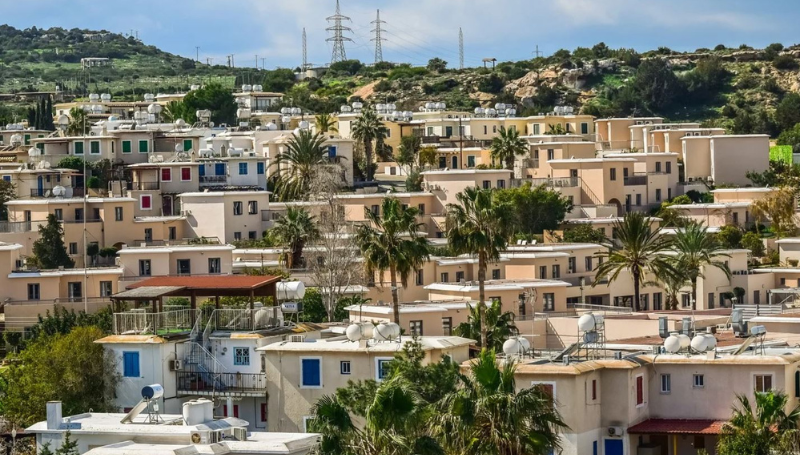
Cyprus offers four distinct investment routes at the same €300,000 threshold. Reforms published in March 2021 expanded the options beyond residential property to include commercial real estate (offices, shops, hotels), company shares, and regulated investment funds. A separate round of changes in May 2023 raised the income requirement and tightened dependent eligibility, but left the investment options intact. Residential property purchased under the program can be rented out from the day of acquisition.
Malta’s MPRP ties investment exclusively to property. You buy or rent. July 2025 changes introduced immediate leasing rights for purchased properties and subletting rights for rented properties after five years, aligning Malta with Cyprus and Greece on rental income. But the MPRP does not offer a fund, business, or commercial real estate route. Your capital goes into residential property or rental payments.
For investors who want their €300,000 working in a business or fund rather than sitting in a residential apartment, Cyprus provides that option. Malta does not.
Family Inclusion
Malta’s MPRP covers up to four generations in a single application: The main applicant, spouse, dependent children (including unmarried adult children under 29 at the time of application who are financially dependent), parents, and grandparents. IMI’s European golden visa guide identifies Malta as the standout program for multi-generational family inclusion.
Cyprus is more restrictive. The May 2023 regulatory changes removed parents and parents-in-law from dependent eligibility. They must now apply independently with their own €300,000 investment and €50,000 income. Children under 18 qualify as dependents on the main application. Adult children aged 18 to 25 can qualify if they are enrolled in a university, unmarried, and financially dependent, but they must file separate applications and individually demonstrate the €50,000 income requirement.
If you are relocating with aging parents or building a multi-generational household, Malta’s program is built for that. Cyprus is designed for families.
Processing Speed
The Cypriot government’s official target for golden visa processing is two to three months, though immigration practitioners report timelines closer to six months in 2026. Even at the longer end, Cyprus remains one of the faster Residence by Investment (RBI) programs in Europe. Cyprus has approved 28,660 golden visas since 2014, demonstrating a high-volume processing infrastructure.
Malta’s MPRP takes longer. The full application cycle runs six to 12 months from submission to final approval. A July 2025 update introduced a temporary one-year residence card issued within weeks of application submission and payment of the initial €15,000 fee. This card allows families to relocate to Malta, explore schooling and property options, and travel within Schengen while the permanent residency application undergoes due diligence.
The temporary card narrows the effective timeline gap. You get a functional residence permit in Malta within weeks, even if the permanent certificate takes months to finalize.

Path to Citizenship
Both programs lead to EU citizenship through naturalization, but the timelines and requirements differ considerably.
Malta requires physical residence for at least four years out of the preceding six, with no more than six consecutive months or ten months total spent outside the country during that period. The 12 months immediately before the citizenship application must be spent continuously in Malta.
Applicants must pass a language test in English or Maltese and have Maltese nationals vouch for them in writing. Citizenship is discretionary, not automatic. The practical minimum is five years from obtaining permanent residency to eligibility.
Since the December 2023 amendment to the Civil Registry Law, Cyprus has a single standard naturalization pathway. Applicants need 12 months of continuous lawful residence immediately before the application (absences up to 90 days permitted), plus seven cumulative years of legal residence in the preceding ten years. That totals eight years.
Applicants must pass a B1-level Greek language examination and score at least 60% on a civic knowledge test covering Cypriot political and social realities.
A fast-track route exists for highly skilled employees of designated Foreign Interest Companies in sectors including technology and IT, shipping, pharmaceuticals and biotech, aerospace, and R&D. These applicants can naturalize after four years total with B1 Greek proficiency, or five years with A2 Greek.
Applications under this route must be processed within eight months. This track does not apply to golden visa holders or self-employed individuals.
Malta offers a shorter path (five years versus eight), an English-language option, and lower minimum presence requirements per year. Cyprus demands longer residence, Greek proficiency, and a civic knowledge exam.
If citizenship is your endgame, Malta gets you there faster and without learning a new language.
Tax Treatment
Neither program requires you to become a tax resident, which means you can hold permanent residency without triggering local tax obligations on worldwide income.
Cyprus operates a non-domicile regime that exempts dividends, interest, and capital gains from the Special Defence Contribution (SDC) for up to 17 years. The 2026 tax reform introduced an extension option: After the initial 17-year period, non-domiciled residents can pay a €250,000 lump sum per five-year period to maintain the exemption for up to ten additional years.
For domiciled residents, the SDC rate on dividends dropped from 17% to 5% for post-2026 profits, but non-doms continue to pay zero. Foreign pensions face a flat 5% tax above an exempt threshold of €5,000.
The same 2026 reform raised Cyprus’s corporate tax rate from 12.5% to 15%, aligning with the OECD’s global minimum. Despite the increase, Cyprus remains one of the lower corporate tax jurisdictions in the EU, particularly when its participation exemption, IP Box regime, and Notional Interest Deduction are factored in. Cyprus levies no inheritance, wealth tax or gift tax. Stamp duty was abolished entirely as of January 1, 2026.
The country also offers a 60-day tax residency rule, allowing individuals to establish Cyprus tax residence by spending just 60 days per year in the country. The 2026 reform removed the previous requirement that the individual not be tax resident in another jurisdiction, though dual residency creates treaty-analysis complexity. For investors seeking a low-touch tax base in the EU, this remains one of the most accessible entry points available.
Malta’s Global Residence Programme (GRP) offers non-EU nationals a flat 15% tax on foreign income remitted to Malta, with a minimum annual tax of €15,000. The MPRP itself does not automatically create tax residency. Non-domiciled residents who do not remit foreign income to Malta pay no tax on those amounts. Capital gains on securities and foreign-source assets are tax-free in Malta. Gains on Maltese immovable property are taxed.
Both jurisdictions offer favorable tax environments. Cyprus edges ahead for investors seeking a structured non-dom framework with zero SDC on passive income and a 60-day residency path. Malta’s remittance basis provides flexibility for those who keep income abroad, and its tax-free treatment of securities and foreign-source capital gains adds another layer of efficiency.

Physical Presence Requirements
Neither program requires you to live in the country full-time.
Malta imposes no minimum stay requirement for maintaining MPRP permanent residency. You must maintain your property, insurance, and financial qualifications, but you can spend all your time elsewhere.
Cyprus requires one visit every two years. Miss the deadline, and your permit faces cancellation. The visit can be brief; a single day satisfies the legal requirement.
Both programs are designed for investors who want a European residence permit without committing to full-time relocation.
Language and Lifestyle
Malta’s two official languages are Maltese and English. Government services, business, legal proceedings, and daily life all function in English. For anglophone investors, Malta presents zero language barriers from arrival through citizenship.
Cyprus uses Greek as its primary official language, with Turkish spoken in the north. English is widely spoken, and business in Limassol, Nicosia, and Paphos often operates in English. Daily life is manageable without Greek. The B1 Greek requirement adds preparation time and effort that Malta’s English-or-Maltese option does not.
Both islands offer Mediterranean climate, low crime, high quality of life, and access to European-standard healthcare and education systems.
Which Program Fits Which Investor?
Choose Malta if you need Schengen travel immediately, want to include parents or grandparents, plan to pursue citizenship through English, or prefer a program with no visit requirement at all. The rental route keeps total sunk costs below Cyprus’s investment threshold, though it leaves you with no retained asset.
Choose Cyprus if you want a recoverable asset investment rather than sunk fees, prefer investment flexibility beyond residential property, value fast processing, or want to establish tax residency under the 60-day rule. Accept the absence of Schengen access (for now) and a longer, Greek-language path to citizenship.
Cyprus’s pending Schengen accession could change this comparison. If Cyprus joins the Schengen Area in 2026 or 2027, its golden visa will offer the same travel benefit as Malta’s with faster processing and broader investment options. Investors willing to bet on that timeline may find Cyprus the stronger long-term proposition.