In an era of heightened geopolitical tensions and a new global order in the making, a small group of nations continues to maintain policies of active neutrality, steering clear of military entanglements while pursuing diplomatic engagement and making few enemies in the process.
From Switzerland’s centuries-old stance to Costa Rica’s demilitarized model, these countries offer not only stability but also pathways for foreign residents seeking safe harbor in uncertain times.
The nations listed below have maintained neutrality through decades of turbulence, though history shows that diplomatic non-alignment doesn’t always guarantee immunity from entanglement in global conflicts.
Strategic interests of major powers can override diplomatic stances, as seen when Nazi Germany invaded neutral Belgium, the Netherlands, and Denmark in 1940 despite their non-aligned positions.
As such, the jurisdictions listed below shouldn’t be conflated with ones that are naturally protected from conflict zones by geographic shielding and self-sufficieny rather than by diplomatic neutrality. For these, see our feature on Where to Go If World War 3 Breaks Out.

With that caveat in mind, the following nations stand out for long maintaining their non-aligned status and navigating murky geopolitical waters with notable success, and each offers viable pathways to residency or citizenship.
Switzerland: The Gold Standard of Neutrality
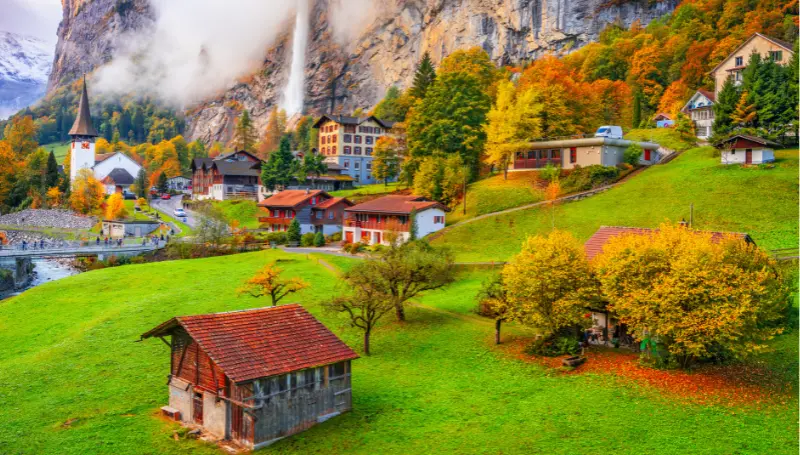
Switzerland’s neutrality represents the world’s oldest continuous policy of military non-alignment, formally established by the Treaty of Paris in 1815.
The Swiss approach rests on principles outlined at The Hague: non-participation in wars, non-alliance, non-provision of troops or weapons to warring parties, and non-granting of transition rights, as articulated by President Ignazio Cassis at the 2022 World Economic Forum.
Yet Switzerland’s neutrality has evolved. After Russia’s invasion of Ukraine in February 2022, the country adopted EU sanctions and froze Russian assets, prompting observers to question whether this marked a departure from tradition.
Swiss authorities maintain that economic measures fall within their political room for maneuver in response to what they term a serious violation of fundamental international law norms, while military neutrality remains intact.
Residency Options: EU citizens need only demonstrate financial means. Non-EU nationals can pursue the Swiss Independent Means Visa, or those with substantial wealth can access the Swiss Lump-Sum Tax Program. This allows wealthy immigrants to pay based on expenditure (CHF 100,000-400,000 annually) rather than income. Path to citizenship opens up after 10 years of continuous residence.
IMI Pros Who Can Help with Switzerland Residency
Liechtenstein: Micro-State Neutrality
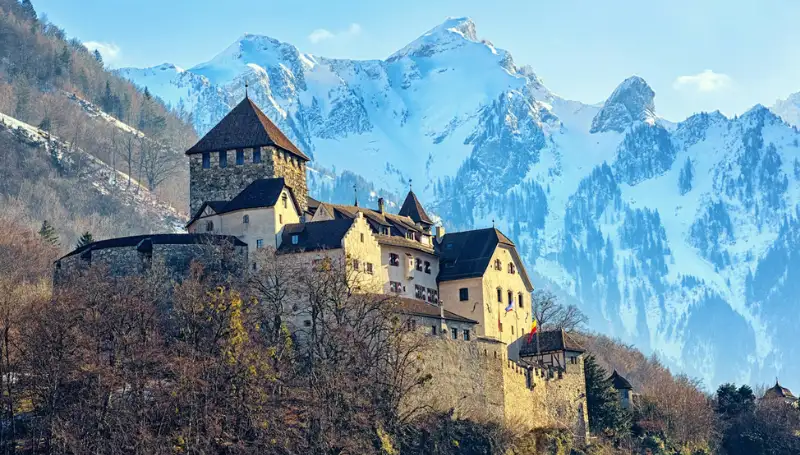
Liechtenstein has maintained a policy of permanent, unarmed neutrality since 1868, when it disbanded its 80-man army.
Following the dissolution of the German Confederation that year, the principality declared its permanent neutrality and has avoided military conflicts for over a century and a half since.
Geopolitically aligned with Switzerland, which manages its foreign affairs and customs, Liechtenstein remained neutral throughout both World Wars.
Despite being surrounded by Axis powers during World War II, the country maintained its neutrality, although it faced significant economic pressure.
Since 1919, Liechtenstein has entrusted its foreign representation and consular protection to Switzerland, which shares a common customs and monetary union with it.
While neutral, Liechtenstein is a member of the United Nations since 1990, the European Economic Area, and the Schengen Area, allowing for economic integration without political alignment.
It is not a member of the UN Security Council or NATO, and has no military forces.
Residency Options: The Liechtenstein Independent Means Visa is quota-based, requires substantial financial resources, and prohibits employment. It provides access to a 12.5% flat tax on local income. Citizenship requires 30 years of residence (potentially 10 with permission from local authorities).
IMI Pros Who Can Help with Liechtenstein Residency
Austria: Neutrality Within EU Integration

Austria adopted permanent neutrality by constitutional law on October 26, 1955, following the Austrian State Treaty. The policy prohibits joining military alliances or hosting foreign military bases.
After Austria joined the EU in 1995, its neutrality evolved into what observers call differential neutrality; military non-alignment combined with participation in EU foreign policy and peacekeeping missions.
Despite debates following Russia’s 2022 invasion of Ukraine, a significant majority of Austrians continue supporting neutrality, viewing their country as a bridge between East and West.
Vienna reinforces this diplomatic stance by hosting major international organizations, including the UN, IAEA, and OPEC.
Residency Options: The Austria Settlement Permit (Independent Means Visa) requires €24,000 annual income for individuals plus accommodation and health insurance. The Self-Employed Residence Permit is available to applicants with €100,000+ in investments that create jobs. Permanent residence after five years with B1 German. Citizenship after 10 years (6 with B2 German).
IMI Pros Who Can Help with Austria Residency
Andorra: Mountain Refuge Between Giants

Nestled in the Pyrenees, Andorra has maintained active neutrality for centuries, avoiding involvement in major 20th-century conflicts, including both World Wars.
The microstate’s neutral status stems from a unique 700-year-old co-principality system established in 1278 and solidified by its 1993 Constitution, whereby the President of France and the Bishop of Urgell in Spain jointly serve as heads of state.
Andorra maintained its neutrality during the Spanish Civil War and World War II, serving as a refuge and a key smuggling route.
The country maintains no standing army, relying on its neighbors for protection while operating a small volunteer police force.
Since 1993, Andorra has gained full international recognition as a sovereign state, joining the UN and Council of Europe while maintaining its neutral stance. Though not an EU member, it uses the euro and maintains special EU relations.
Residency Options: The Andorra Residence Without Lucrative Activity requires a €50,000 fee, plus either a €1M investment or €400K in the Housing Fund, granting 2-year, renewable permits. Permanent residency after 7 years. Citizenship requires 20 years and Catalan proficiency.
IMI Pros Who Can Help with Andorra Residency
Oman: Pragmatic GCC Neutrality
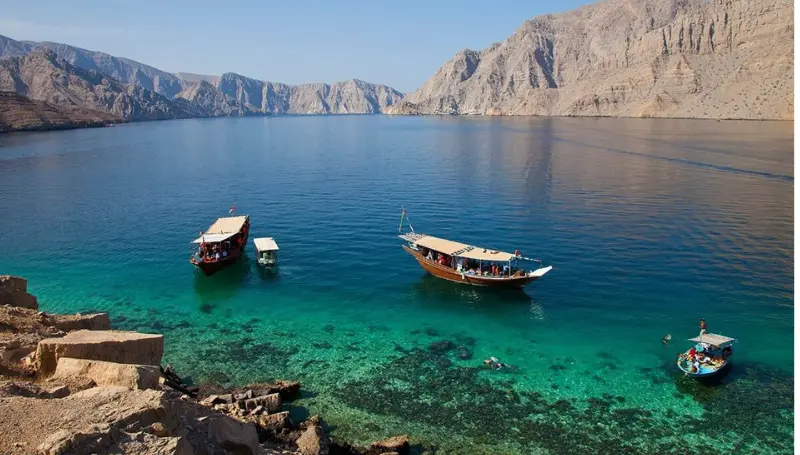
As US warships move toward Iran and President Trump warns of imminent military action, the Persian Gulf faces its most acute crisis in years. Trump announced that “very big powerful ships” are heading toward Iran, while Iranian Supreme Leader Ali Khamenei warned that any American attack would trigger a regional war.
In this volatile environment, one Gulf state stands apart: Oman has maintained peaceful relations with all sides, positioning itself as the region’s essential mediator for decades.
While Saudi Arabia rejected allowing its airspace to be used for military operations against Iran and Qatar’s foreign minister traveled to Tehran to discuss de-escalation, Oman’s role runs deeper; the sultanate has spent decades cultivating exactly this moment of relevance.
International media has long described Oman as the Switzerland of the Middle East, and the comparison holds.
This balanced approach reflects a foreign policy grounded in pragmatism, facilitating dialogue between disputing parties, refraining from military intervention, and maintaining balanced relations with competing regional powers.
Oman’s geographic position, controlling the southern coast of the Strait of Hormuz, through which roughly 21% of global petroleum liquids pass, reinforces its interest in regional stability.
Residency Options: The Oman Investor Residency requires an OMR 200,000 (US$520,000) investment and grants a 10-year, renewable permit. No citizenship pathway available.
IMI Pros Who Can Help with Oman Residency
Mauritius: Neutral Haven in the Indian Ocean

Mauritius pursues active, non-aligned neutrality in international affairs, prioritizing diplomatic dialogue and regional cooperation within Africa and the Indian Ocean.
Its stance emphasizes sovereignty, demonstrated by the Chagos deal, democratic stability, and neutrality in global conflicts to maintain its reputation as a safe and neutral economic partner.
Residency Options: The Mauritius Investor Visa program grants immediate permanent residency upon a $375,000 real estate investment, while the Retirement Visa for over-50s requires a monthly remittance of US$1,500. Citizenship after 5-7 years.
IMI Pros Who Can Help with Mauritius Residency
Costa Rica: Unarmed and Unaligned

Costa Rica holds a unique status as a permanently demilitarized neutral nation.
Following the 1948 abolition of its military, the country officially proclaimed permanent, unarmed neutrality on November 17, 1983.
The 1949 Constitution prohibits a permanent army, forming the bedrock of this stance. Costa Rica relies on international law, regional collective security mechanisms, and diplomacy rather than military force.
Costa Rica retains the right to self-defense in the event of aggression and participates in treaties such as the Inter-American Treaty of Reciprocal Assistance.
Yet the country has faced scrutiny over its neutrality during regional conflicts, particularly the 1980s Nicaraguan crisis, and faces contemporary security challenges from transnational crime.
Residency Options: The Costa Rica Pensionado Visa requires a $1,000 monthly pension, while the Rentista Visa requires a $2,500 monthly income or a $60,000 deposit. The Investor Visa requires a $150,000 investment. Permanent residency after 3 years. Citizenship after 7 years with Spanish proficiency.
IMI Pros Who Can Help with Costa Rica Residency