
Since August 1, 2026, an investor seeking citizenship of St. Kitts and Nevis can send $250,000 to the government by two routes and arrive at exactly the same place. The Sustainable Island State Contribution (SISC) and the Public Benefit Option (PBO) now share a price and a fee schedule, the Citizenship Unit (CIU) has the same 120 to 180 days to rule on either, and neither returns a cent.
So why does the world’s oldest citizenship by investment (CBI) program keep both? The answer lies in where the money goes, and what it leaves behind.
What Changed on August 1
Until this summer, a PBO applicant paid $250,000 plus post-approval fees for his family: $15,000 for a spouse, $10,000 per child under 18, and $15,000 per dependent aged 18 or over.
For a couple with two young children, that came to $35,000 more than the SISC, whose $250,000 already covered a family of up to four.
Price harmonization, approved in July and effective August 1, closed the gap. On either route, $250,000 now covers a main applicant with up to three dependents, plus $25,000 for each additional dependent under 18 and $50,000 for each one aged 18 or over.
Due diligence also matches, at $10,000 for the main applicant and $7,500 for each family member aged 16 or over. On both routes, the investor pays only after approval in principle.
Where the National Donation Goes
The SISC route is straightforward. The investor’s check, payable to the Accountant General, goes into the Federal Consolidated Fund, and the CIU confirms the deposit before granting citizenship.
From there, it becomes general revenue, spent against five national priorities such as local food production and green energy. The investor knows his money sits in the national accounts, but not whether it paid for a solar farm or a social safety net.
Many families prefer that simplicity; others want to know exactly what their $250,000 builds, and that is the gap the PBO is designed to fill.
How the Public Benefit Option Works
Introduced in the program’s 2023 overhaul, the PBO channels each contribution into a single project approved by the federal Cabinet. Private developers propose the projects and must show they will benefit the public, maximize local employment, and transfer skills, while assuming all of the project’s financial risk.

The Cabinet sets how many “public benefit units” each project may sell and releases them in step with construction, with each phase certified by an independent professional engaged by the CIU’s Board of Governors.
The money never passes straight to the developer. The applicant pays the $250,000 to the CIU, which holds it on trust and, within 30 days of granting citizenship, moves it into an irrevocable escrow account. The developer draws from it only as certified phases are completed.
Nothing in those rules makes the investor’s citizenship conditional on the building’s progress. Construction risk sits with the developer.
Six projects currently qualify: two affordable-housing projects, the reconstruction of Basseterre High School, the Royal St. Kitts Beach Resort, a global marketing program for the federation, and the Prime Creative Arts Center.

By the CIU’s count on October 1, one housing PBO had already financed more than 100 homes and handed 19 to families.
The Prime Creative Arts Center, Up Close
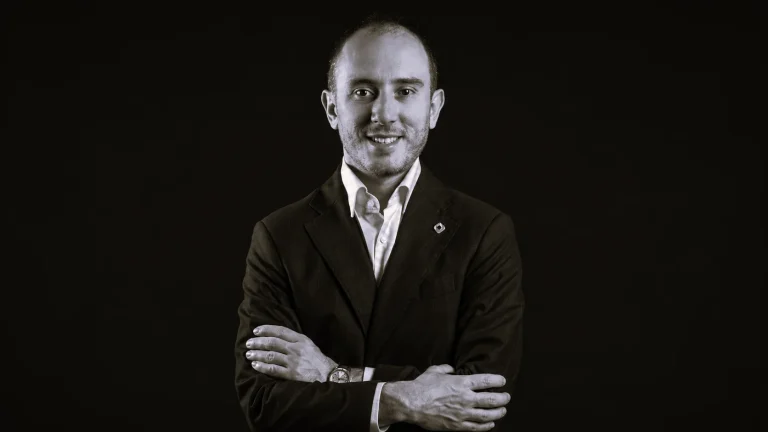
The arts center is among the most ambitious PBO projects. Its developer, Dubai-based Prime Developments, completed the Imperial Bay condominiums in St. Kitts in 2015, and its founder is a citizen of the federation.
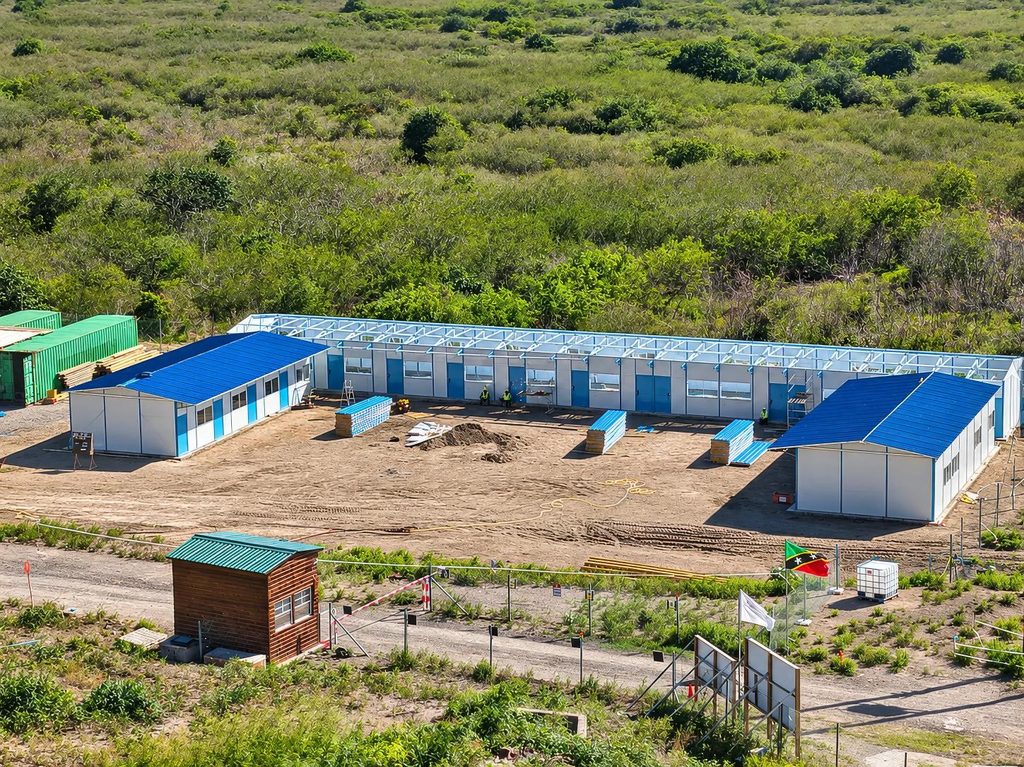
The complex is rising on site in the Frigate Bay hills, overlooking the airport and harbor, on land Prime had held for more than a decade before breaking ground in January 2026.
Its centerpiece, designed by Italian project director Alessio D’Ascenzo, is an open-air amphitheater shaped after the island’s volcanic terrain, with room for 4,000. Beside it sit a 1,200-seat indoor theater and a Lab Block of recording studios, dance rooms, music production suites, and classrooms.
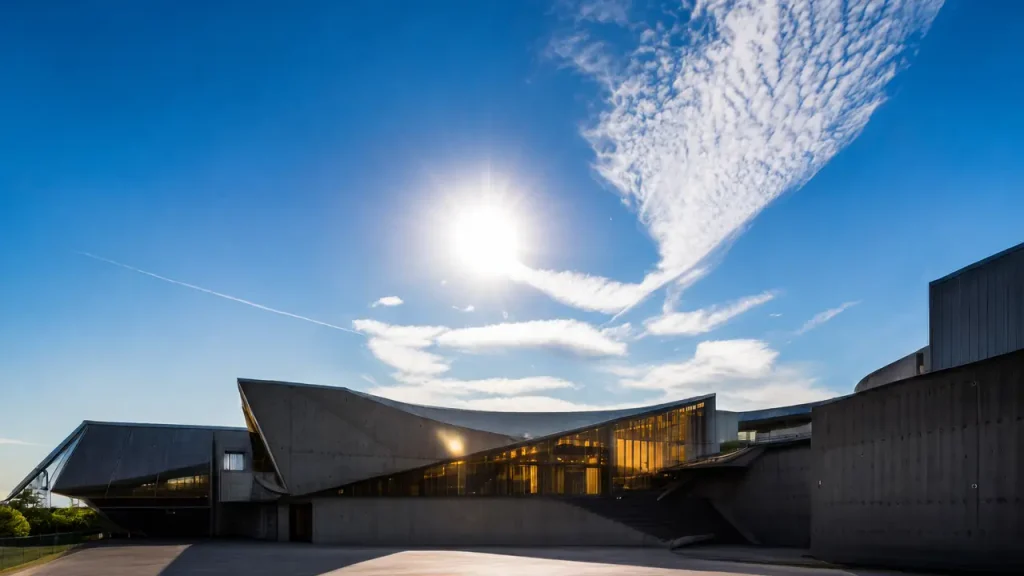
In the Market Block, local leather workers, woodworkers, and jewelers will craft and sell goods in front of visitors, cruise passengers among them.
Prime Minister Terrance Drew and CIU Executive Chairman Calvin St. Juste inspected the foundation works in late June, and the CIU reported on October 1 that Phase One had begun. Prime expects to finish in early 2029.
Jobs go first to locals, Kittitian firms take the subcontracting roles, and the Ministry of Creative Economy has paired the build with startup loans for local creatives.
At the groundbreaking, St. Juste called the PBO “not speculative development.”
Where the Routes Actually Differ
A PBO contribution has an address. Asked by an heir, a private banker, or even another government how the family acquired its citizenship, an SISC investor can cite a contribution to the national fund, while a PBO investor can point to the building his money is raising.
Legacy is part of the equation too. Prime offers each new citizen the option of having his name engraved on the center’s main bronze door, and a family applying this year could watch a performance in 2029 in the amphitheater it helped fund.
The PBO also fits where the program is heading. In his December 2025 update, St. Juste announced a “mandatory genuine-link requirement,” listing social, cultural, and philanthropic engagement among the ways to show one.
That makes the PBO, tied to a named public project, look more in step with that standard and with the genuine link the EU has pressed for.
What to Look for in a PBO Project
Choosing the PBO means choosing a partner, since each investor signs for his unit with the developer. The developer’s record is the first thing to check, and Prime’s includes a completed project on the island and a build already under way.
The government’s own moves suggest the option is here to stay. It priced the PBO in line with the SISC in the same year it announced a move away from “passive financial contributions.”
At an August industry webinar featuring Deputy Prime Minister Geoffrey Hanley, the harmonization was presented as a sign of the option’s continuing importance.
Regional rules under the Eastern Caribbean Citizenship by Investment Regulatory Authority (ECCIRA) will apply only once it is operational and member states agree on a start date. Until then, today’s terms apply to both routes.
Which Route Fits Whom
The SISC suits the investor who wants his contribution to go to the national budget and has no preference about where it is spent.
For everyone else, the PBO offers more for the same money and the same paperwork. Instead of a general budget whose impact is hard to trace, the $250,000 goes to a project built for local people, and the investor chooses the cause, from housing and schooling to tourism and culture.
Families drawn to the arts will find the Prime Creative Arts Center the natural choice.
Explore Both Routes With Prime Developments
Prime Developments’ teams in Dubai and St. Kitts walk investors and their families through both routes, from fees and unit availability to the bronze-door engraving. Every application must be filed through a CIU-authorized agent, and Prime also works with agents who want to offer the project to their clients.