
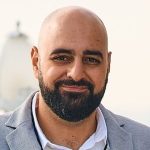
10 On The Weekend is a weekly (-ish) feature in IMI, the concept of which is simple: Each time, we ask the same ten questions of a different IMI Pro, letting readers get to know the interviewee on a more personal and informal level than they might during the ordinary course of business.
Our guest this week is Mohamed BennisSenior Vice President at Arton Capital
How do you spend your weekends?
Weekends are about family. They are a time to recharge after a full week of work and to regain perspective.
Stepping back helps me reflect on what happened during the week, what I can control, and what I cannot. Professionally, that pause brings clarity.
On Sunday afternoons, I also like to gently prepare for the week ahead. It allows me to start Monday already one step ahead, rather than reacting.

What are your top three business goals this year?
I will slightly shift my answer to reflect my goals next year.
First is to continue growing the US market. Having a physical presence in North America has been a real advantage, allowing us to educate and build trust on the ground.
Then comes education. North America is still about 15 years behind Middle Eastern and Asian markets when it comes to understanding investment migration, so there is significant work to do in explaining how these programs actually function.
Finally, I want to bring perspective to programs that were historically overlooked and reposition them as viable and relevant solutions for the right profiles, as well as highlight the new dynamic behind the new programs being launched.
What’s your biggest business concern right now?
My main concern is the growing protectionist approach adopted by many governments. In trying to protect their interests, policies can sometimes become counterproductive.
Migration is at the very root of how most countries were built and developed, and when that reality is forgotten, everyone loses.
This uncertainty makes long-term planning harder for families and investors, as rules can shift faster than capital, creating hesitation rather than confidence.
Which book is on your nightstand right now?
It is called “Google News”. We tend to underestimate how much information we have at our fingertips.
Today, almost any perspective, analysis, or data point is accessible instantly. I spend a lot of time reading articles, publications, and opposing viewpoints to better understand where our industry is going.
Books are important, but staying informed in real time is essential.
How and when did you first get into the investment migration industry?
By chance. In 2006, while interning at the Mayor of Montreal’s office, I met a political advisor who had worked for the Minister of Immigration and offered me a part-time role.
That led to working with three different Ministers of Immigration in Quebec as a political advisor, followed by a role as a government official for the Quebec Immigrant Investor Program.
After leaving public service, I took almost a year to reflect on my next step. Moving into the private side of investment migration was the natural continuation, bringing with me a public sector understanding that is relatively uncommon.
What was your proudest moment as a service provider?
A client approached us focused on products and Golden Visa options, but it quickly became clear she was confused and overwhelmed.
Rather than pushing a specific program, I took the time to understand the real reason behind her needs and to explain the broader options that could genuinely help her.
That is when I knew we were making a real difference. This happens often. Clients come to us stressed or fearful, and my proudest moments are when I listen, bring clarity, offer thoughtful options, and help them avoid rushed or emotional decisions.
Focusing on the client rather than the product is always a win.
Which investment migration market development has surprised you the most in the last year?
The US. It was long assumed that Americans, holding one of the world’s strongest passports, would have little interest in alternative residencies.
The more I speak with US clients, the more I understand their reasoning. My message to them is simple: Plan, don’t run. Just as you diversify assets, diversifying mobility has become a rational and necessary strategy.
If you could go ten years back in time, what business decision would you change?
None. Every frustration, setback, strained working relationship, failed partnership, or obstacle played a role in shaping where I am today.
When you zoom out, even negative experiences serve a purpose. They prepare you for how you handle success later on.
What investment migration industry personality do you most admire?
I admire the pioneers who had the courage to build companies in a highly competitive and often misunderstood space.
I also have deep respect for processing teams, who are the backbone of this industry and whose work is often thankless yet essential.
I would especially single out Armand Arton, our group’s CEO, who had the vision to lead where others later followed.
As a product of migration himself, much like my own story, his journey explains the passion and authenticity behind what he does.
If all goes according to plan, what will you be doing five years from now?
Continuing to innovate. Creating new, responsible pathways for people to diversify their mobility and empowering a broader audience, not only ultra high net worth individuals.
I want to help democratize the perception of investment migration. I am personally a product of business migration.
My father immigrated to Canada through an entrepreneur program, and that decision changed our lives. I intend to remain an ambassador and living proof of the positive impact these programs can have.



