10 On The Weekend is a weekly (-ish) feature in IMI, the concept of which is simple: Each time, we ask the same ten questions of a different IMI Pro, letting readers get to know the interviewee on a more personal and informal level than they might during the ordinary course of business.
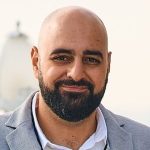
Our guest this week is Christophe Suchy, Co-Founder at Global Citizen Consulting
How do you spend your weekends?
We live between Panama City, mainly, and Boquete up in the highlands of Chiriquí. The city is where the week happens, the meetings, the work, the energy. So weekends, when we can, are about getting out of it.
The best ones start with the drive or short flight to Boquete, where we have a place in coffee country at an altitude where the pace drops by half the moment you arrive.
Coffee on the terrace, a long walk, reading, and the kind of thinking we would never call work, but probably is.

The honest version is that running a firm and a technology company keeps the line between weekend and weekday soft, and we have made peace with that. What we actually optimize for is authority over our own calendar, not a clean five-day week.
What are your top three business goals this year?
First, prove that a fully independent advisory model can reach seven figures without turning into a volume shop. We run a very person-centric practice built on two engagements: An entry-level exposure audit and a deeper exit architecture engagement.
Second, finish productizing our methodology so the quality of the work does not depend on us being in the room. We built a structured discovery process and a documented planning system precisely so the thinking is repeatable.
Third, make our Insights platform the place serious people go for an honest read on jurisdictional strategy, rather than another marketing funnel dressed up as content.
What’s your biggest business concern right now?
The industry keeps mistaking a transaction for a strategy, and clients pay for it later. We are watching jurisdictions that were sold as safe become liabilities almost overnight.
The European Union has hardened its position to the point where simply operating a citizenship by investment program can now be treated as grounds to suspend visa free access, and the United States has imposed entry restrictions on the citizens of two Caribbean nations over their programs.
When you sell someone a passport as a finished product, you have handed them a single point of failure.
Our concern is less about any one program and more about contagion. The category gets judged by its most transactional actors, and that reputational drag lands on everyone, including the advisors trying to do serious work.
Which book is on your nightstand right now?
Right now, it is Steve Jobs in Exile, by Geoffrey Cain.
It covers the twelve years between 1985 and 1997 that the legend usually skips, when Jobs was pushed out of Apple and spent his wilderness years at NeXT.
What pulls me in is that it is a book about the unglamorous middle, the part of the story everyone edits out. The argument is that the stretch of failure and near bankruptcy is exactly what taught him discipline and produced the leader who later remade Apple.
I spend my working life with people in transition, and the lesson maps cleanly. The reinvention nobody is watching is usually where the real work gets done.
I read it as a study in patience and in building something independent after the institution shows you the door.
How and when did you first get into the investment migration industry?
Through the back door, which I think is the only honest way into this work. Both Gail and I had spent years as founders and operators doing cross-border deals and structuring, so the mechanics were already familiar.
What changed was living the question ourselves. Gail and I made the move to Panama in 2020, in the middle of COVID, when borders were closing, and a lot of people discovered how locked in they actually were.
We restructured our own lives across jurisdictions and learned where the real friction sits, the parts no brochure mentions.
Peers started asking how we had done it, the questions got more serious, and four years later, in 2024, we formalized all of it into Global Citizen Consulting.
What was your proudest moment as a service provider?
The proudest moments are quiet ones, and they are almost always the engagements where we talked a client out of something rather than into it.
The one that stays with me is a client who arrived convinced he had to buy into a program that, within a year, would have exposed him to exactly the restrictions we are seeing now. We slowed him down, mapped his real exposure, and built him a structure he still holds.
He paid us to tell him not to do the thing everyone else was selling, and it held up years later.
When a client trusts you with that, that is the whole job.
Which investment migration market development has surprised you the most in the last year?
How quickly a passport went from being treated as a pure asset to being a potential liability. A year ago the prevailing logic was simply that more citizenships meant more optionality.
Now the European Union is openly discussing suspending visa-free access for the citizens of countries that run these programs, and the United States has restricted entry for nationals of specific Caribbean issuers.
The irony is that, in the same window, the United States launched its own version, the Gold Card, and began selling residency for a seven-figure contribution.
So the message to the market is that buying access is statesmanship when a large country does it and suspect when a small one does.
That double standard, and the speed at which the ground shifted under people who thought they had bought certainty, surprised me more than any single program change.
If you could go ten years back in time, what business decision would you change?
We would have built our own optionality much earlier and planned the relocation years before we actually did.
We made the move in 2020, and as well as that turned out, the honest truth is that a global shock pushed us into a decision we could have made calmly, on our own terms, long before.
That is exactly the lesson we now bring to clients.
Optionality is something you architect while things are stable and you still hold leverage, not something you scramble for once the pressure is on.
We learned it the hard way, by waiting for the world to force the question instead of asking it first.
What investment migration industry personality do you most admire?
Christian Kälin, for the field building more than for any one firm.
Whatever you think of where parts of the industry went, he turned a fringe idea into a serious global market and forced governments to engage with it.
We run an independent practice precisely because we believe the model needs a counterweight to the large vendors, but you can build the alternative and still respect the person who built the category.
If all goes according to plan, what will you be doing five years from now?
Still living between Panama City and Boquete, still a deliberately small firm, but with the work running on a methodology rather than on us.
The clear trajectory is toward serious people who need real structure, and increasingly, entrepreneurs and family offices who need international tax structures rather than a quick fix.
If the plan holds, Global Citizen Consulting is the independent name those people reach for precisely because we have nothing to sell them except the right answer.
We expect to be spending less time delivering and more time on the harder questions, namely where capital and families actually move as the old assumptions about citizenship and tax keep breaking down.
The through line is clear, building architecture that still stands when the environment changes.