Over the past two years, the wealthy have watched their favorite tax arrangements quietly disappear. Britain retired its non-dom regime in 2025. Portugal’s ten-year shelter for foreign income shut its doors to newcomers, and most of the European programs still standing cap the benefit at 15 years while charging a six-figure annual fee for it.
Into that vacuum stepped Turkey, with the boldest offer in the market. A law in force since June lets qualifying new residents pay no Turkish tax on their foreign income for 20 years, with no annual fee and no fixed lump sum attached. For internationally mobile money, that combination is rare.
The appeal goes well beyond the math. Istanbul has quietly become a destination for global wealth, with waterfront apartments along the Bosphorus, summer houses on the Aegean coast, and a financial center built to court the capital now relocating from the Gulf. A tax break gives all of that a financial logic it lacked before.
What the Exemption Actually Does
The measure sits in a single article of Turkey’s income tax law, gazetted in June and backdated to the start of 2026. A foreign national who becomes a Turkish tax resident pays no Turkish income tax on income earned outside the country for 20 years from the date residency begins. Dividends, capital gains, foreign rental income, business profits, and royalties all fall outside the Turkish tax base.
What stays taxable is just as clear. Income earned inside Turkey, from a local salary or a Turkish business, still faces the standard progressive rates that climb to 40%. The exemption covers the foreign half of an investor’s life, not the domestic one.
Two details make the regime unusually generous. Exempt foreign income never has to appear on a Turkish return, which removes the annual reporting that erodes most preferential systems. Inheritance and gift tax, normally charged on a sliding scale, drop to a flat 1% for anyone inside the regime.
A parallel amnesty rounds out the package. Foreign assets declared and brought into Turkey before the July 2027 deadline can be regularized at rates that fall to zero if the money stays invested for five years.
What Twenty Years Is Worth
Stack the regime against what survives elsewhere and the scale becomes obvious. Where comparable European programs still exist, they rarely run past 15 years, and many bill a six-figure sum every year for the privilege. Turkey asks for neither, and it offers two decades.
For an investor with a portfolio throwing off dividends and capital gains, the difference compounds fast. A foreign income stream of $500,000 a year, taxed at a typical European rate, can shed six figures annually to the state. Over 20 years, the gap between paying that and paying nothing is the price of a second home, several times over.
How much an individual keeps depends on their own circumstances. Nationality matters, because some countries tax their citizens on worldwide income no matter where they live. The origin of the funds, the structure that holds them, and the timing of the move all change the outcome, which is why the regime rewards planning rather than improvisation.
Where Citizenship Comes In
Turkey is one of the few places where a passport and a tax break can sit in the same hand. Its citizenship by investment (CBI) program grants naturalization through a real estate purchase of $400,000, with a passport that carries visa-free or visa-on-arrival access to more than 110 destinations. Approval typically lands within four to six months, among the fastest timelines anywhere.
Those two statuses are separate, and the distinction is where most people stumble. The tax exemption turns on residency, not the passport, and it carries one condition: The applicant must have had no Turkish home and no Turkish tax liability in the three calendar years before becoming a resident. Read literally, that would seem to punish the very investors the citizenship program attracts.
The law anticipates exactly that. It includes a carve-out: Anyone whose only previous Turkish tax came from local rental income, securities income, or capital gains still qualifies for the 20-year exemption. So an investor who bought a Turkish apartment for citizenship, rented it out, and paid tax on that rent has not forfeited anything.
The trap lies in the sequence. An investor who buys property, moves, and crosses the residency threshold without planning the order can become a full Turkish taxpayer on worldwide income, exactly the outcome the exemption was meant to prevent.
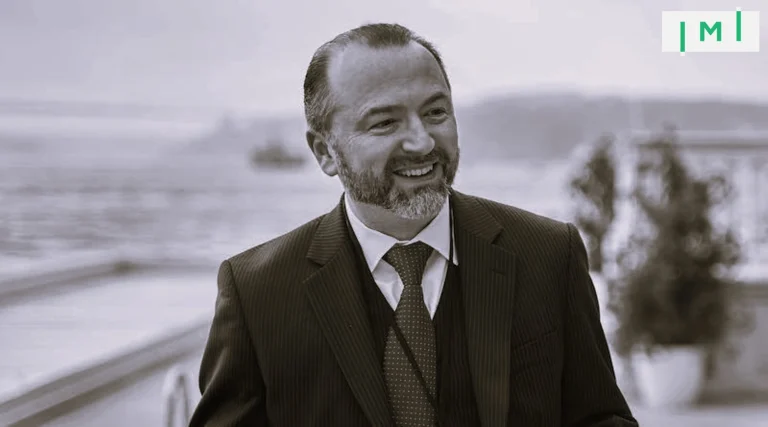
Onur Sümer, Founding Partner and Attorney at Law at GSC International, treats that sequencing as the heart of the work. Citizenship and the tax exemption are, in his view, “two separate engines that only pay off when they are timed to fire together.”
Building the Whole Structure, Not Just the Passport
This is where GSC International works. The firm treats Turkish citizenship and the new tax regime as parts of one decision rather than two transactions, sequencing the investment, the move, and the establishment of residency so the exemption is available the moment it is needed.
Sümer frames the work as bigger than any single rate. Most of the firm’s clients, to hear him tell it, are after “20 years of certainty for a family that plans to outlast it,” not merely a lighter tax bill.
What they build is not a document, but an architecture. A second passport for mobility and security, a tax residency that shelters foreign income for two decades, an asset position regularized cleanly, and a home in a country built to receive exactly this kind of capital: These fit together only when they are designed together.
That coordination, to Sümer’s mind, is the whole value. He casts the firm’s work as “building the life a passport is meant to enable, rather than just handing one over.” It leaves the investor with a single plan, instead of a passport in one hand and a tax surprise in the other.
Turkey’s window opened in June, and it rewards investors who move with a plan rather than a hunch. For anyone weighing the citizenship, the tax exemption, and the sequence that makes both work, GSC International offers a private consultation to map the structure to your own situation. Get in touch through the firm’s website to start the conversation.