In 2025, a single estate on Sardinia’s Costa Smeralda changed hands for €185 million, the largest residential transaction ever recorded in Italy. The buyer was not Italian; neither, for the most part, are the buyers behind the records now falling across the country’s prime markets, from the Milanese centro storico to the shores of Lake Como.
Italy Sotheby’s International Realty, which brokered that sale, closed 2025 with nearly €1 billion in transactions and a 68% increase in revenue, drawing on more than 32,000 inquiries.
By the firm’s estimate, international buyers now account for approximately 70% of transactions at the top end of the market.
A Story of Concentration, Not Volume
Foreign citizens bought an estimated 39,000 Italian homes in 2025, just 5.1% of total residential transactions and far below the 17% share they held in 2007.
What has changed is not how many foreigners buy, but what they spend.
Engel & Völkers, among the world’s largest luxury property networks, found in its recent Italy report that international buyers make up 35% of the luxury residential market on average, and that in nearly every prime location, a large share of them purchase without financing.
Where financing is used, the sums are also climbing fast: Luxforsale Finance, which arranges mortgages for foreign buyers of Italian luxury property, recorded a 63% jump in applications from foreign clients in the first five months of 2026, with average financed values rising from €14.59 million to €21.4 million in a single year.
Concentration shows most clearly in the ultra-prime tiers. Portal data from Gate-away shows demand for properties above €3 million in Versilia grew 94.74% in a year, while Dreamer Real Estate reports that 38% of all 2025 inquiries in Tuscany and comparable locations targeted assets above €5 million.
Where the Records Are Falling
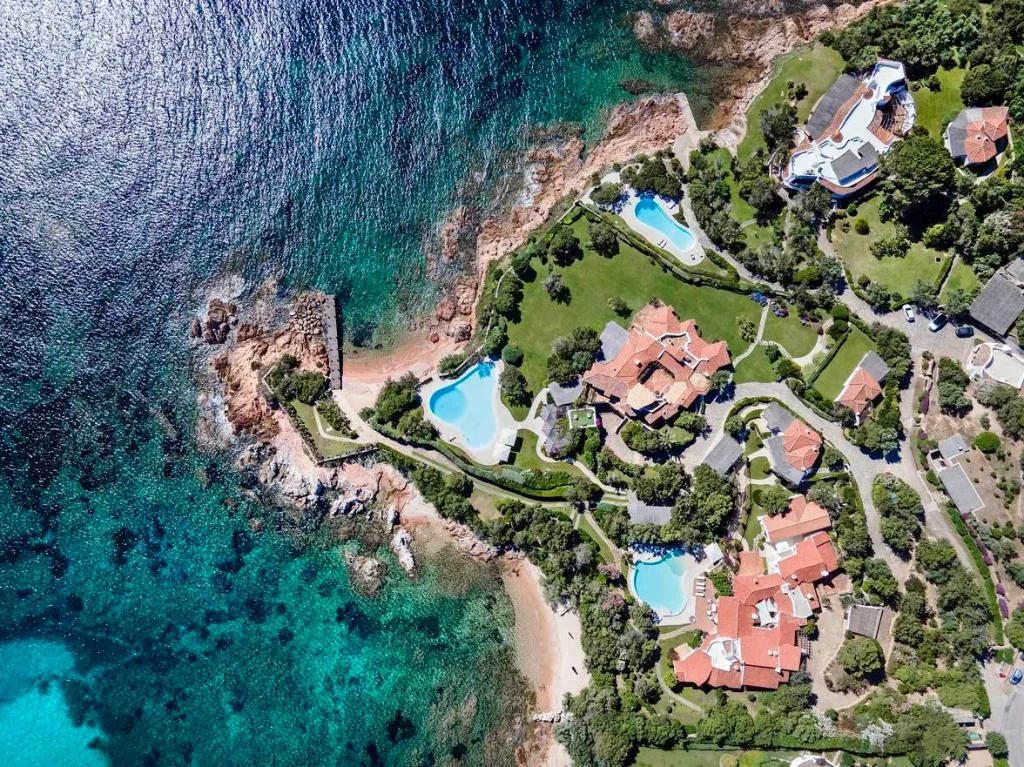
Costa Smeralda, a luxury coastal destination, leads the country on price, with exclusive estates commanding up to €32,000 per square meter, and it carries the highest foreign concentration of any prime Italian market: 80% of buyers are international.
It was there, fittingly, that the €185 million record sale closed, in a market where a fixed stock of coastal villas meets an ever-growing pool of wealthy buyers.
The same arithmetic of scarce waterfront and mobile wealth plays out on Lake Como, now among the world’s top five luxury second-home markets alongside the French Riviera and Aspen.
A waterfront home with direct lake access averages around €2.5 million, while historic villas with boathouses and private gardens reach up to €30 million.
On the Tuscan coast, Versilia has quietly become Italy’s third-largest luxury market, with high-end stock valued at over €4 billion.
Forte dei Marmi anchors the segment: prime prices average €16,100 per square meter, up 17% since 2019, and plots in Roma Imperiale regularly clear €20,000.
Milan, where relocating wealth has pushed prime values furthest, set its own record with a $28 million duplex sale in Brera.
A million dollars bought roughly 60 square meters of prime Milanese space in 2020; by late 2025, it bought 45.8 square meters, and prime prices grew 7% annually in mid-2025, the fastest of any major European market.
Who Is Buying, and Why They Stay
Americans lead nearly every ranking, accounting for a quarter of all foreign inquiries and a fifth of Sotheby’s international clientele, and they now rate Italy as their second-favorite property destination worldwide after the United States itself.
British inquiries grew 23% in 2025 as the UK’s non-dom abolition pushed wealthy residents abroad, Germans and Swiss dominate the northern lakes, and buyers from India, Brazil, and the UAE are the fastest-growing new cohorts, with a marked preference for standalone villas and absolute privacy.
Increasingly, these buyers come to live, not merely to holiday, and much of the money arrives with a residence permit attached.
Italy’s flat-tax regime, now €300,000 per year on all foreign income for up to 15 years, has attracted approximately 4,000 participants since 2017, and demand has spread from Milan to Rome, Tuscany, and Como as stock tightens.
For non-EU nationals, the Investor Visa provides an entry route, with a minimum investment of €250,000 in an innovative startup and no minimum stay requirement. The visa program’s applications hit a record 209 in 2025.
Retirees settling in southern towns can pair a purchase with the 7% flat tax on foreign income. Property alone does not qualify a buyer for residence; the purchase and the residence route have to be structured together.
Where the Market Goes From Here
Forecasts point to consolidation rather than correction. Luxury prices are expected to grow approximately 1.5% nationally in 2026, but 3% to 7% in Milan and Rome, and three Italian destinations now rank among the world’s top 30 for ultra-high-net-worth individuals (UHNWIs).
For buyers weighing an Italian acquisition, the sequencing matters as much as the asset: residence status, tax election, and purchase structure each affect the economics of the others.
To assess how an Italian property purchase fits your residence and tax position, contact Vignale Capital for a confidential consultation; the firm advises high-net-worth families on Italian residence, investment structuring, and flat-tax elections from application through relocation.