
Nearly 400 industry professionals gathered in Guangdong as Ms. Charmaine Quinland-Donovan addressed residency reform, the European Union’s 2028 request, and the future of visa-free access.
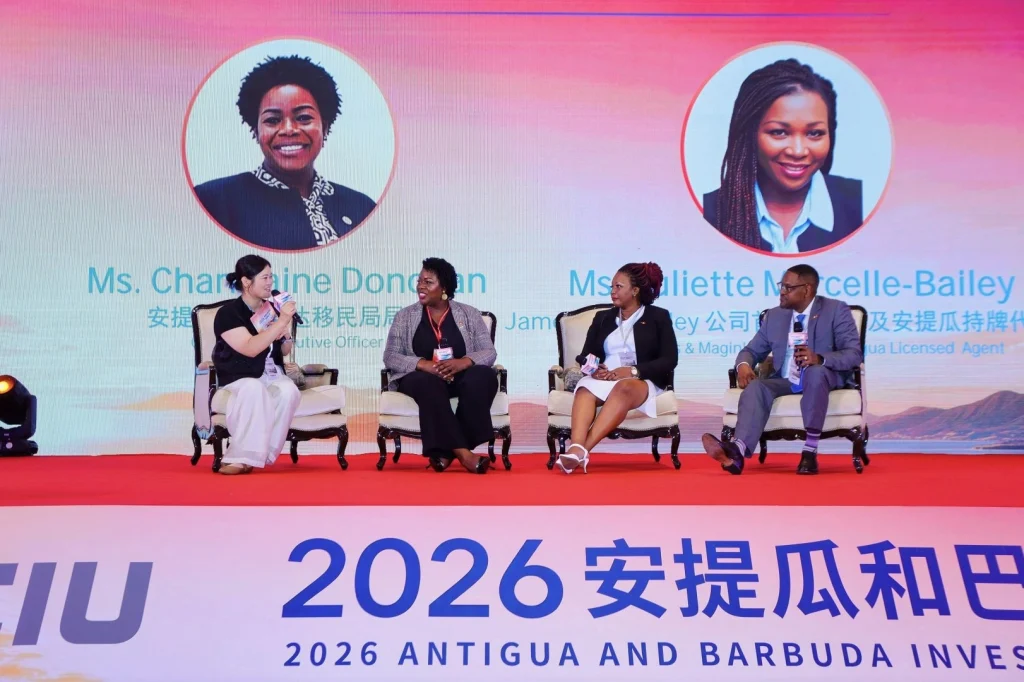
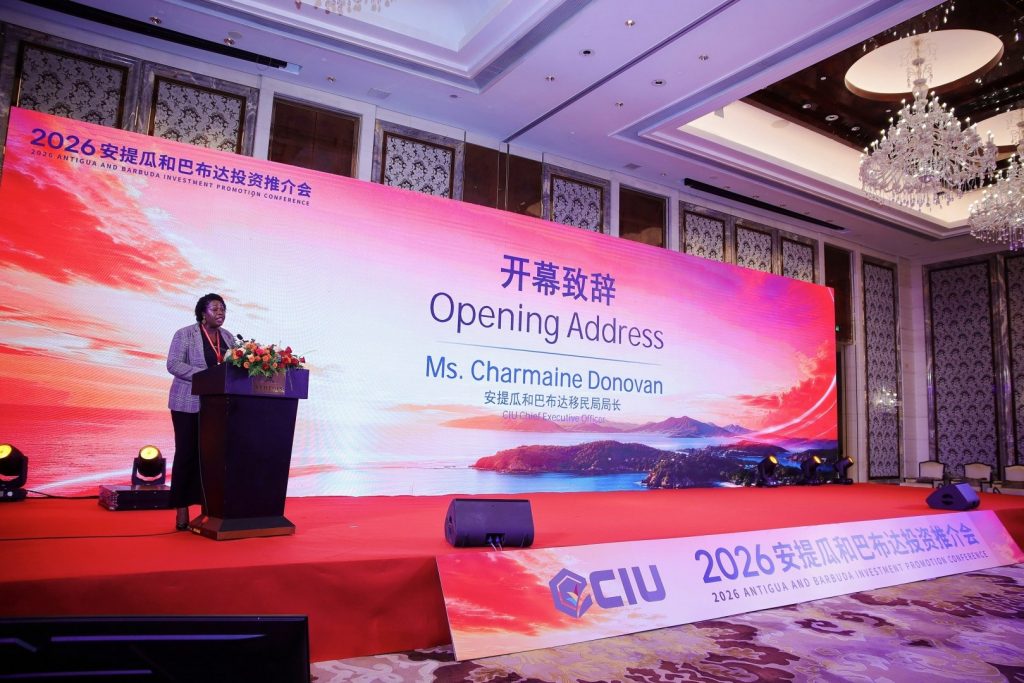
Guangdong, China, July 27, 2026. Nearly 400 investment migration professionals, company founders, association leaders, and channel representatives from across China attended the 2026 Antigua and Barbuda Investment Promotion Conference in Guangdong.
Hosted by ORVIA, the conference created a rare high-level exchange between the leadership of Antigua and Barbuda’s Citizenship by Investment Unit (CIU) and one of the world’s most important investment migration markets.
The centerpiece of the program was an address by Ms. Charmaine Quinland-Donovan, Chief Executive Officer of Antigua and Barbuda’s CIU. She presented an update on the program’s processing performance, family inclusion, and due diligence framework, as well as its response to the regulatory and diplomatic pressures now facing Caribbean citizenship programs.
The conference offered participants something that has been unusually difficult to obtain amid recent market uncertainty: Direct answers from the official responsible for the program’s administration. The scale of the gathering and the seniority of the discussion made it one of the most significant Antigua-and-Barbuda-focused investment migration events held in China in recent years.
Processing Capacity, Family Inclusion, and Governance
Ms. Quinland-Donovan told delegates that the CIU had processed, during 2024 and 2025, an application volume comparable to what the Unit would normally handle over a five-year period. She reported that all applications submitted in those two years had received an initial determination and that processing for new applications submitted in 2026 had returned to within six months.
She also highlighted the program’s unusually broad approach to family inclusion. According to Ms. Quinland-Donovan, Antigua and Barbuda operates the only Caribbean citizenship by investment (CBI) program capable of accommodating five generations within an eligible family structure, allowing qualifying family members from grandparents to grandchildren to be included under the program’s rules.
On program integrity, Ms. Quinland-Donovan described a three-layer review covering identity, financial background, and character. She said the Unit used multiple due diligence providers and treated transparency as a legal and operational obligation, supported by regular reporting and stronger regional oversight.
ORVIA’s long-standing and trusted working relationship with the Government of Antigua and Barbuda was reflected throughout the conference. From senior-level coordination and agenda design to the selection of the issues placed before the CIU, the event demonstrated ORVIA’s direct access to official policy information and senior government stakeholders. It also gave Chinese industry professionals a direct channel through which to raise the questions affecting clients and business planning.
Thirty Days Over Five Years, Calculated by Family
One of the most closely watched topics was the proposed increase in the post-citizenship residence requirement from five days to 30 days. During the conference, Ms. Quinland-Donovan clarified that the requirement would be completed cumulatively over five years and calculated on a family basis.

Under the explanation provided to delegates, members of a family applying together would be able to contribute collectively toward the 30-day requirement, rather than each member having to spend 30 separate days in Antigua and Barbuda. Ms. Quinland-Donovan said the reform was intended to respond to international concerns about programs with little or no meaningful connection to the granting country while remaining practical for international families.
She emphasized that the requirement should be viewed across the full five-year period. For most applicants, she explained, the practical effect would be limited and could be satisfied through a family visit to Antigua and Barbuda. The change also forms part of the country’s alignment with a stronger, more harmonized regulatory framework among the Eastern Caribbean states operating citizenship by investment programs.
The EU’s 2028 Request and Antigua and Barbuda’s Response
Ms. Quinland-Donovan also addressed the European Commission’s request that the five Eastern Caribbean states operating CBI programs phase out those programs by June 1, 2028. She conveyed a firm government position: Antigua and Barbuda would not accept the unilateral termination of a program that remains a critical pillar of national development and non-tax revenue without a viable and credible replacement source of financing.
She said Antigua and Barbuda was working with the other four Caribbean CBI jurisdictions on a coordinated response and that a high-level delegation was being prepared for direct engagement with European institutions in Brussels. The objective, she explained, was to pursue every available diplomatic and regulatory avenue while continuing to meet international compliance expectations.
Ms. Quinland-Donovan reiterated that the program supports public finances and contributes to national priorities, including infrastructure and social development. She said the government would defend the country’s economic sovereignty and the interests of all Antiguan and Barbudan citizens, whether by birth or by investment, while maintaining constructive engagement with international partners.
“We are approaching this challenge with great determination,” she told the audience.
Confidence on Visa-Free Access
Another central concern for the audience was how the European Union’s revised visa suspension mechanism might affect Schengen visa-free access. Ms. Quinland-Donovan acknowledged the seriousness of the issue but delivered a confident message. She told delegates that the government remained confident that Antigua and Barbuda would preserve visa-free access through stronger vetting, regional coordination, and direct engagement with European institutions.
She pointed to measures under consideration across the region, including enhanced due diligence, biometric screening, and additional pre-approval checks intended to address European security concerns. She also stressed that the five Caribbean jurisdictions would need to act collectively and maintain a constructive dialogue with the European Union.
ORVIA General Manager of Sales Winni Wang then joined Ms. Quinland-Donovan for an in-depth discussion focused on the three questions generating the greatest anxiety in the market: How the 30-day requirement would work in practice, how Antigua and Barbuda intended to respond to the 2028 phase-out request, and whether visa-free access could be preserved. The discussion gave participants one of the clearest direct explanations yet provided to the Chinese market.
A Reassuring Signal to the Market
For the nearly 400 people in the room, the event was more than an investment presentation. It was a timely reassurance at a moment when policy headlines have created uncertainty across the industry. Participants left with direct explanations from the CIU’s leadership, a clearer understanding of the government’s position, and a stronger basis for communicating with clients.
The conference also reinforced ORVIA’s role as a trusted bridge between Chinese investors, industry firms, and Caribbean government stakeholders. Through its professional capabilities, established government relationships, and access to official resources, ORVIA will continue to bring the Chinese market timely policy insight and direct opportunities for high-level dialogue.
To learn more about ORVIA, visit our website here.