

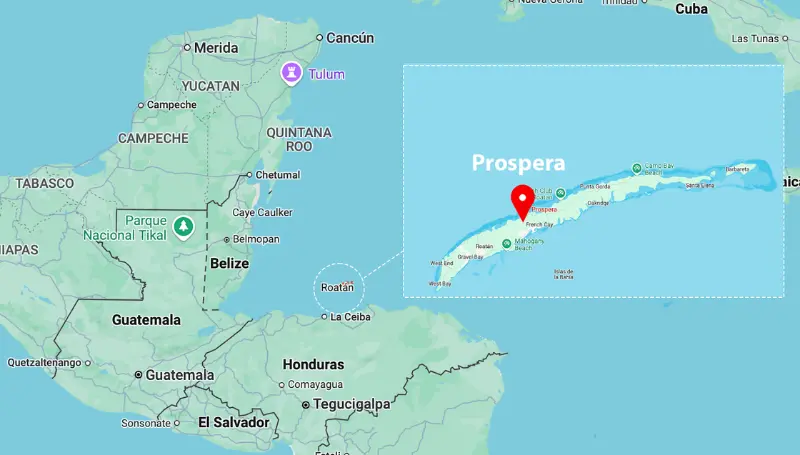
Próspera, a privately-run autonomous jurisdiction of Honduras, has launched a lump-sum tax program that allows eligible residents to pay $5,000 per year to cover all income taxes, regardless of income level.
The program specifically targets digital nomads and location-independent professionals who have legally exited their home country’s tax systems and lack tax residency elsewhere.
The program excludes U.S. citizens from participation because the United States uses a citizenship-based taxation system.
Operating as a Zone for Employment and Economic Development (ZEDE) under Honduras’s constitutional framework, Próspera maintains a distinct fiscal and legal system separate from the national government.
How the Program Works
Participants pay a flat $5,000 annual fee to cover all income taxes under Próspera’s Tax Statute, and may pay in cryptocurrency.

Additionally, applicants must meet three requirements:
- They must pledge they have no tax residency elsewhere and will not get one during the election period.
- They must set up and maintain a business entity in Próspera’s Entity Registry.
- They must complete a minimum seven-day visit within twelve months of enrolling.
The entire setup process can be completed remotely, with only the annual visit requiring physical presence.
Joey Langenbrunner, a strategic tax advisor and consultant who conceptualized the program and worked with Próspera’s government to draft the law, explains that comparable taxation programs operate at much higher thresholds, noting that most lump-sum or territorial regimes begin around $25,000 to $100,000 or more, and often include physical presence requirements, complex filings, or discretionary approval processes.
If income generated within Próspera exceeds $5,000, the lump-sum payment applies as a credit against total tax liability. Participants still pay value-added tax, property taxes, and other fees.
The program aims to provide what Langenbrunner describes as clear, compliant tax residency for globally mobile professionals operating across borders, without imposing relocation or physical stay requirements.

Application Process
Applicants submit documentation and complete know-your-customer verification digitally, then activate e-Residency to access Próspera’s digital governance platform.
Upon approval and payment, Próspera issues an official Tax Residency Certificate.
The requirement to establish a business entity within 60 days of approval adds economic substance to what is otherwise a minimal-presence program.
Próspera designed this so that participants demonstrate genuine business activity in the jurisdiction, even if most operations occur elsewhere.
Revenue Distribution and Governance
The tax structure reflects Próspera’s position within Honduras’s legal framework. As such, 12% of collected taxes goes to the Honduran national government, while 44% goes to the local ZEDE municipality, an autonomous entity established under national law with oversight by the national Committee for the Adoption of Best Practices.
The remaining revenue supports Próspera’s operations and development.
This setup illustrates ZEDE’s hybrid governance model, which operates with substantial autonomy while maintaining ties to Honduras’s national government.
The Committee for the Adoption of Best Practices ensures ZEDE activities align with constitutional requirements and international best practices.
The program enters a competitive market of tax-residency options for mobile professionals. Similar programs in countries such as Italy, Switzerland, Malta, and Caribbean nations typically require larger financial commitments, longer stays, or both.
Territorial tax systems in places like Singapore and Hong Kong offer zero taxation on foreign-sourced income but generally require more substantial local economic activity.
