For most of its history, Portugal’s golden visa was sold as a passport play. Put money into real estate or a fund, show up for seven days a year, and collect a European citizenship in five years. That pitch worked, and it attracted a specific kind of investor.
That pitch is now outdated. Portugal’s new Nationality Law entered into force on May 19, doubling the standard naturalization timeline from five to ten years. For EU and CPLP (Community of Portuguese-Speaking Countries) nationals, the timeline is seven years.
Over 500 golden visa holders are preparing a collective lawsuit against the Portuguese state. Portugal’s Minister of the Presidency, António Leitão Amaro, told Diário de Notícias last week that any consultant who promised a client he was “buying a Portuguese passport” through the golden visa had deceived him.

The lawyers representing those investors fired back. One of them said that “the government and its agencies knew it, promoted it, and profited from it since it was introduced in October 2012. The minister is now trying to rewrite history.”
As someone who has worked in the immigration field for 15 years, I disagree with how Portugal handled this change. An investor who was six months from citizenship under the old rules now faces five and a half more years. That is not how a credible jurisdiction treats people who followed its rules in good faith.

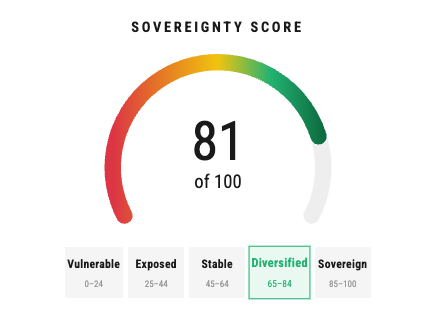
But I also think this episode is a useful illustration of a principle I have spent years advising clients on: Do not put all your flags in one jurisdiction.
Flag theory in practice, not in theory
I hold a Vanuatu passport. In 2024, Vanuatu lost its visa-free access to the Schengen area.
For someone whose mobility depended entirely on that passport, this was a serious disruption. It was not for me, because I also held a European residence permit through Portugal’s golden visa. My Schengen mobility did not change.
The Vanuatu passport still carries value for other purposes; it simply stopped being my European access point.
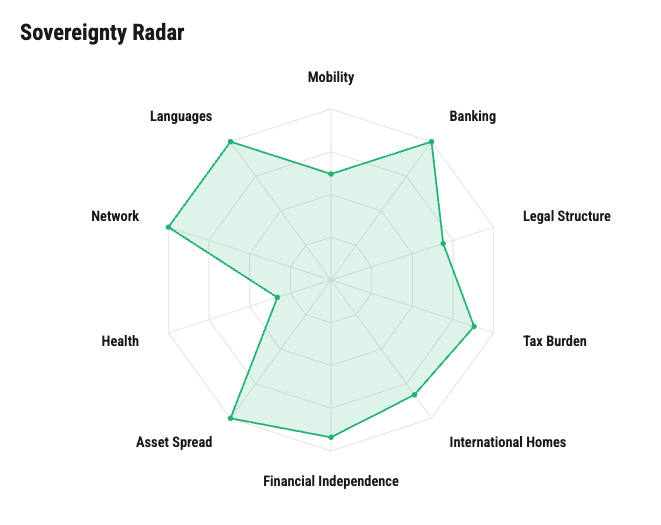
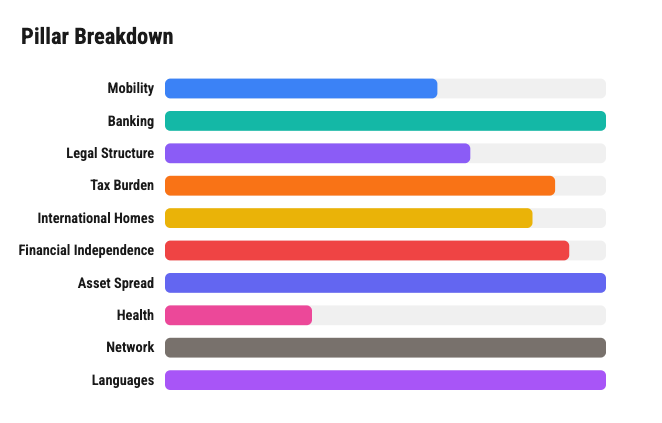
This is what flag theory looks like in practice. Not every flag is acquired through a large investment, and not every flag is a passport.
Some are residence permits, some are tax residencies, some are business registrations. The point is that they work in combination, so that when one jurisdiction changes its rules (and jurisdictions always change their rules), the others absorb the impact.
My family now lives in Brazil. I need to maintain European mobility for work, but I do not necessarily need to do that through the golden visa route.
I could renew the Portuguese permit; I could also look at a digital nomad visa in another EU country, or a different residency structure entirely. The specific instrument matters less than the principle: The right flag, at the right cost, for the right function, maintained for as long as it serves its purpose.
What many investors do not realize: The program survived
The Portuguese golden visa received enormous media coverage over the past two years, most of it framed around closure. Real estate was removed as a qualifying route.
The nationality law went through parliamentary debates, a Constitutional Court challenge, a presidential veto cycle, and a final vote. Industry publications, including this one, covered every stage in detail.
What did not receive nearly as much coverage is the fact that the program itself stayed open.
Spain eliminated its golden visa outright in April 2025. Malta lost its citizenship by investment (CBI) program to a European Court of Justice (ECJ) ruling the same month. Ireland and the UK closed their investor programs without replacement.
Against that backdrop, Portugal’s golden visa is not the weakened option. It is one of the few major European programs still open.
Many investors I speak with today, including very well-advised people, believe the Portuguese program closed entirely. It did not. What it now delivers, stripped of the passport distortion, is a different proposition from the one most people remember.
What the golden visa actually is now
Strip away the passport timeline and look at what the residence permit itself delivers.
From day one: Visa-free movement across the entire Schengen area for the investor and their family. The right to live, work, study, and operate a business in Portugal. Family reunification (spouse, dependent children, and dependent parents).
At year five: Eligibility for permanent residency, which carries most of the practical benefits of citizenship, without the naturalization requirement.
Throughout, one of the lowest physical presence requirements in Europe. Roughly seven days per year. No tax residency obligation unless the holder chooses to relocate.
The new naturalization timeline also makes the program more honest about who it serves best. For investors who already hold a strong primary passport, whether American, British, Emirati, or Singaporean, the residence permit was always the product, not the citizenship.
These investors usually do not need a Portuguese passport for mobility; what they need is a European base, a Schengen-zone residency for their families, and optionality for the future. The golden visa delivers all three without requiring them to renounce anything or relocate anywhere.
The same logic applies, perhaps even more directly, to investors from countries that do not recognize dual citizenship. Chinese nationals, for instance, represent the largest single applicant group in the program’s history. For most of them a Portuguese passport was never part of the plan, since acquiring one would mean surrendering their Chinese citizenship.
What they are buying is European access, family mobility, and an education pathway for their children, structured through a residence permit that does not force a choice between jurisdictions. For this profile, the ten-year naturalization timeline changes nothing.
The investment routes
The dominant route is the €500,000 investment fund. Vehicles regulated by the CMVM (Comissão do Mercado de Valores Mobiliários), Portugal’s securities regulator, now cover technology, renewable energy, sustainable agriculture, forestry, hospitality, senior living, and PropTech.
Several qualify as Article 8 or Article 9 under the EU’s Sustainable Finance Disclosure Regulation. The European Investment Fund acts as an anchor investor in a number of qualifying vehicles.
Fund investments now comprise over 78% of golden visa applications. Investor behavior has shifted; golden visa funds are increasingly evaluated within the same framework as other private market instruments, not as residency-purchase mechanisms with a financial wrapper. For the right investor, the €500,000 is a deployment into a regulated European fund that happens to come with a residence permit attached.
But the fund route is not the only option, nor is it the cheapest.
The cultural heritage donation route, at €250,000 (or €200,000 in low-density areas), delivers the exact same residence permit. The donation is non-refundable and goes toward approved artistic production, film projects, museum preservation, or archaeological work. Applications through this route grew by 165% in 2024 as investors sought alternatives after real estate was removed.
There is also a scientific research contribution of €500,000, and a business creation route that requires applicants incorporate a company in Portugal and create at least ten jobs.
The cultural route, at €200,000 to €250,000, is among the lower-cost options in Europe. It is a donation, not an investment; the capital does not come back. For an investor whose primary objective is a European foothold rather than a passport, the calculation is straightforward: Schengen access and EU residency for a family, in a jurisdiction with the rule of law, political stability, and no physical presence requirement.
The CPLP track and the São Tomé question
The new Nationality Law created a two-tier naturalization system. Most foreign nationals face a ten-year timeline. Citizens of CPLP countries, which include Brazil, Angola, Cape Verde, São Tomé and Príncipe, and others, qualify after seven years.
This has generated immediate interest in acquiring CPLP citizenship as a stepping stone, particularly through São Tomé and Príncipe’s new CBI program, at roughly US$100,000 for a family, with approval in six to eight weeks.
On paper, the sequence works. In practice, fund managers and legal practitioners inside the Portuguese market are nervous. The ECJ struck down Malta’s CBI on the grounds that it commodified EU citizenship.
If São Toméan CBI holders begin appearing in Portuguese naturalization queues in meaningful numbers, it creates precisely the kind of pressure point the Commission has shown it will act on. Portugal did not design the seven-year CPLP track with CBI passports in mind. It designed it for Brazilians, Angolans, and Cape Verdeans with deep historical and linguistic ties.
An investor who acquires a São Toméan passport and applies for a Portuguese golden visa the following week has no genuine link to either country. That is exactly the framing the ECJ used against Malta. The risk is that Portugal tightens the CPLP eligibility definition, and does so while an investor is four years into a seven-year bet.
Brazil offers a more defensible CPLP route. It is the ninth-largest economy, investor residency starts at roughly US$130,000, and naturalization is available after four years of actual permanent residence.
But it requires genuine relocation. The full cycle to a Portuguese passport through Brazil runs 11 to 12 years.
What Portugal teaches about jurisdictional risk
The broader lesson from Portugal’s nationality law is not specific to Portugal. It is that any plan built on a single jurisdiction’s promise of future citizenship carries risk.
An investor who obtained a Portuguese golden visa in 2022 under a five-year citizenship track, and put nothing else in place, now faces a ten-year timeline and a lawsuit. Someone who held the same golden visa but also maintained a second passport, a different tax residency, and a business registered in a third country has lost nothing except one timeline on one component of a broader plan.
This is the practical case for flag theory. Not as an abstract philosophy, but as risk management.
Flags are not trophies. They are instruments, and each one should make economic and strategic sense.
A Portuguese golden visa is an excellent European flag. Brazilian residency with real estate exposure covers Latin America, and a Caribbean passport covers immediate mobility.
They do not need to be acquired through the same mechanism or at the same cost level, but they need to work together.
Portugal in context
The programs that survived the 2023 to 2025 reset are the ones built to absorb political pressure. Portugal’s golden visa, restructured around regulated funds rather than speculative property, with low stay requirements, multiple entry points from €200,000 to €500,000, and a maturing investment ecosystem that channels capital into productive sectors, fits that description.
Since its inception, the program has attracted over 12,700 main applicants and their families, deploying €7.3 billion into the Portuguese economy. The fund ecosystem now spans forestry, renewable energy, hospitality, and PropTech.
The passport at the end is further away than it was two years ago. But the residence permit, the Schengen mobility, the investment exposure, and the optionality remain. For investors who understand what they are actually buying, and what they are not, the proposition is clearer now than it has ever been.