

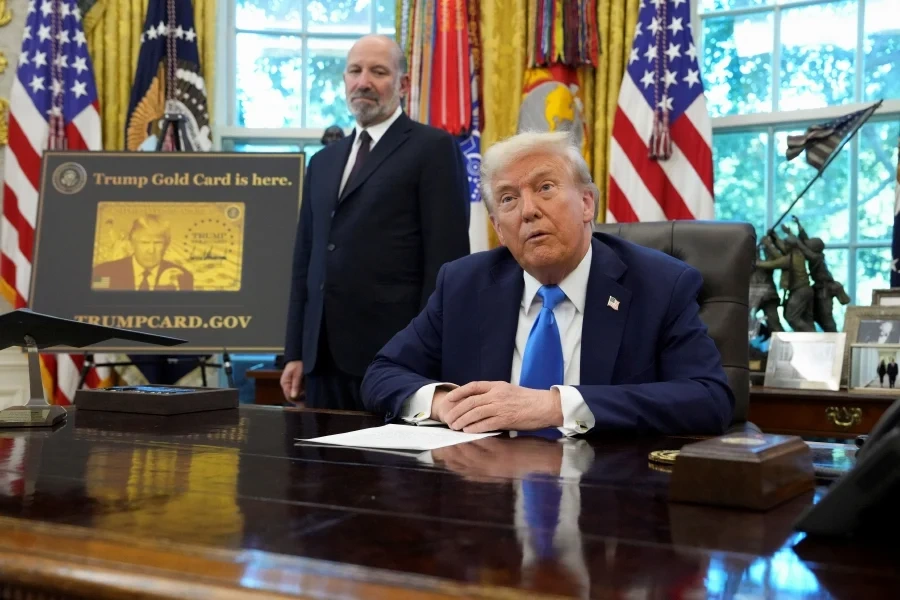
Commerce Secretary Howard Lutnick told a House Appropriations subcommittee on Thursday that the Trump Gold Card program has approved exactly one applicant since applications opened in December. He described “hundreds” of others awaiting review and characterized the vetting as “the most serious […] in the history of government.”
Four months earlier, at the program’s official launch, Lutnick stood alongside President Trump and declared the government had sold US$1.3 billion worth of Gold Cards in just days. Trump held up the gilded card and called it “the green card on steroids.” On Thursday, Lutnick did not address the gap between that figure and a single approval.
What US$1.3 Billion “Sold” Means Remains Unclear
The program’s own website specifies that the US$1 million donation is submitted only after an applicant clears vetting. Before that, applicants pay only the US$15,000 processing fee. If “hundreds” of people are in the queue, the program has collected several million dollars in processing fees and, based on Thursday’s testimony, exactly US$1 million in donations from the lone approved applicant.
Lutnick has never defined what “sold” meant in December. Whether the figure referred to processing fees received, donation commitments pledged, or something else entirely has gone unexplained. The Commerce Department did not respond to press inquiries about the discrepancy.
The Trillion-Dollar Projection
A year ago, Lutnick told a cabinet meeting that the Gold Card would raise US$1 trillion and help balance the federal budget. That target assumed a million cards at US$1 million each. At one approval in four months, the program is on pace for three approvals per year, or roughly 333,000 years to reach the trillion-dollar mark.
Even “hundreds in the queue” would not change the math in any material way. The publicly held national debt stands at US$31.3 trillion.
Even the Visible Card Wasn’t Real
In January, rapper Nicki Minaj posted a photo of a gold-colored card from Trump and claimed she had received it “free of charge.” Speculation that she might account for the program’s single approval circulated widely after Thursday’s testimony. A Commerce Department spokesperson told Snopes the card was a “memento,” not an actual visa document.
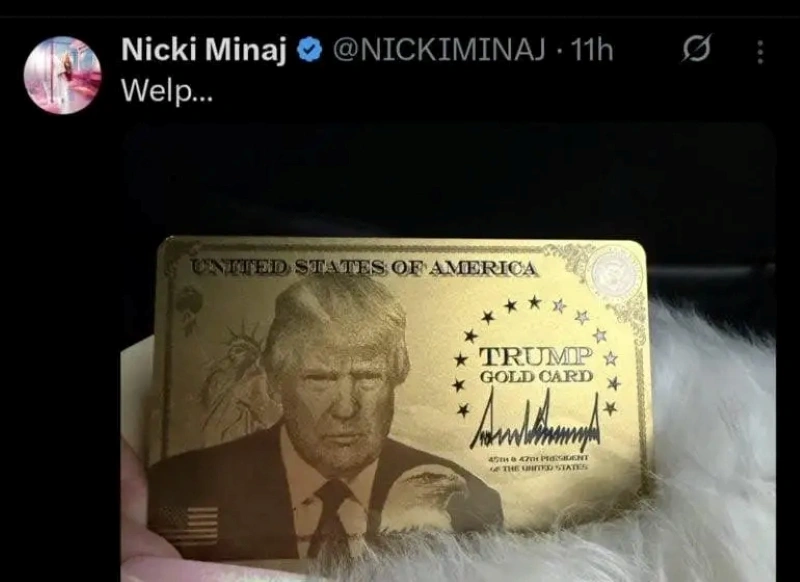
Minaj, who was born in Trinidad and Tobago, has been a legal permanent resident for approximately 20 years, according to a Department of Homeland Security official. Lutnick declined to identify the actual approved applicant, and the Commerce Department cited federal law in refusing press inquiries.
Revenue With No Destination
Asked by Rep. Grace Meng (D-NY) how the US$1 million donations would be spent, Lutnick offered only that the funds would go toward “the betterment of the United States of America” and that the administration would decide the allocation. He provided no further detail.
When the program was first announced in February 2025, Trump said the proceeds would go to “an account where we can do positive things for the country.” Fourteen months later, neither the account nor the mechanism for directing funds has been publicly specified.
Legal analysts have questioned whether the executive branch has the constitutional authority to create the program without congressional approval, a concern that extends to the still-unlaunched US$5 million Platinum Card.



