Turkey’s Interior Ministry has cancelled or withdrawn the citizenship of 6,134 people who acquired it through the country’s citizenship by investment (CBI) program. A written statement published on August 4 puts the number of principal investors at 1,413, with the balance made up of spouses and children.
The total divides into two categories resting on different legal grounds. Inspections by the General Directorate of Land Registry and Cadastre (TKGM), the Tax Inspection Board, and the General Directorate of Security identified 1,150 investors who had completed collusive or irregular transactions, and their investment eligibility certificates were cancelled along with the citizenship of 5,391 people once families were counted.
A second, smaller group was caught after the fact. Police and the National Intelligence Organization flagged 263 investors as objectionable on public order and national security grounds following naturalization, and 743 people lost citizenship as a result. No fraud is alleged against them; their status was withdrawn on vetting grounds rather than for any defect in the investment.
Enforcement has accelerated this year. Since February 11, 2026, cancelled eligibility certificates have cost 443 investors and their families their Turkish citizenship, a group totaling 1,358 people. Seven others were stripped on security grounds over the same period.
Two Announcements, Two Numbers
The ministry’s disclosure followed a police operation unveiled the same day by Justice Minister Akın Gürlek. Detention warrants for 90 suspects produced 72 detentions across 16 provinces, in an investigation centered on Istanbul and run by the organized crime bureau of the city’s chief public prosecutor.

Investigators seized 1,045 properties, a hotel in Bodrum, 15 vehicles, a yacht, and 10 bank accounts, while seven companies were placed under court-appointed trustees. Gürlek put the sum that should have entered Turkey through the investment process, but never arrived, at approximately TL 2.5 billion (approximately $52.6 million).
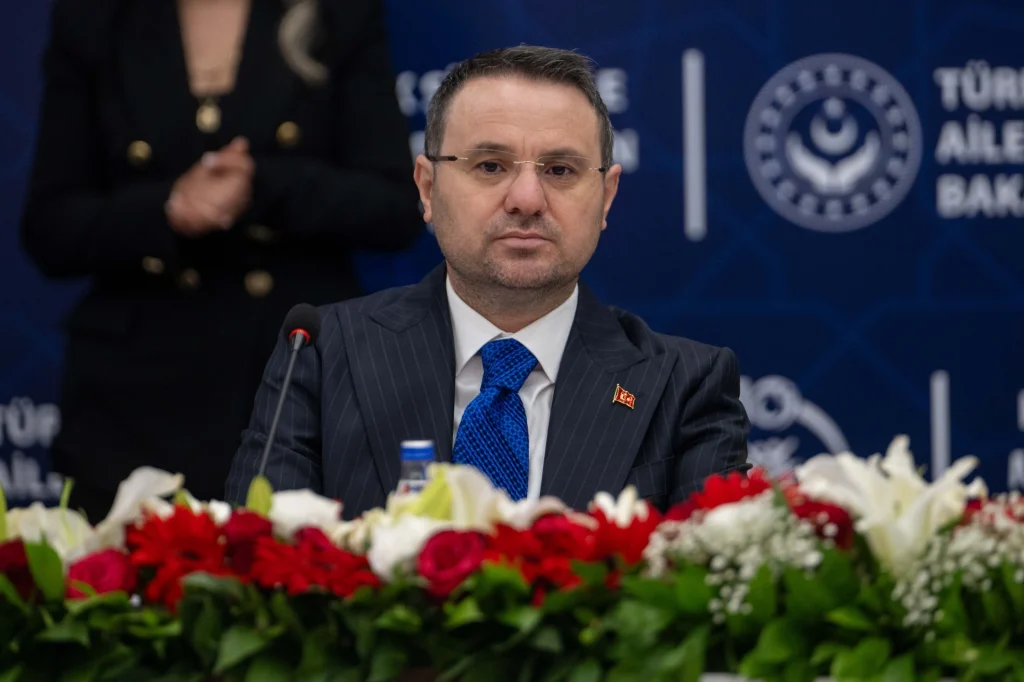
He also confirmed that revocation proceedings had begun against 687 people tied to that file. Those 687 belong to the criminal case; the ministry’s 6,134 is cumulative and covers the whole program. Neither authority has explained how far the two overlap.
What Cancellation Actually Does
The ministry grounded its decisions in articles 31 and 40 of Law No. 5901. Article 31 governs cancellation, or iptal, where citizenship followed a false declaration or the concealment of material facts, which is the fraudulent-valuation cohort. Article 40 provides for withdrawal, geri alma, where the legal conditions turn out never to have been met, and covers those flagged on security grounds.
Article 32 explains the multiplier. A cancellation decision reaches the spouse and children who acquired citizenship through the principal applicant, which is how 1,413 investors becomes 6,134 people. Dependents are not assessed separately on their own conduct.
Article 33 is the provision investors tend to meet late. Anyone whose citizenship is cancelled reverts to foreigner status under Turkish residence law and, where the decision calls for it, must liquidate his Turkish assets within one year. Property left unsold at that point is sold by the Treasury, with the proceeds credited to his account.
“The Same Scam Is Impossible to Do Today”
Aran Hawker, co-founder at CIP Turkey, reads the operation as a continuation rather than a fresh discovery, describing it as “a wider net on the earlier operation” that swept up 451 investors last September. Investigators, in his account, tend to leave a network running while they watch it, and the first round of detentions yielded the information on methods and associates that made the second possible. He expects further cases, “because it was quite widespread.”
Hawker places the conduct firmly in the program’s past. “This all happened when the program was at $250,000,” he tells IMI, arguing that “people exploited things in the early days, and the Turkish government has done a great job of sealing up the loopholes and potential points of exploitation.”
On whether the method still works, he is unequivocal. “The same scam is impossible to do today,” in his assessment, with “absolutely zero chance to corrupt the system that’s in place right now.”
Taymour Polding, also a co-founder at CIP Turkey, treats the outcome as a deterrent worth having. Anyone “trying to defraud the Turkish government will be caught, sooner or later,” he argues.
He adds that “the overwhelming majority of those involved in the program strictly adhere to the rules, which is essential if it is to remain in the long run.”
Why the Old Method No Longer Works
Turkey has rebuilt its valuation architecture twice since the transactions under investigation. TKGM Circular 2024/2, applying to reports requested from March 4, 2024, handed exclusive authority for citizenship-purpose appraisals to Gayrimenkul Değerleme A.Ş. (GEDAŞ), a valuation company owned by the Housing Development Administration (TOKİ). Valuers licensed by the Capital Markets Board (SPK), whose reports the networks had inflated, kept their role for every other category of foreign property acquisition.
The second change closed the paper trail. Since December 9, 2024, TKGM has issued an amount determination certificate (TTB), generated from the GEDAŞ report through an internal application and transmitted straight into the land registry system. A certificate presented in physical form is not processed at all.
That last clause carries more weight than its phrasing suggests. Since December 2024 a forged appraisal has had no manual route into a citizenship file, because the document certifying the investment amount never passes through an applicant’s hands.
The Years Nobody Will Name
What the ministry did not do is date the cancelled files. The omission is conspicuous, given how straightforward the reassurance would have been had the answer been a comfortable one.
Ankara was willing to be specific elsewhere. Its statement closes by asserting that the conduct was confined to attempted forgery of pre-application documents, and that no weakness or negligence attaches to staff at the General Directorate of Population and Citizenship Affairs.
Hawker’s account points to the window between September 19, 2018, when the real estate minimum dropped to $250,000, and mid-June 2022, when an amendment published in the Official Gazette raised it to $400,000. Those were the program’s highest-volume years, and they ran end to end under the private valuation regime that no longer applies.
Percentage Unknown
How much of the program this represents is not knowable from public data. Interior Ministry figures cited in Kristin Surak‘s work at the London School of Economics put investor naturalizations at more than 5,000 by the close of 2019, against as many as 9,000 applications then pending.
The years since are covered mainly by private estimates. Against a program Surak’s research places at more than half of all CBI approvals worldwide, 6,134 remains a number without a denominator.